When does the fun begin?
When I ended the previous post, A, T & I had made our way back to the hotel. A few hours remained between our hotel tour and introductory group dinner and I’d worked up a bit of an appetite so I set out to see where I might find a light snack in a place that wasn’t one of the myriad Korean restaurants in the neighborhood. I anticipated a large meal so I wanted something that wouldn’t be overly filling but would keep me satiated. When I crossed Reforma, Calle Génova became Calle Rio Sena and before me opened a world of street food vendors
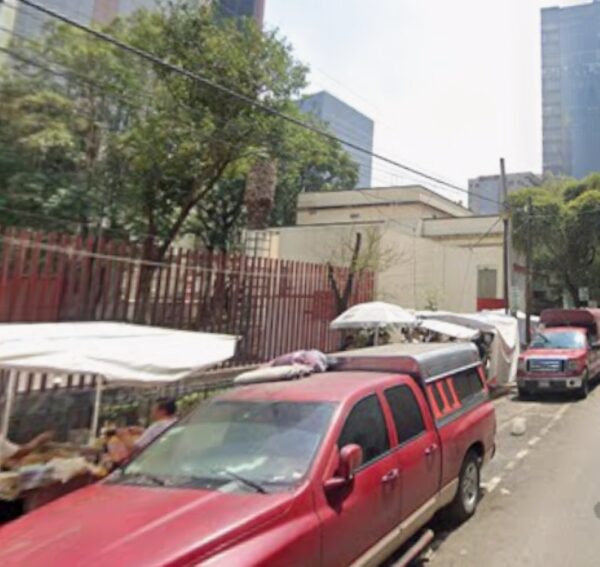
that I’d visit more than once during my stay. Today, I had a snack of flautas de pollo.
A hotel with a history
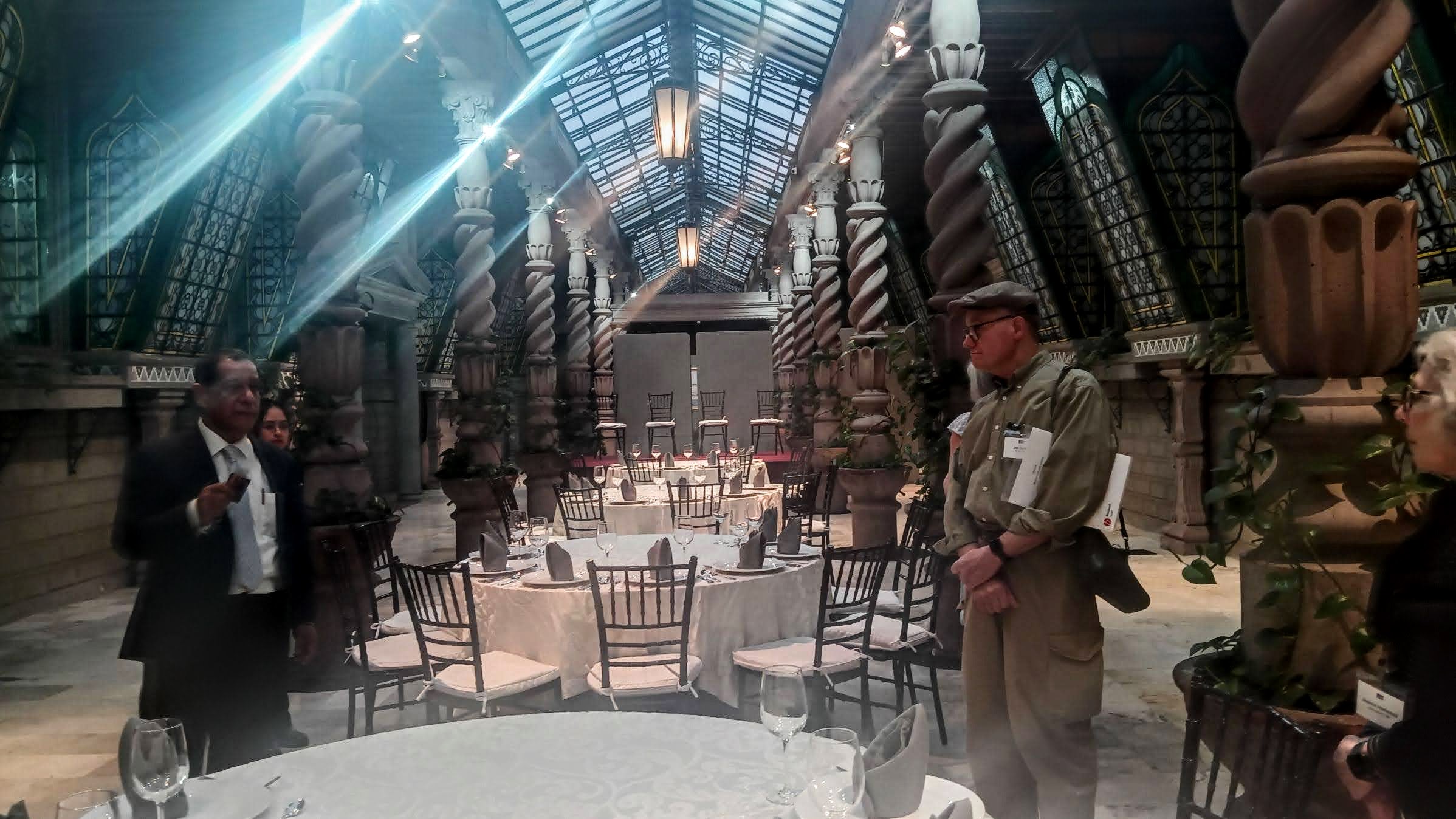
Our group gathered at the appointed time in the lobby of the Hotel Geneve where we met not only each other, but our hosts, guides, and several of the hotel’s staff. The latter would lead us on a tour of the hotel before we had our supper.
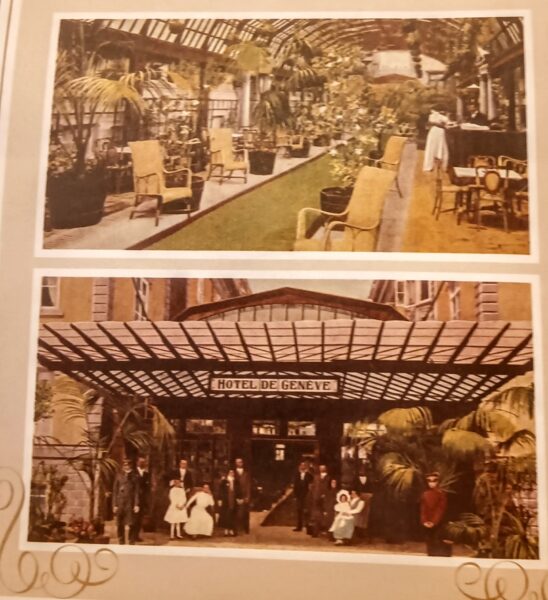
Conceived as a luxury, European‑style property and perhaps spurred by the ambitions of the Mexican president (or dictator depending on one’s viewpoint) Porfirio Diaz to attract international investment to México, the Belle Epoque hotel opened its doors in 1907. From its opening, it was considered one of the most modern and elegant establishments in the country. According to the hotel’s promotional material, it was the first in CDMX to offer, “cab service, operator, dry cleaning, travel agency, elevator, tennis court and hairdresser, as well as telephone and bathroom in each room.”
According to the hotel manager, the en suite bathrooms provided guests with hot and cold running water at a time when this would have been considered an exceptionally advanced amenity for anyplace in Mesoamerica. These European style amenities meshed well with Porfirio Diaz’ policy. The hotel took an additional and, in this instance, rather daring step that defied Mexican societal norms to attract visitors. It welcomed women as solo travelers.
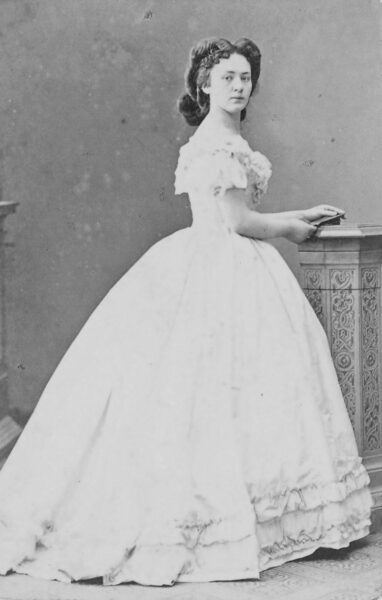
Elsewhere in the world, women were becoming more assertive. Those among you who have been long time followers of these accounts might recall, for example, Bertha von Suttner (whom I profiled here)
[From Wikipedia – Public Domain]
the second female Nobel laureate and the first woman not to share her prize with a man. In the United States women such as Helen Keller and Ida B Wells were becoming prominent intellectuals.
However, in Porfirian México when the Hotel Geneve opened in 1907, societal norms heavily restricted any form of independent travel for women. The expectation was that they would be chaperoned by family or husbands whenever they were in public. Lone women in public spaces were seen as vulnerable to exploitation at best or, more likely, as morally suspect. Most hotels of the time either refused them outright or offered inadequate protection thereby potentially manifesting this reality.
By explicitly welcoming solo female guests with “accommodation and safety guarantees,” Hotel Geneve provided rare respectability and security. Not only did the hotel provide professional staff oversight, but the private bathrooms allowed these women additional security and comfort.
Buenos Díaz
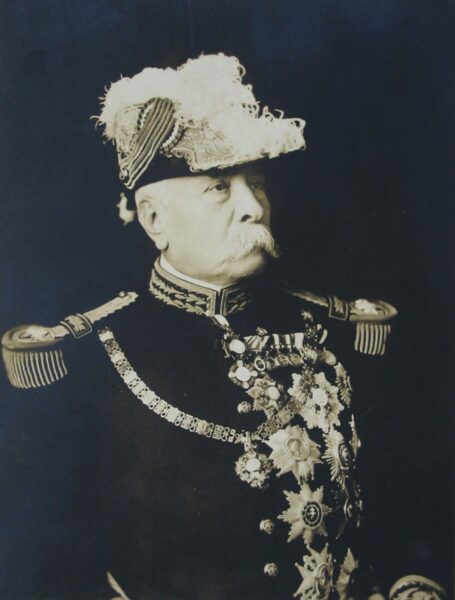
I don’t know if the name of the hotel’s casual restaurant is intended as a play on the Spanish greeting or as a punning reference to the controversial Mexican president-cum-dictator Porfirio Díaz who had a close association with the hotel in its early days.
[From Wikipedia – Public Domain]
In 1876, under the Plan de Tuxtepec, Díaz ousted President Sebastián Lerdo de Tejada by defeating federal forces at the Battle of Tecoac on 16 November. He assumed the presidency in early 1877 and despite the no-reelection principle that had been the stated reason for his rebellion, he controlled the reins of power until the Mexican Revolution in 1910.
Díaz maintained his grip on power using what was called the pan o palo system. In English, pan o palo would translate to “bread or stick.” The bread offered rewards like economic benefits, land grants, or political favors to his allies and supporters while his opponents faced the sticks of violence, imprisonment, exile, or death enforced by the army and rurales police with the latter killing more than 10,000 people using a tactic called the ley fuga. This involved authorities staging or provoking a prisoner’s escape attempt, then shooting them as a supposed fugitive and provided the means to bypass formal trials.
However, it isn’t his repressive tactics alone that make Díaz controversial. México experienced considerable growth and Western style progress throughout his regime. His achievements included:.
- A significant expansion of railroads and telegraph lines that enabled the efficient transport of goods while improving communication and reducing banditry.
- He oversaw a revived mining industry using new mercury-free processes that focused on industrial minerals like copper and silver.
- Textile production and manufacturing grew in urban factories that were often steam-powered. This created wage producing jobs for urban workers.
- Foreign trade value rose tenfold exceeding $250 million annually by 1910. This increased trade coupled with the modernization of the banking system allowed the government to repay international debts.
And it was to this last area that the Hotel Geneve’s policy of welcoming solo female travelers made a noteworthy contribution.
The policy was read as a signal of México’s embrace of progressive, cosmopolitan, European-level sophistication and safety standards. This appealed to foreign capital and tourists from Europe and the US. Solo female travelers – often affluent Europeans or Americans – represented the growing global tourism market Díaz sought to tap. Their positive experiences and word-of-mouth reinforced investor confidence and, in a virtuous cycle, drew more elite international visitors whose presence polished the nation’s image for investors at least indirectly fueling export and infrastructure growth.
Porfirio Diáz was dining with his family at the hotel’s Palm Garden restaurant on 20 November 1910 when the revolution that would oust him from power began. He died in exile in Paris on 2 July 1915.
You might know Frida but do you know Guillermo?
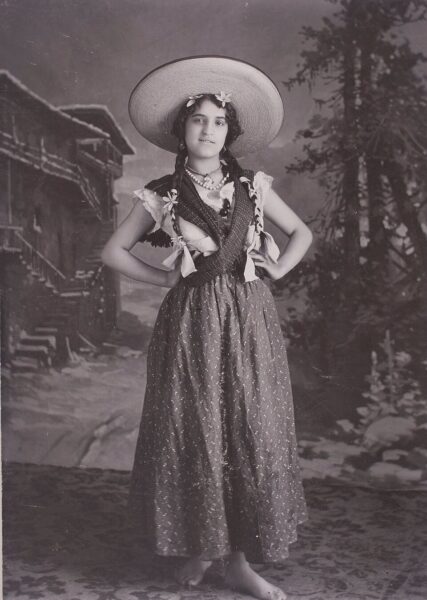
On 6 July 1907 in a small house in what was then the village of Coyoacán, Matilde Calderón y González de Kahlo
[From Wikimedia by Guillermo Kahlo – Public Domain]
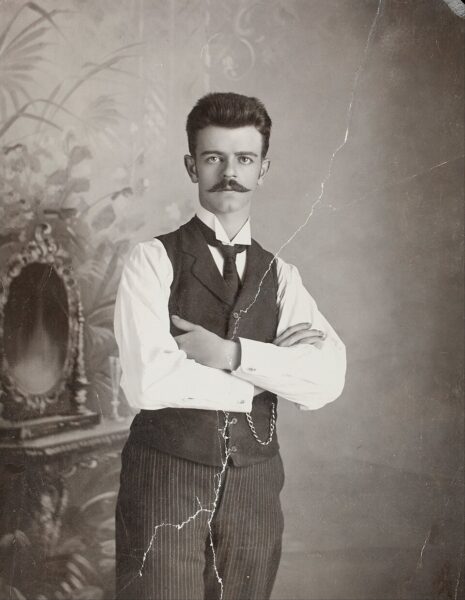
gave birth to a daughter she named Magdalena Carmen Frida Kahlo y Calderón but who would be called simply Frida. Frida’s father, Carl Wilhelm Kahlo,
[From Wikimedia by Guillermo Kahlo – Public Domain]
was born in Germany and had emigrated to México in 1891 where he adopted the name Guillermo. In 1901, Kahlo set up a photographic studio. While working for El Mundo Ilustrado and Semanario Ilustrado he received a government commission to take architectural photographs and he eventually became the official photographer of the Presidency of the Republic of México during the later years of Porfirio’s rule. In 1907 he took the first photos of the newly opened Hotel de Geneve.
[From the Hotel Geneve]
At the end of the hotel tour, we sat down for supper in the large atrium.
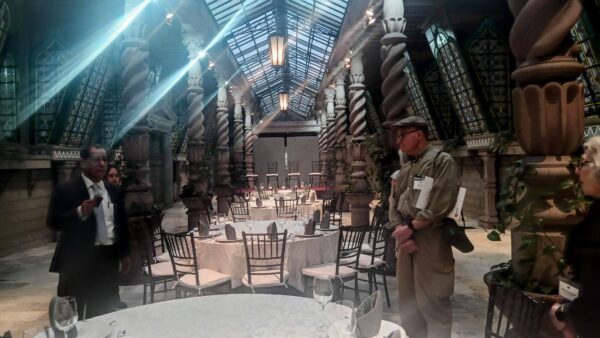
I joined five others in the group as we began to learn about one another and prepare for the real action that begins tomorrow. Here are a few other photos of the present iteration of the Hotel Geneve.
But first a few words about the geology of the Valley of México
Sorting the entries for my series about my time in CDMX and those that are part of my Olympic Host Cities series has been a bit of a challenge. Until my trips to Lake Placid and Antwerp, my visits to Olympic host cities had been coincidental. Thus, it was sensible to include geological and archaeological posts. In this case, it’s a bit more challenging because significant elements of my time in CDMX incorporate elements – particularly regarding archaeology – that are usually exclusive to the Olympic posts.
On reflection, I think Earthbound Expeditions did a fine job curating the trip but much of what we saw and did was temporally non-linear and this chafes against my usual presentation. However, I do think we can take a small detour into the geology of the Valley of México before the group begins its tour. That will be the next post. Think of it as a Monday night dream (or nightmare) before we set out Tuesday morning.
-
Photos and their stories – Lisbon – Summer 2026 part two – plus an egg-straordinary bonus
August 21, 2026 -
Photos and their stories – Lisbon – Summer 2026 – part one
August 21, 2026 -
The indigenous people of Da?ow?aga? (Olympic Valley and me supplement three)
August 19, 2026 -
The indigenous people of Da?ow?aga? (Olympic Valley and me Supplement two)
August 17, 2026 -
Olympic Valley in the time before humans (Olympic Valley and Me Supplement one)
August 14, 2026