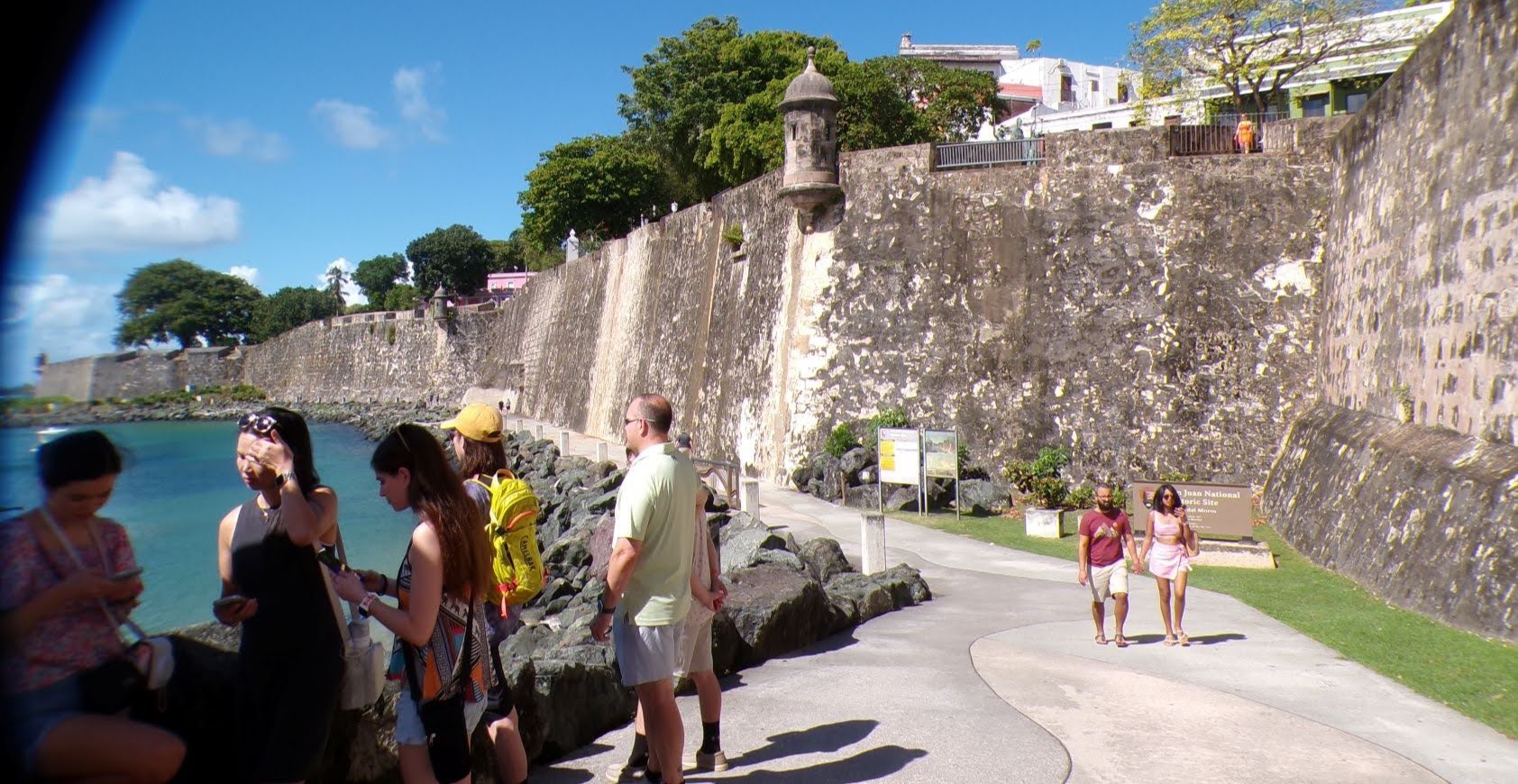
A visit to Old San Juan – Part two
When I ended the previous post, in the story of the Taíno, they were experiencing 15 years of normalcy after Cristoforo Colombo departed in late November 1493. Another Spanish visitor arrived in the interim and had initially made friendly contact with the Taíno people, including the principal Taíno cacique Agüeybaná I, a diplomatic leader who fostered
[From FH Dolls]
and facilitated that relationship. Still, the decisions by Juan Ponce de León in August 1508 portended not merely an end to their normalcy but ultimately an end to the Taíno as the dominant culture on the island.
In that year, after establishing the first European settlement called Caparra, he led an expedition that confirmed gold placer deposits in the island’s western regions. As the Spanish began exploiting this gold, rising tensions between the two cultures were exacerbated when Agüeybaná I died around 1510.
Taíno Rebellion
The Spanish had begun using forced labor and were treating Taíno as virtual slaves in gold mines, farms, and construction. They suppressed Taíno traditions, rituals, and social structures, forced them to learn Spanish, and had a program that mandated conversion to Catholicism.
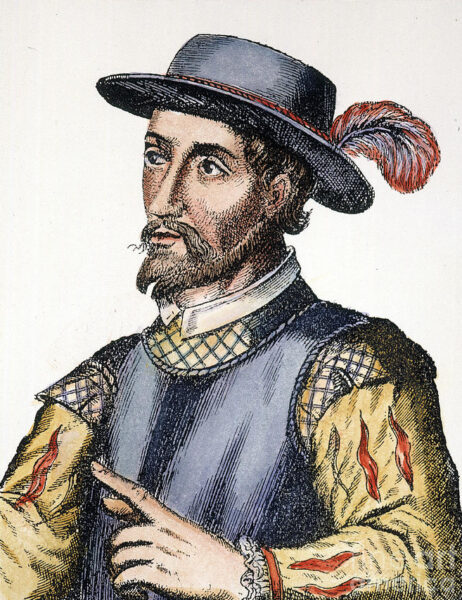
Agüeybaná I’s successor, Agüeybaná II, rejected the prior alliances, united several caciques, and began testing and defying Spanish claims of superiority. The conflict ignited in 1511 when Taíno leaders, led by Agüeybaná II, who would later come to be called ‘El Bravo’, drowned Spanish officer Cristóbal de Sotomayor to disprove Spanish claims of divinity. They burned his western settlement and attacked the Spanish across Borinquén. After Guarionex, cacique of Utuado, attacked the village of Sotomayor and killed eighty of its inhabitants, now Governor de León,
[From Wikipedia – Public Domain]
led the counter attacks. The Taíno Rebellion ended at the Battle of Yagüecas in 1511. It was here that, even before the battle began, a Spanish soldier shot and killed Agüeybaná II. Despite outnumbering the Spanish by as many as 150 to 1, they retreated and became disorganized. By 1512, de León had quashed the organized rebellion though he didn’t succeed in fully ending the fighting as Agüeybaná II’s followers continued a series of guerilla style attacks.
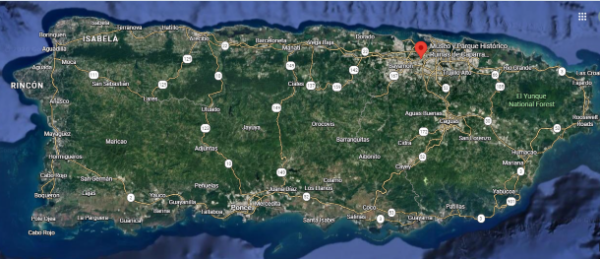
As noted above, de León established his initial settlement at Caparra a bit inland from present day San Juan
[From Google Maps]
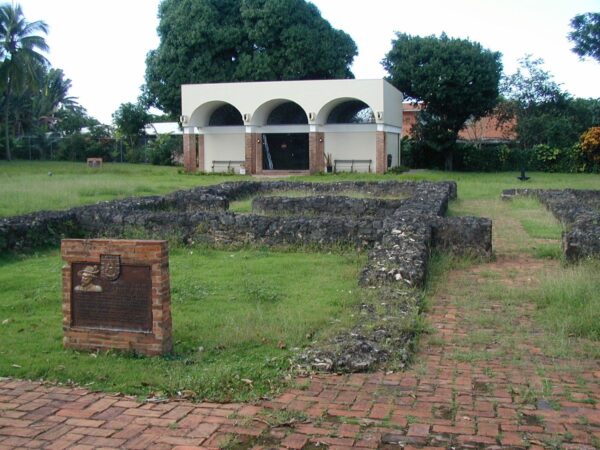
where he built a fortified house, a storehouse, and some basic infrastructure there overseeing the exploration for the island’s gold.
[From Wikipedia – By Frederic Gleach, CC BY-SA 2.0]
Although the Taíno population was rapidly dwindling from the combined pressures of disease, enslavement, and conflict, their guerilla attacks continued throughout the next decade. These raids compounded the difficulties faced by a site surrounded by dense mangroves and with a poor harbor. The Spanish fully abandoned Caparra by 1521. But they didn’t move far.
Settling San Juan
Even as early as 1511, some Spaniards living in Caparra began relocating to the more strategic islet at the mouth of the bay – the site of present‑day Old San Juan. The then unnamed town was functioning as the principal Spanish settlement and the creation of the Catholic diocese together with the construction of a wooden cathedral around 1513 made it the island’s religious center.
By 1521 Caparra was fully abandoned, and in the decade since settlement began, the new town had its basic street grid and main plazas – Plaza de Armas and Plaza de la Catedral in place. The town was formally established on 15 August 1521 and given its official name – Ciudad de San Juan Bautista de Puerto Rico. Today we simply call it San Juan and it’s the oldest city under US jurisdiction.
Almost immediately, construction began on the city’s first permanent structure – Ponce de León’s family home that he would call Casa Blanca. (There’s no association with either the movie Casablanca or the Casa Blanca at 1600 Pennsylvania Avenue in Washington, DC.)
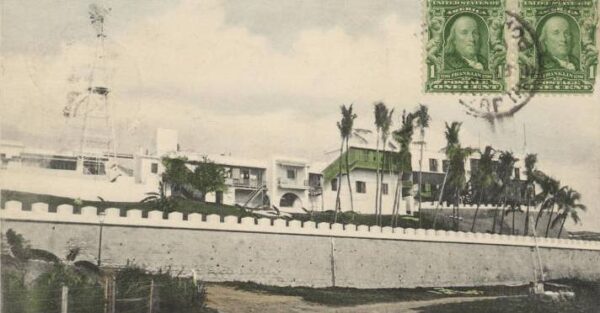
[From Wikipedia – Public Domain]
Other early houses clustered near the harbor and central plazas and, as was common for the time, the Church and royal officials dominated Spanish civic life. Meanwhile, disease, overwork, and violence in the gold mines perpetuated the drastic decline of the remaining Taíno population. The few who remained were being further displaced from the growing town.
But this population decline presented a problem for the Spanish occupiers. It diminished their slave labor force. The Spanish Crown’s solution was authorizing the importation of African slaves. While the first slaves likely arrived concurrent with the earliest settlement around 1513 the slave trade in Puerto Rico gained its formal structure in 1517.
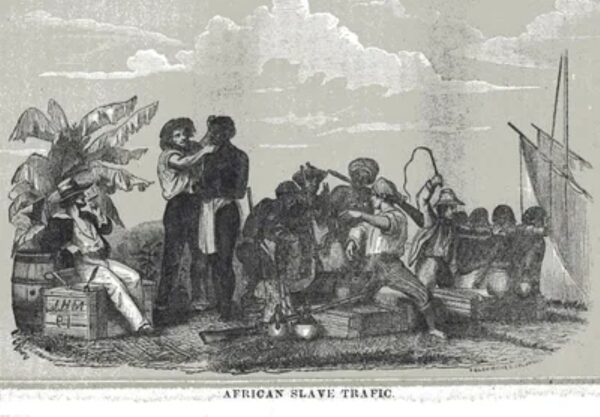
[From The Haitian Revolution – Public Domain]
Among the other advantages the Spanish gained in the move from Caparra to San Juan was that it could guard the eastern edge of Caribbean sea-lanes. Conversely, this made it an attractive target for rival powers and privateers. Facing the dual threat from the sea on one side and the remaining Taino resistance on the other, Spain began constructing substantial defenses in the 1530s. These included La Fortaleza
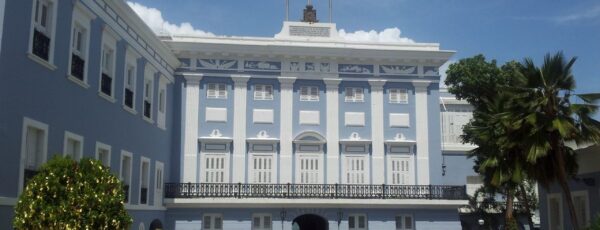
(that today serves as the governor’s residence) and the first batteries of Castillo San Felipe del Morro
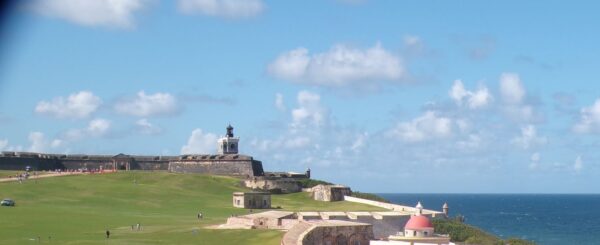
with the latter guarding the bay entrance.
Between roughly 1530 and the mid‑1600s, they built, and largely completed, a continuous stone wall that 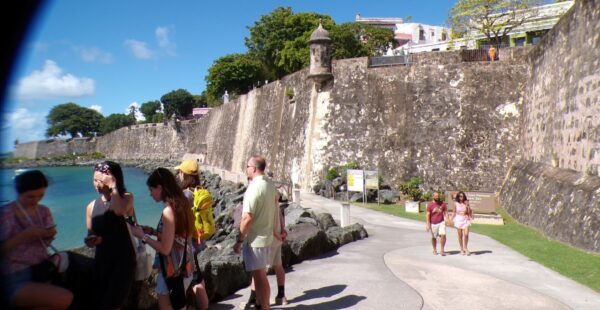
gradually encircled the town and cemented Old San Juan’s identity as a compact, heavily fortified colonial city. These walls proved essential in defending the city from attacks by British (1595, 1797) and Dutch (1625) forces.
Remember the Maine – Becoming a US Territory
Now let’s jump to the end of the nineteenth century – 1898 to be precise – and look roughly 1,1oo miles (1,800 kilometers) to the northwest and the island of Cuba.
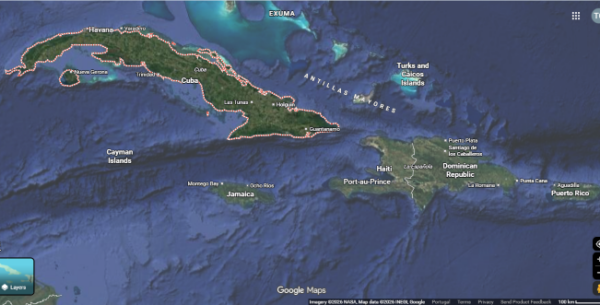
[From Google Maps]
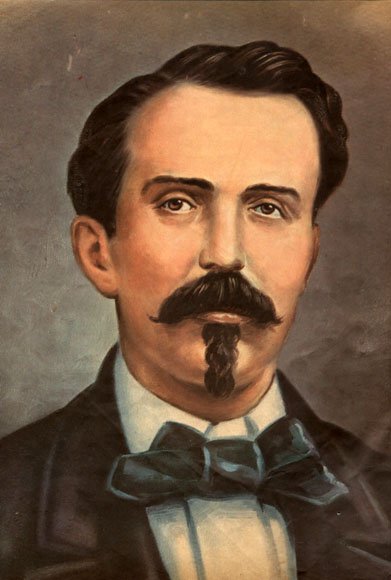
On 10 October 1868, Carlos Manuel de Céspedes
[From Wikipedia – Public Domain]
rang the plantation bell summoning his slaves and followers. Proclaiming emancipation, universal suffrage, and a republic free from Spanish rule, he freed a reported 30 slaves. Known as the Grito de Yara (Cry of Yara), it marked the beginning of an uprising of criollos, farmers, and Afro-Cubans that became the Ten Years War.
Using guerilla style tactics, these somewhat disorganized bands kept the Spanish engaged until the 1878 Pact of Zanjón. This treaty granted amnesty to the rebels and promised a gradual end to slavery but, while promising to give Cuba the same political status as Puerto Rico including limited representation in the Spanish parliament, it fell short of granting full independence.
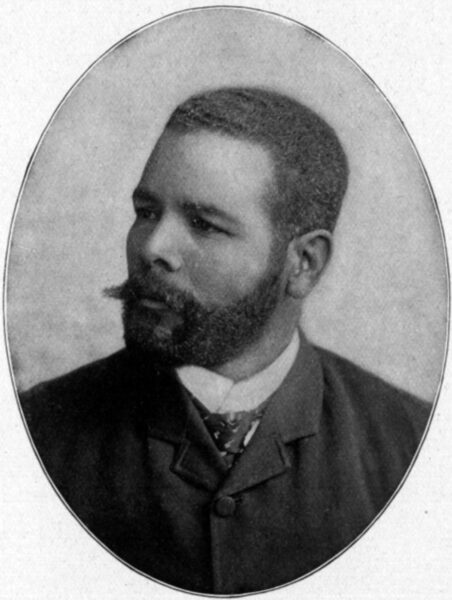
And not all the rebels agreed. Exacerbated by Spain’s failure to grant autonomy equivalent to Puerto Rico, fully abolish slavery, or honor amnesty and political freedoms, Calixto Garcia organized the Cuban Revolutionary Committee in New York and issued a manifesto denouncing Spanish rule. Antonio Maceo
[From Wikipedia – Public Domain]
led the Protest of Baraguá in March 1878 that rejected the pact outright. And so there was the Little War that lasted from August 1879 until September 1880.
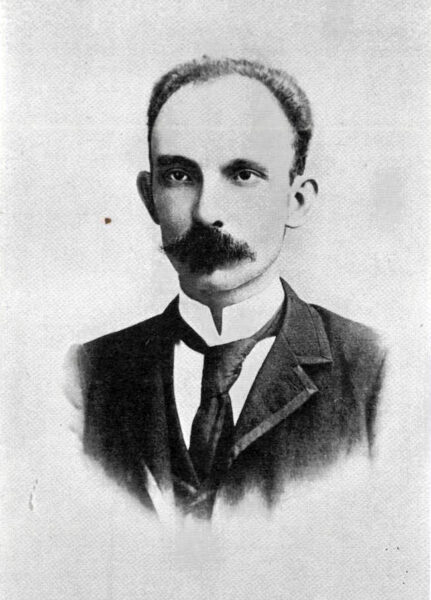
We move forward to 1895 when the exiled José Martí
[From Wikipedia – Public Domain]
organized the final push for Cuban independence. When he returned from the US, landing with Máximo Gómez and Antonio Maceo on 24 February 1895, it sparked island-wide uprisings that the Spanish brutally repressed over the ensuing three years drawing American public outrage.
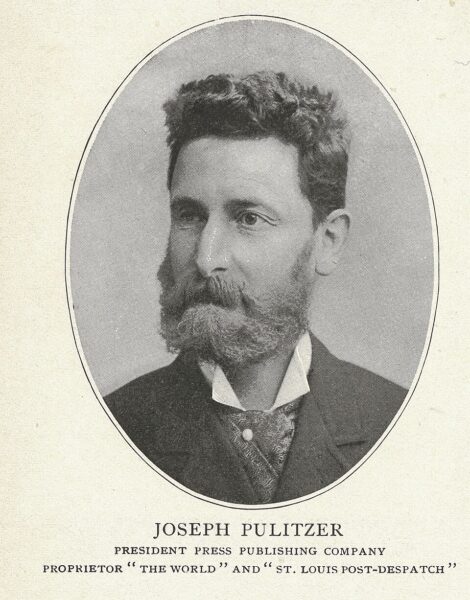
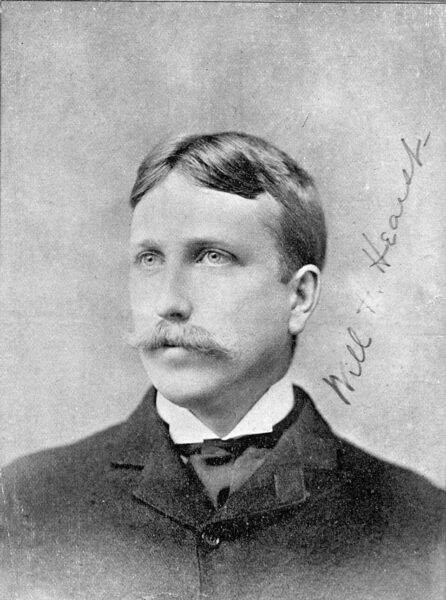
Amplified by US economic interests, sensationalist journalism fueled by readership demand and led by Joseph Pulitzer
[From Wikipedia – Public Domain]
and William Randolph Hearst
[From Wikipedia – Public Domain]
public pressure grew on President William McKinley to intervene. And intervene he would.
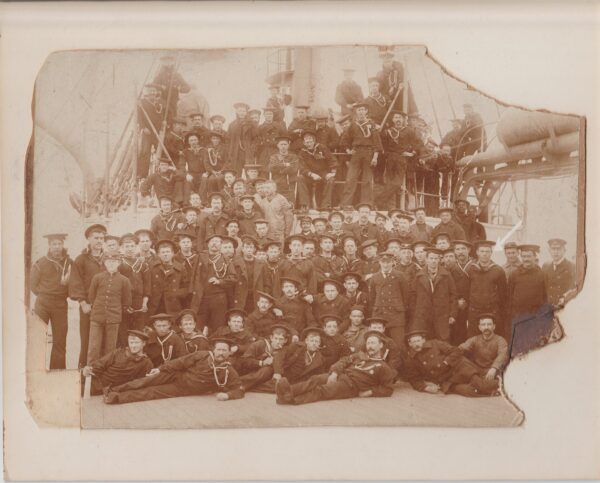
On 15 February 1898, just days after Hearst’s New York Journal published a stolen letter from Spanish minister Enrique Dupuy de Lôme that called McKinley weak, the USS Maine exploded while docked in Havana harbor killing 266 American sailors.
[From Wikipedia – Public Domain]
With no evidence, press and officials blamed a Spanish mine. (Later independent investigations concluded that the blast was accidental and most likely caused by spontaneous coal bunker combustion adjacent to munitions.)
The new rallying cry became, “Remember the Maine!” On 22 April 1898 the US Navy instituted a Cuban blockade trapping the fleet of Admiral Pascual Cervera y Topete
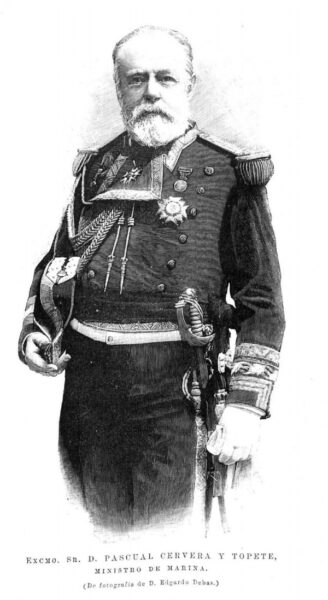
[From Wikipedia – Public Domain]
for more than a month. Troops under General William Shafter landed at Daiquirí and Siboney in June, winning battles at Las Guasimas, El Caney, and San Juan Hill (where Teddy Roosevelt’s Rough Riders charged). When Cervera attempted to breakout on 3 July, US firepower destroyed his fleet. US forces besieged and captured Santiago on 17 July.
The war ended on 12 August when the parties signed an Armistice but this didn’t fully end the hostilities in the Caribbean. US forces had landed on Puerto Rico in July 1898 and raised the American flag on 18 October. The US and Spain formally signed the Treaty of Paris on 10 December 1898 with Spain ceding Puerto Rico, Guam, and the Philippines to the US for $20 million.
After ratification by the Senate in 1899 the US initially instituted military rule. The Foraker Act of 1900 replaced military rule with a civil government allowing the “unorganized territory” limited self-rule under a US-appointed governor. The Jones-Shafroth Act of 1917 granted Puerto Ricans US citizenship but perpetuated the island’s territorial status.
We’ve reached Viejo San Juan at last. I hope you enjoyed the ride and that you learned a little on the way. Next, join me in my walk around the city.
-
Photos and their stories – Lisbon – Summer 2026 part two – plus an egg-straordinary bonus
August 21, 2026 -
Photos and their stories – Lisbon – Summer 2026 – part one
August 21, 2026 -
The indigenous people of Da?ow?aga? (Olympic Valley and me supplement three)
August 19, 2026 -
The indigenous people of Da?ow?aga? (Olympic Valley and me Supplement two)
August 17, 2026 -
Olympic Valley in the time before humans (Olympic Valley and Me Supplement one)
August 14, 2026