Olympic (Squaw) Valley and me – part two
On using Squaw Valley.
Historically, California had two areas called Squaw Valley – one in Fresno County and the one in Placer County that hosted the 1960 Winter Olympics. The residents of the latter began referring to their community as Olympic Valley partly to avoid confusion and partly to counter the complaints filed by Fresno County which had received the imprimatur for the name Squaw Valley from the United States Board on Geographic Names (USBGN) in 1957.
In September 2022, the USBGN renamed the Fresno location Yokuts Basin as part of a program to remove “squaw” from geographical names across the country. In that same year, the Board officially designated the Placer County location as Olympic Valley.
Wikipedia reports:
In August 2020, the resort announced it planned to change its name. Resort President Ron Cohen said in a statement, “While we love our local history and the memories we all associate with this place as it has been named for so long, we are confronted with the overwhelming evidence that the term ‘squaw’ is considered offensive.”
In September 2021, the resort officially became Palisades Tahoe and, in 2022, Placer County renamed the road leading to the resort and Squaw Valley Road became Olympic Valley Road.
However, the official Olympics website still cites the location of the 1960 Games as Squaw Valley. These Games are (based on my less than extensive research) the only Olympics where the entirety of the Games bear the name of a resort rather than a host city. (Resorts have hosted events. The Whistler Blackcomb Resort hosted all Alpine skiing competitions in the Vancouver Games but that Olympiad remains the Vancouver Games.) Thus, for consistency and familiarity, I will use this now outdated term. Unlike the museum at High Camp, I will not use a grawlix. I respectfully request the indulgence of the indigenous Washoe people and all others for whom this term remains offensive.
Recounting my visit
A distinguishing, but not unique, aspect of my trip to Palisades Tahoe – the resort once known as Squaw Valley – is that like Lake Placid it’s unlikely I would have ever traveled there had it not hosted the Olympics.
(Antwerp’s history of having once hosted the Olympic Games was the deciding factor in my choice to visit there rather than Bruges on my 2025 trip to Belgium. In truth, Antwerp’s status as an Olympic host was one factor in opting to start that trip in Belgium but only after considering other nearby host cities such as Amsterdam, Munich, and Berlin.)
Another element differentiating Squaw Valley and Lake Placid from the other hosts is that I rarely sought any remnants of their Olympic Games. In many places, such as in this picture of Helsinki’s Olympic Stadium,
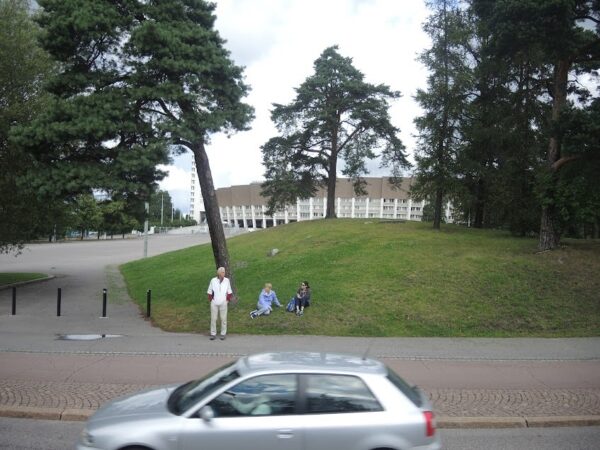
all I did was pass by a venue and, unlike Helsinki, often without any photographic reminder.
Surprisingly little to see
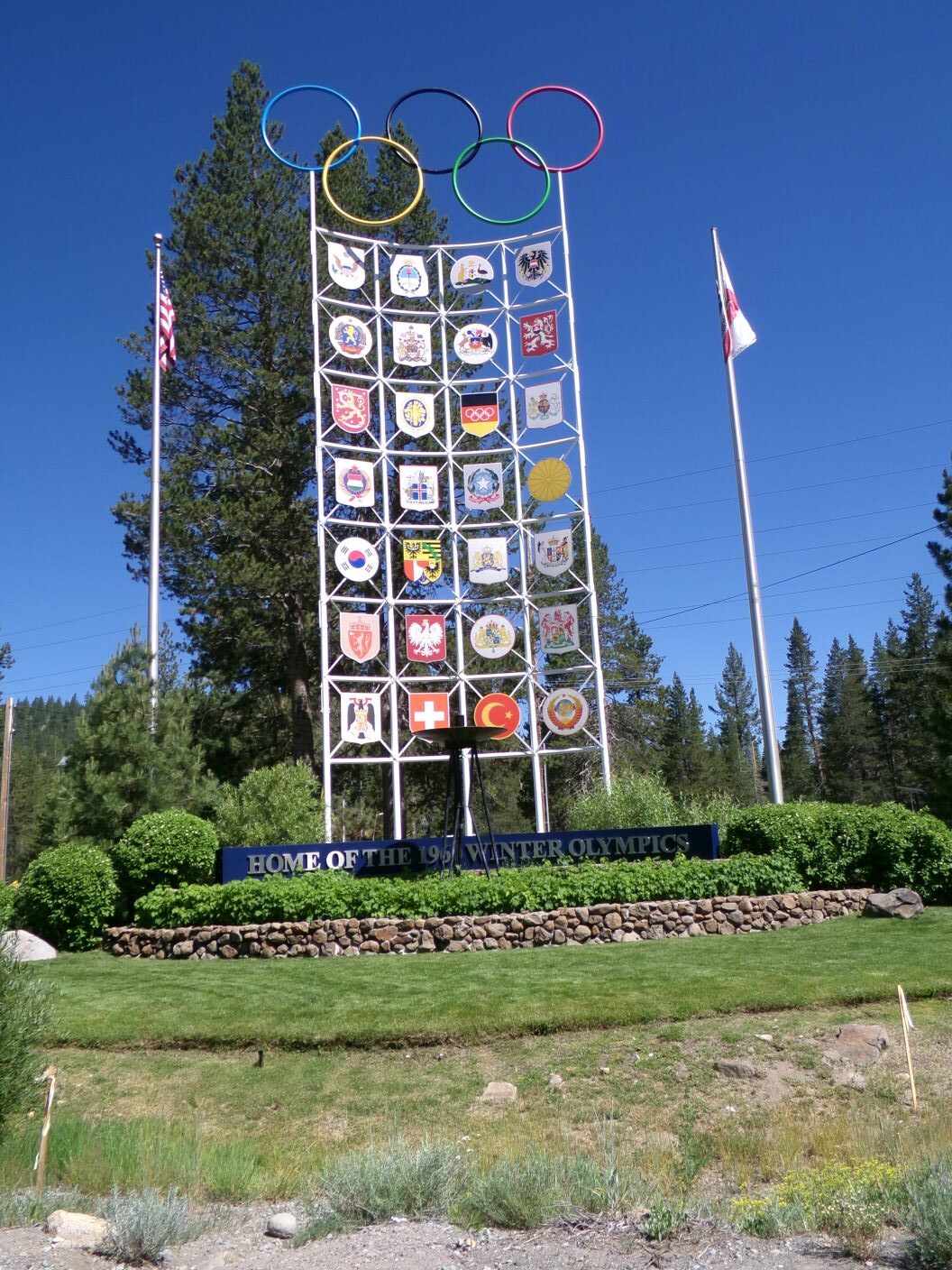
The photo at the top of this post shows the Tower of Nations and the Olympic Cauldron at the junction of California Route 89 and Olympic Valley Road about 10 miles from the actual site of the 1960 Games. When I reached the venue, I learned that, other than the ski slopes, none of the competition venues still exist. Further, there’s only one clearly identifiable building still standing that was used for the Games.
Here’s what happened to them:
The Blyth Memorial Arena: Built for the Games and used for ice hockey, figure skating, and ceremonies was demolished in 1983 after its roof collapsed from the weight of a heavy accumulation of snow.
The Papoose Peak Ski Jumping Hill: Used for ski jumping and Nordic combined was dismantled in 1973. It’s now the site of the Far East Express Chairlift.
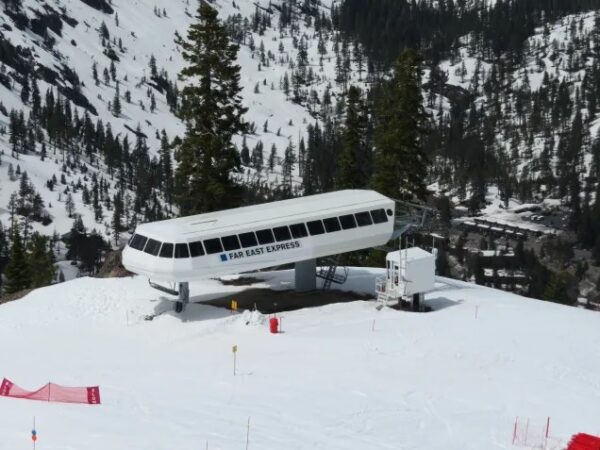
[From liftblog.com]
McKinney Creek Stadium: Used for cross-country skiing, Nordic combined (cross-country element), and biathlon was intended as a temporary structure – as were the East Rink and Speed Skating Oval. All were demolished soon after the Games closed.
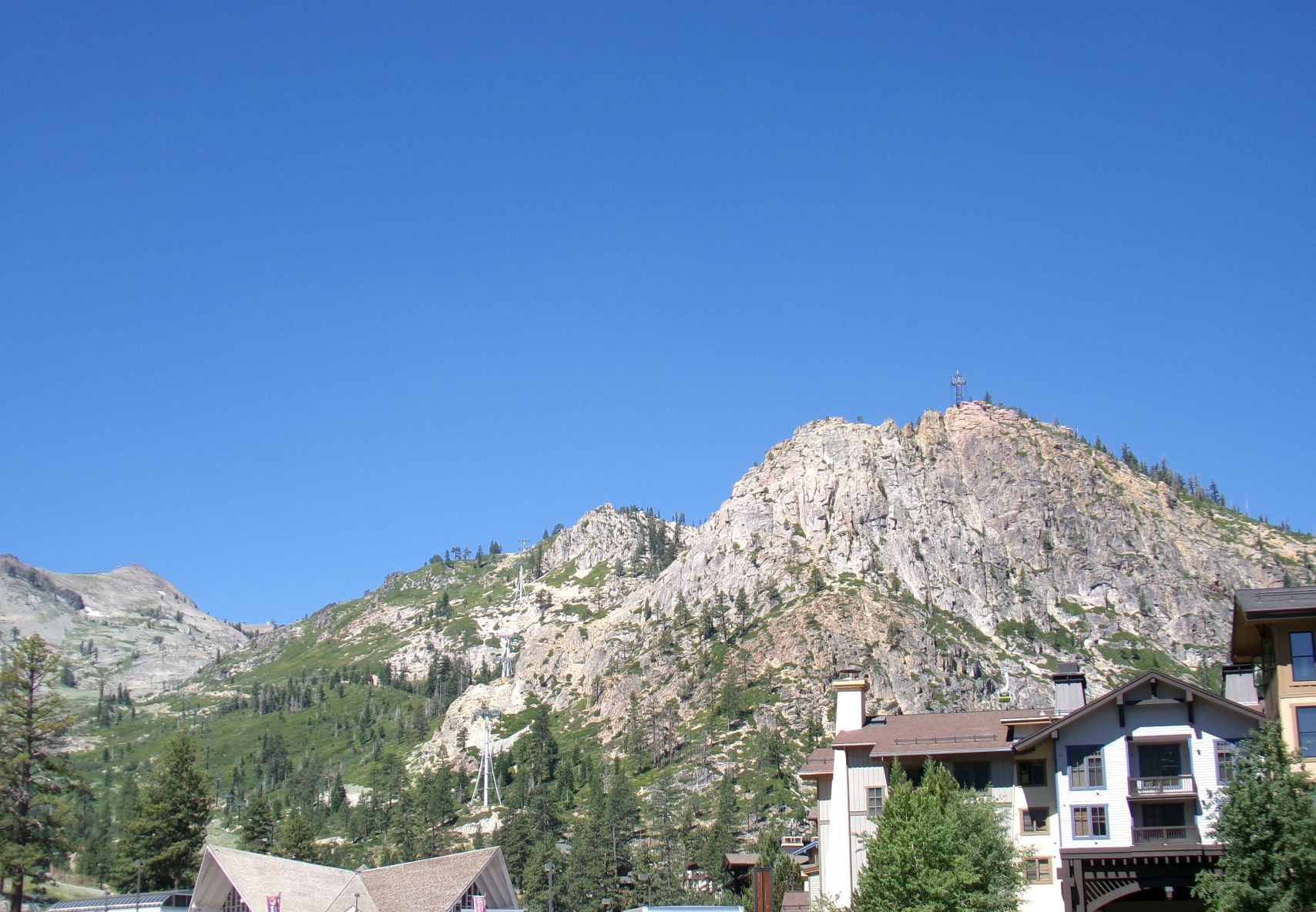
What you find at the site in 2026 is a large ski village resort – a collection of hotels, restaurants, and retail. Pull into the massive parking lot, look around and
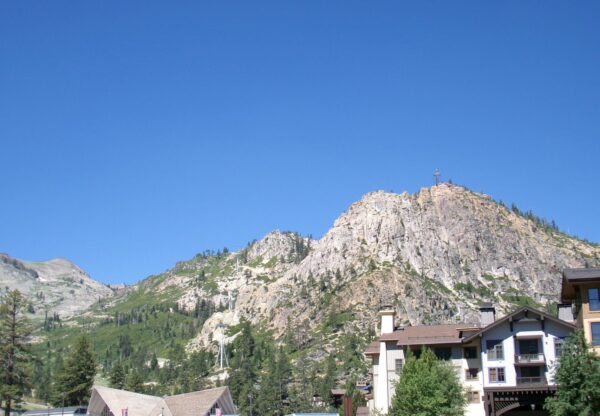
it becomes clear
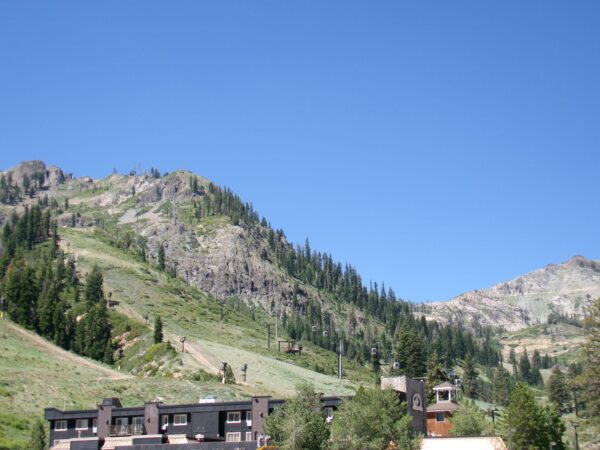
that you’re in a valley even though you’re more than 6,000 feet above sea level.
Here’s a 23 minute video tour of the resort. Watch as much (or as little) of it as interests you.
As for me, after walking around the village a bit, I decided to ride the aerial tram to High Camp. There were expansive views on the rides up and down its significant change in elevation covering nearly 2,000 feet in a 10 -minute ride. Although it was lunch time, the restaurant had yet to open so I walked briefly around the area and then went into the Olympic Games Museum where among the very first things I saw was this sign that triggered the rant below.
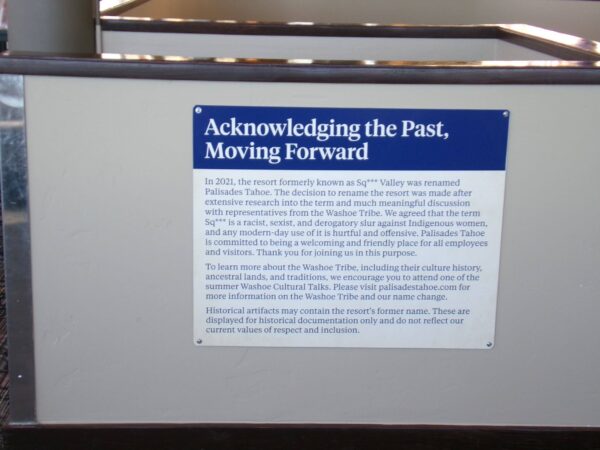
I’ll start by emphasizing that I don’t believe in using language in a way intended to demean, insult, belittle, exclude, or offend a listener or reader. I am well aware that some words and expressions, because of past usage, carry a weight that makes them inherently offensive or exclusionary. With that said, I think societally, we’ve overreacted in our use of euphemistic or other adaptations and for me the sign in the above photo exemplifies this.
Beyond some sort of hypersensitivity, what does using a grawlix accomplish? I don’t find changing the name to better reflect “current values of respect and inclusion” problematic in any way. But, in this context, is anything achieved by substituting Sq*** for Squaw? We all know what the full word is and will read the sign that way. Is the author of this text trying to position themself as somehow morally superior because I filled in the blanks and read “Squaw” but they didn’t actually write it?
Even the most farsighted among us are likely to find our own moral compasses limited and constrained by the views of our time, our education, our experiences, our social groups, etc. The word “nigger” appears at least 210 times in The Adventures of Huckleberry Finn yet Mark Twain’s general portrayal of slavery and racism – principally through his use of irony and a child’s perspective – is of a morally corrupt system that dehumanizes black people. (If I’d written “n-word,” it likely wouldn’t change your reading of the previous sentence.) Twain isn’t perfect and this allows some who apply a 20th or 21st-century perspective to assert that his satire falls short of its goal. This alters the controversy his book initially generated among conservative, predominantly white readers and librarians who were uncomfortable with the novel’s satire of Southern society, religion, and slavery. Some saw it as unpatriotic or morally dangerous. A library in Concord, Massachusetts banned it, calling it “trash” and “suitable only for the slums” while criticizing its subject matter, language, and moral tone.
I think George Carlin’s 1990 critique of “soft language” sums up my feelings on the matter.
Rant over.
An uninspiring museum
My first visit to an Olympics museum happened last summer in Lake Placid. Perhaps because the town hosted the Games twice, it has a larger and more engaging museum than the one at High Camp. The latter, however, has more engaging views.
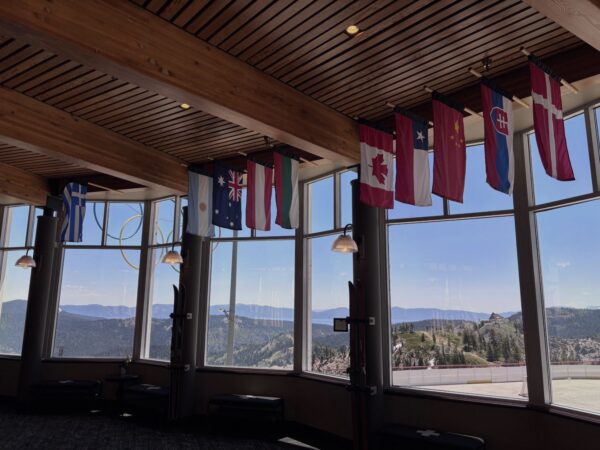
Another factor in having an underwhelming museum could be that since this site is, and always has been, a commercial resort, and there’s no municipal pride in preserving any extensive Olympics heritage, the museum is something of an afterthought. It’s here that I found a photo of the Tower of Nations in its original site.
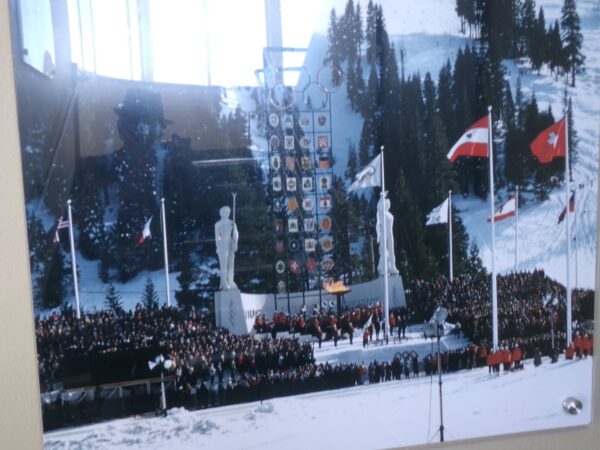
There are other artifacts throughout – some identified and others not – and many were difficult to photograph because of the glare from the windows.
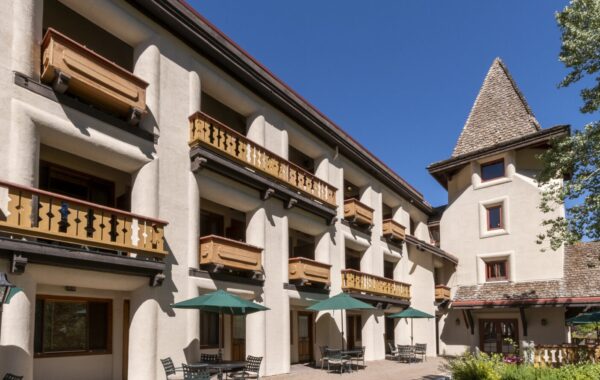
From there, I rode the aerial tram back to the valley, had some lunch, and walked over to the lone remaining building – now the Olympic Village Inn. At the time, it served as the first self-contained Athlete’s Village for a Winter Olympics Games.
Dipping a toe in Tahoe
The new name of the resort is Palisades Tahoe and the lake
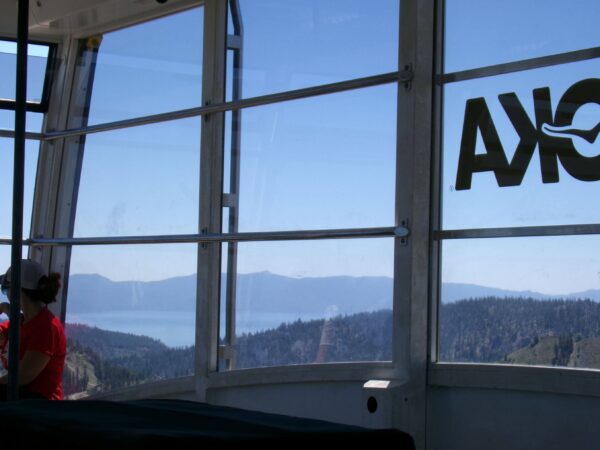
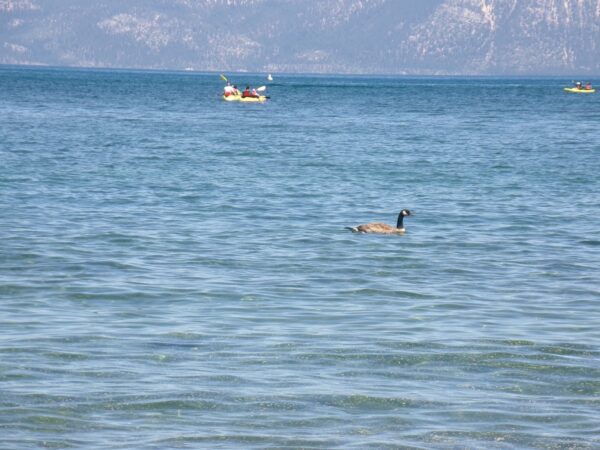
is easily visible from the aerial tram on the ride from High Camp and, as the largest natural fresh water lake west of the Mississippi River, it certainly plays a substantial role in the area’s geography. So, after my walk past the Olympic Village Inn, I made the short 15-minute drive to Tahoe City. I considered visiting the Gatekeeper’s Museum but
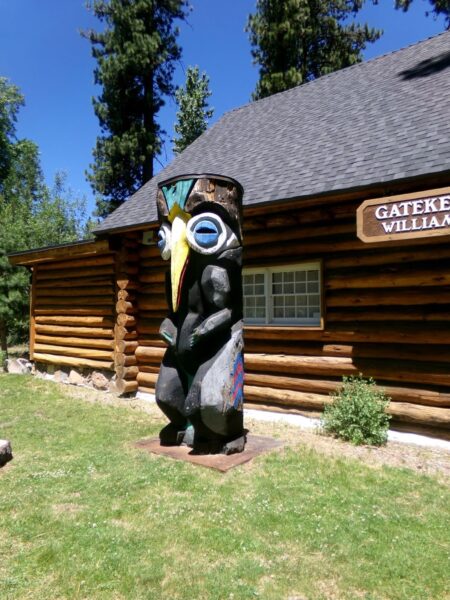
after a brief conversation at the admission desk, I chose not to because I felt the exhibits wouldn’t provide much additional information of the sort I sought. I did, however, take the short walk to Lake Tahoe, remove my shoes and socks, and dip my foot into and quickly remove it from the quite cold lake water.
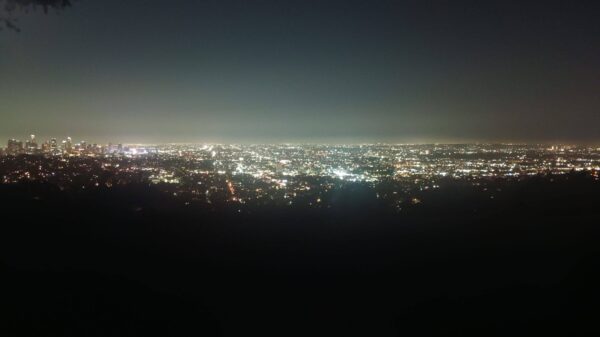
That wraps up my Thursday visit to Olympic Valley. Friday I flew to Los Angeles for some family activities that ended with a Sunday night walk with my nephew and one of my grandnephews up into Griffith Park where we enjoyed a nice view of Los Angeles.
-
Photos and their stories – Lisbon – Summer 2026 part two – plus an egg-straordinary bonus
August 21, 2026 -
Photos and their stories – Lisbon – Summer 2026 – part one
August 21, 2026 -
The indigenous people of Da?ow?aga? (Olympic Valley and me supplement three)
August 19, 2026 -
The indigenous people of Da?ow?aga? (Olympic Valley and me Supplement two)
August 17, 2026 -
Olympic Valley in the time before humans (Olympic Valley and Me Supplement one)
August 14, 2026
3 responses to “Olympic (Squaw) Valley and me – part two”
Dear T, now you have stood on the mountain on which I cut my (skiing) teeth. I’m glad you made it there despite the fact it was primarily to tick off a location on a list. 😉
If only I’d known this was such a place for you, maybe I’d have visited sooner and not only to complete my list. You’re so much more physically adventurous than I. Certainly I can promise that if I ever get to Alpe d’Huez, it won’t on a bicycle!
Ah, but you have explored, walking, so much more extensively throughout the world than I ever will, and we hope to share some of that type of discovery with you again somewhere someday.