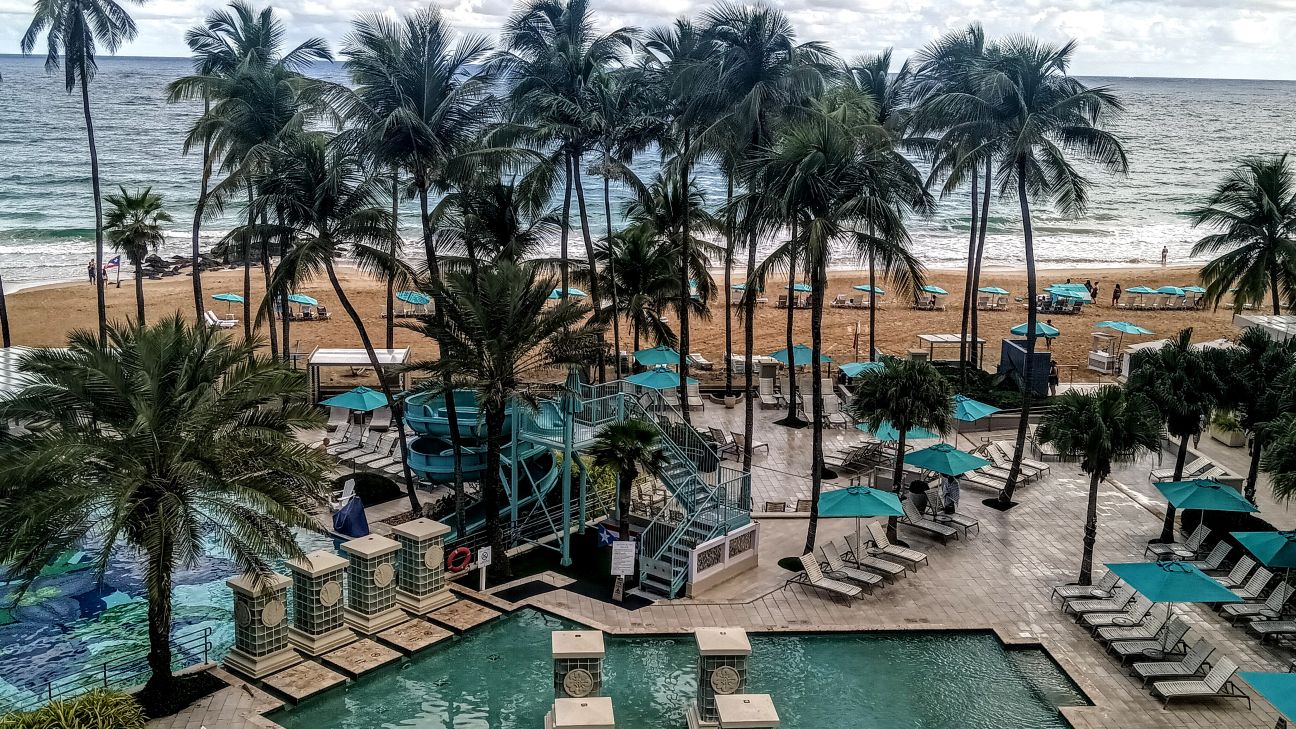
A visit to Old San Juan
More than a dozen years ago, I recounted a Thanksgiving week trip to Atlanta that included a stop in Whitwell, TN plus some days with my sister hosting the family in Atlanta. Until my mother died in 2008, our clan would usually gather at our parents’ house for this home bound American celebration. My sister mainly took over that role but there have also been a few years when my Texas nephew E and his family have hosted. However, as time has passed and everyone has aged and the family has geographically spread to further corners of the country, it’s become a tradition we no longer maintain annually.
While it’s not unusual for the Maryland women’s basketball team to play in some sort of holiday tournament in a typically warm locale I’d never traveled to one of these in part because of our family tradition. With no family gathering planned for 2025, I used the opportunity to travel to San Juan, Puerto Rico – a place I’d never been and a place where the Terps would play a pair of games on Wednesday and Thursday. This is the story of those few days.
Adventures in air travel
I’ll go out on a limb and say that, given the security precautions that attend travel in this age, this photo
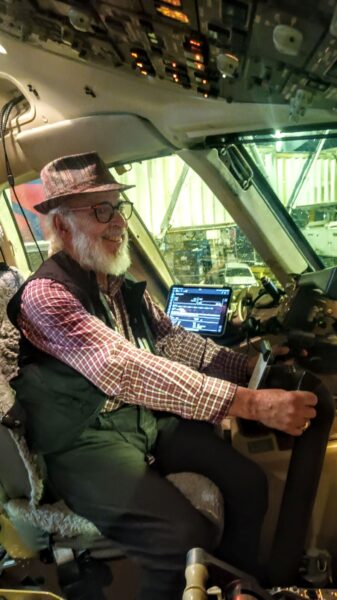
of me striking terror in the guts of the other passengers on Delta flight 1861 from Atlanta to San Juan is one you wouldn’t expect to see in the 21st century. It’s certainly not an opportunity I expected to have. But, surprise, surprise, my flight from DCA to ATL was delayed so long that both it, and my connecting flight to San Juan needed to be rebooked. Then the flight from Atlanta was delayed by mechanical issues and the captain came into the first class cabin and invited any passenger to hop in the seat in the flight deck. (He later went into the main cabin and invited other children to do the same.)
Over my years of travel, I’ve made a general habit on my arrival of taking a photograph of my hotel rooms and the view they afford. In this instance, I was able to take the room’s interior
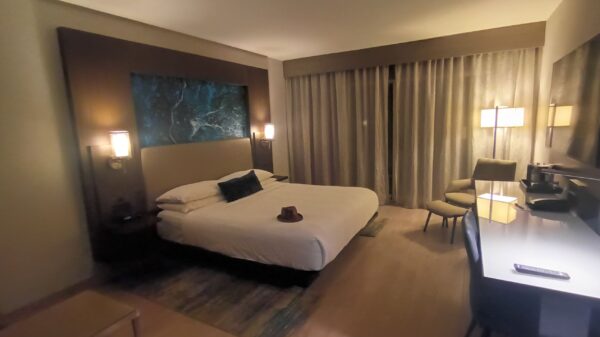
but, because it was nearly 22:45 Tuesday, the view from my balcony
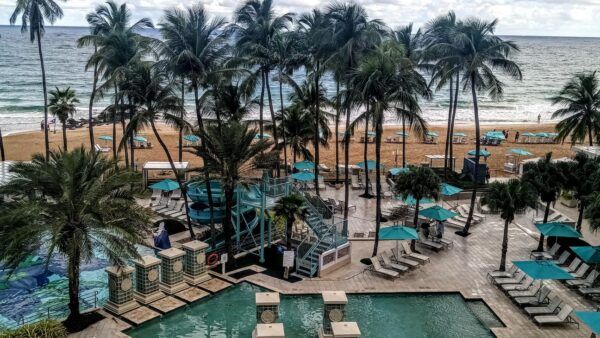
had to wait until Wednesday morning.
Although I’d likely have done so regardless, I opted to stay at the same hotel as the team under the misapprehension that the arena was close to the property. It wasn’t. Neither was the property particularly close to old San Juan though it was closer to the latter than to the former. The Google Maps screenshot shows that Old San Juan is about 6km west of the hotel and the arena where the games would be played about 18km to the southeast.
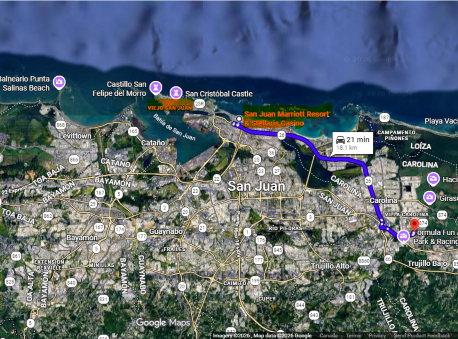
As is my habit, I’d gotten an early start to the morning and taken a brisk walk in the vicinity of the hotel. On my return, I got to briefly chat with several of the players as they were boarding the bus to take them to the arena where they’d spend what seemed to me an unduly long time awaiting the start of their game scheduled for 17:30. However, the late gametime start provided me the opportunity to hop into a taxi and spend some time in the oldest city under US jurisdiction. It’s not a particularly long ride but let me tell you some of the things I’d learned about the island that the indigenous Taíno people called Borikén and that we call Puerto Rico.
First, the first land
When writing for the series Olympic Host Cities and Me, I include at least one post devoted to the geology of the general area. Some of my regular readers find this particularly interesting while others consider it dull or even superfluous. So, to satisfy the first group and frustrate the second, I’m going to include this condensed look at Puerto Rico’s geology. Consider it some intense reading while in the taxi into Viejo San Juan.
Rising from the Puerto Rico Trench, where the Caribbean Plate interacts with the North American Plate, Puerto Rico consists primarily of Cretaceous (145 – 66 MYA) to Eocene volcanic and plutonic rocks (56 – 34 MYA), overlain by Oligocene (34 – 23 MYA) to even more recent carbonates and sediments.
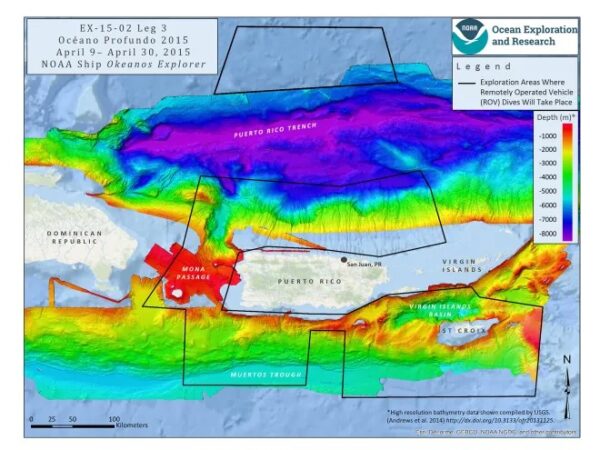
[Map from NOAA – Okeanos Explorer]
Geologists divide the island into three distinct regions: the Cordillera Central with volcanic cores, northern carbonate platforms, and coastal lowlands that, along the north shore, occupy a narrow band 13-19 kilometers wide.
Much of the Cordillera Central was created by tectonic generated volcanic activity. The northern carbonates resulted from Oligocene and Miocene marine deposition, and the karstification, with features such as the mogotes and sinkholes, that dominate the north occurring within the last five million years following the uplift of these rocks above sea level.
The northern coastal lowlands formed through the deposition of alluvial sands, gravels, silts, beach deposits, and aeolianites over older Miocene limestones. (Aeolianites are sedimentary rocks formed by the lithification of sediments, typically sand, deposited by the wind. They are most commonly coastal limestone deposits formed from wind-blown calcareous sand {shell fragments} originating from shallow marine environments.) Sea-level fluctuations from glacial retreat during the Pleistocene generated significant buildup after which rising seas and erosion combined to smooth the surface. It’s here in this narrow band that you’ll find San Juan.
And then the first people
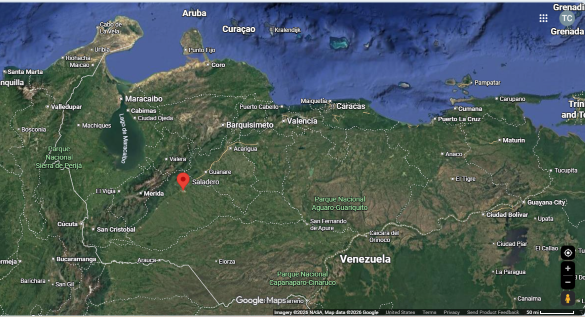
As far as we know, when Cristoforo Colombo and his crew anchored in a bay on the west or northwest coast of Puerto Rico on 19 November 1493, they were the first Europeans to reach the island. They were not, however, the first humans to reach there. The people Colombo encountered in his two day exploration of the island from his anchorage in a bay he named San Juan Bautista would have been Taíno. The Taíno were an Arawak speaking people likely descended from the previous Saladoid culture and who occupied many islands in the eastern Caribbean. (There are no large, unmixed Taíno tribes today but many modern Puerto Ricans, Dominicans, and Cubans have strands of Taíno DNA.) They had displaced an earlier Ortoiroid culture that was the first to arrive on the island from the Orinoco region of South America in present day Venezuela as seen on the Google maps screenshot below.
Evidence from the Puerto Ferro site on Vieques shows that these first people arrived no later than sometime between 2000 and 1800 BCE. Some more recent archaeological evidence at sites like Angostura suggests that human presence on the island could extend that date back a further 700 years.
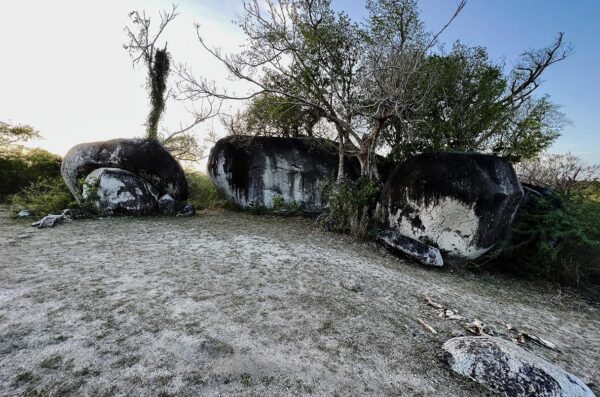
[From Science.org]
Colombo recorded friendly interactions with the Taíno in his brief two day stay and, while he didn’t establish a permanent settlement on the island, he claimed it for Spain before moving on to Hispaniola.
Taíno culture established itself on the island between the seventh and eleventh centuries. By the time of their encounter with Colombo, they had established a primarily agricultural society utilizing conucos (mounded fields) to grow cassava, sweet potatoes, maize, and various kinds of fruit. They lived in organized villages structured around central plazas, bohíos (round houses), and caneyes (rectangular homes for the caciques {chiefs} who led their communities). (The image below is a reconstructed Taíno village on Cuba.)
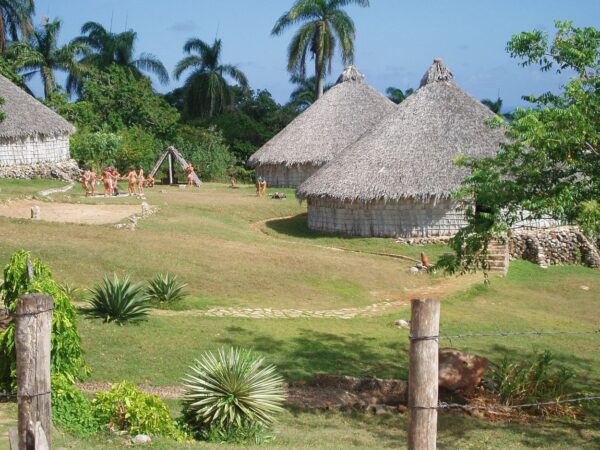
[From Wikipedia By Michal Zalewski – Own work, CC BY-SA 3.0.]
Borikén, the Taíno name for the island means Land of the Valiant and Noble Lord and they practiced a form of animism. (Animism is the belief that natural things and phenomena – such as animals, plants, rocks, rivers, weather, and sometimes human-made objects – are alive or have a distinct spiritual essence.) Their carvings in wood, bone or stone – called zemis – were sacred objects that represented spirits or ancestors.
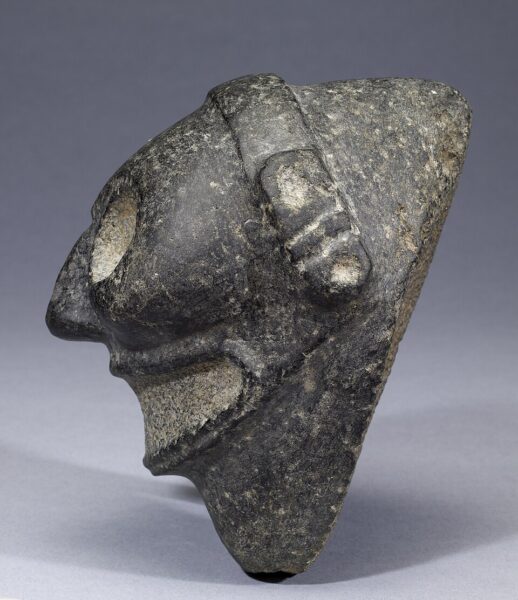
[From Wikipedia – Walters Art Museum – Public Domain]
They continued their traditional lifestyle unaware of the coming Spanish storm that would engulf them a mere 15 years later. And that is the story of the next post.
-
Photos and their stories – Lisbon – Summer 2026 part two – plus an egg-straordinary bonus
August 21, 2026 -
Photos and their stories – Lisbon – Summer 2026 – part one
August 21, 2026 -
The indigenous people of Da?ow?aga? (Olympic Valley and me supplement three)
August 19, 2026 -
The indigenous people of Da?ow?aga? (Olympic Valley and me Supplement two)
August 17, 2026 -
Olympic Valley in the time before humans (Olympic Valley and Me Supplement one)
August 14, 2026