Some things looking better, baby – Getting into Kosovo
Another disappointing border crossing
After our quick drive through Kukës, we approached the border crossing between Albania and Kosovo. There were seven people – a Spanish couple, another Spaniard with a friend visiting him from Mexico, M from Ireland, K, our driver/guide, and me on this quick day tour that had stops in Pristina and Prizren. K collected our passports and we proceeded rather quickly into Kosovo. The disappointing part? No visa stamp. It’s likely that I’ve commented on this before but I am aware of the absence of the visa stamps that made looking through the pages of my passport a kind of cool activity. I’ll visit five countries on this trip (Belgium, Germany, North Macedonia, Albania, and Kosovo) and return with stamped visa proof of having only been to the first three.
Once we crossed the border, we barreled straight through to Pristina the Kosovan capital. K did all he could to downplay our expectations and, while we’d spend more time there than we did in Kukës, the visit to Pristina was also relatively short especially considering that it is the nation’s capital. However, as we rode into the city, seeing this –
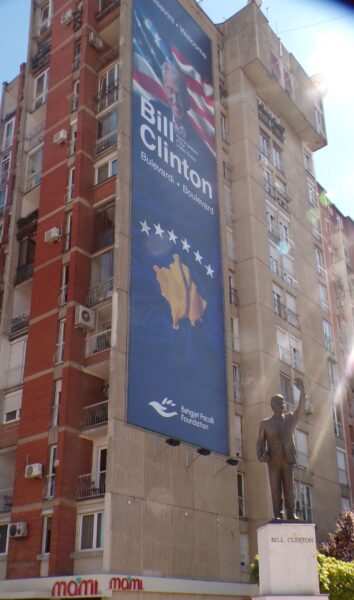
knocked my thoughts a bit cattywampus.
Generally, before I visit a place for the first time, as a matter of assuetude, I do enough research to have at least passing familiarity with its history, geography, and customs. Then there’s always the supplemental research required on my return because something unexpected arose and without it, not only would my curiosity remain unresolved, this blog would be much less interesting – at least for me to write. Nothing in my research prepared me to see this enormous tribute to the 42nd President of the United States in the capital of Kosovo.
Clinton and his Secretary of State, Madeleine Albright, were instrumental in triggering the so-called “Humanitarian War” – the NATO bombing campaign that began in March 1999. Over the ensuing 78 days, the region saw the mass exodus of Kosovars to neighboring countries but also forced the Yugoslav withdrawal from Kosovo. (Many analysts believe Clinton wouldn’t have acted as aggressively had it not been for Albright’s urging.)
Clinton visited Pristina on three separate occasions with the first coming in November 1999 and,
as I learned in Tirana,
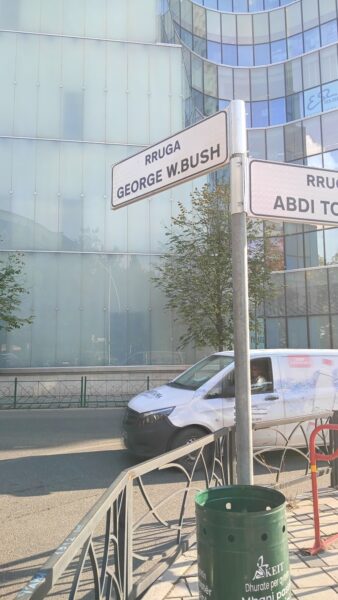
a simple visit by a foreign dignitary can sometimes be enough to have a street named for him so seeing a road named Bulevardi Bill Klinton should have been relatively unsurprising. The larger than life statue and enormous poster, on the other hand, seems to manifest the perception many Kosovars have of the Clintons encapsulated by Elda Morina’s 2016 statement to the BBC, “They made the whole world know our problems. For the first time everyone knew who are Kosovans. Bill Clinton is the person who revealed our suffering – and from that point we all had big sympathy for the Clinton family.”
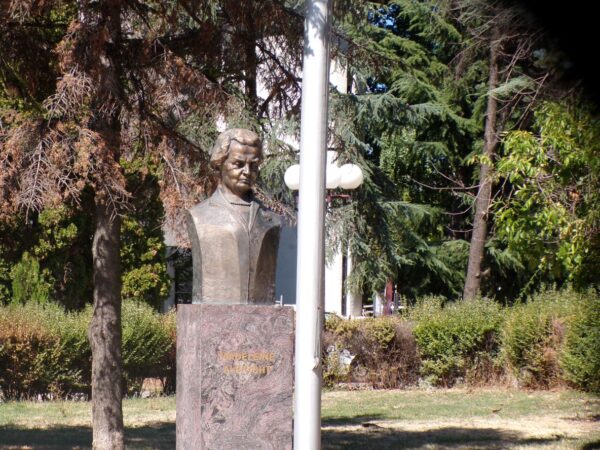
And yes, later in the morning, we would spot the bust honoring Secretary Albright.
I will also note in passing that NATO’s intervention came without specific UN Security Council authorization. This led to long‑running debates about its legality under the UN Charter versus its claim to be a “humanitarian intervention.” And we can see the repercussions today not only in the Balkans but in other areas of the globe as I write this in the fall of 2025. This isn’t the forum for a long discussion about the “responsibility to protect” and the conditions under which force should be used to prevent mass atrocities. So, I’ll leave you to consider this on your own if you’re so inclined. Now, I’ll return to my coverage of the rest of our hour long walk through Pristina.
Where have all the good men gone
The man honored by this statue in front of the Cathedral of Saint Mother Teresa is Ibrahim Rugova.
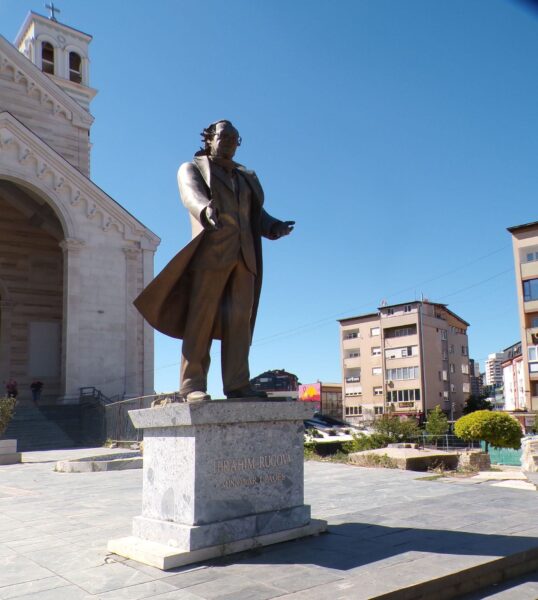
In the nineties, he was the sole President of the self-declared Republic of Kosova. He founded the political party called the LDK (Democratic League of Kosovo) that at one point in time had the support of 90% of the ethnic Albanian population of Kosovo. Because he adhered to a policy of non-violent resistance, he’s often call the Gandhi of the Balkans and to many Kosovars he is Ati Kombit – “The Father of the Nation.”
However, as the KLA ascended in its armed struggle against the remains of Yugoslavia, Rugova’s strategy suffered coruscating attacks from the KLA’s political chief – Hashim Thaçi. His position weakened further when Madeleine Albright pushed NATO’s support behind Thaçi and further still when he was, for all intents and purposes, abducted, taken to Belgrade, and forced to appear on Serbian state television by the side of Slobodan Milošević and call for an end to the war. Rugova managed to flee to Italy where he took refuge in the Vatican while Thaçi allegedly ran the country like a criminal enterprise. Thaçi ultimately faced a ten-count indictment in front of the Kosovo Specialist Chambers in the Hague. In September 2025, his trial is ongoing.
As for Rugova, he eventually returned to Kosovo and was elected President. He served from 2002 until he died in 2006.
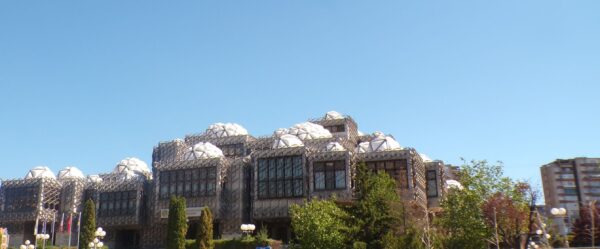
Our next stop was in front of the National Library of Kosovo – a building Atlas Obscura describes as “a unique architectural effort, and captures the spirit of a country recently ravaged by war, and working to move forward and rebuild.” They also write, “Pristina’s public library resembles a giant prison…” I’ll leave it to you to decide.
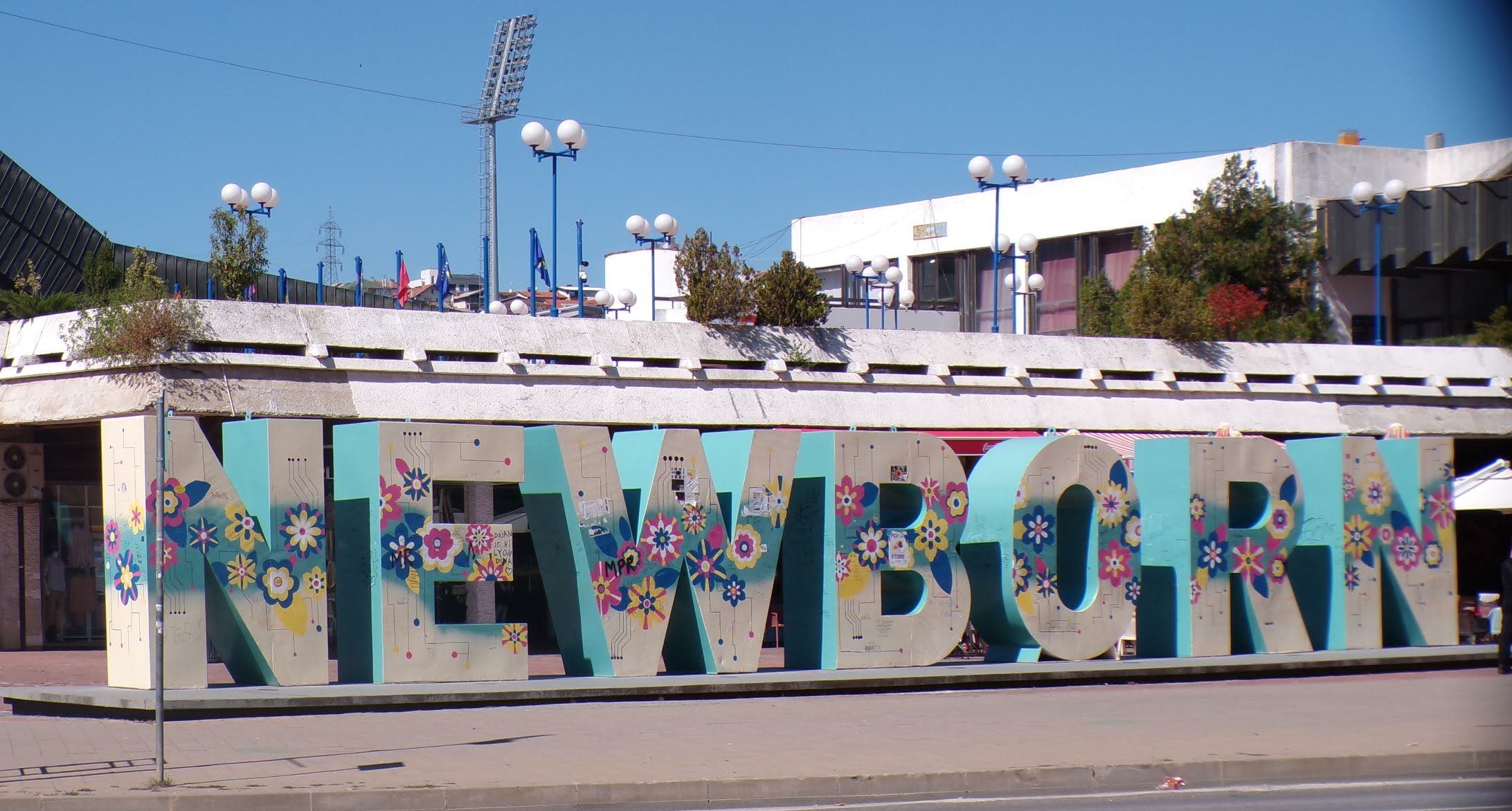
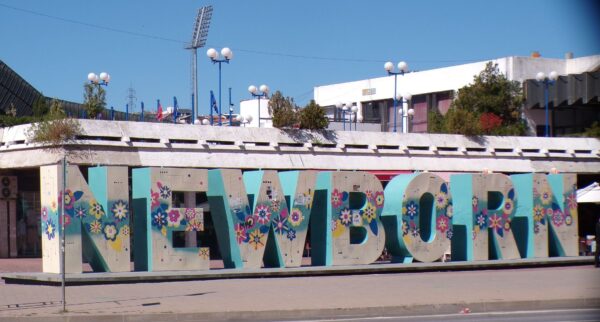
Kosovo gained wide international recognition as an independent state in 2008. (Many countries, including Serbia, still do not acknowledge its sovereignty.) To mark its status as Europe’s youngest country, it unveiled the Newborn Monument on 17 February of that year. It receives either a new coat of paint or slight design modification each year. For example, in 2018, it looked like this.
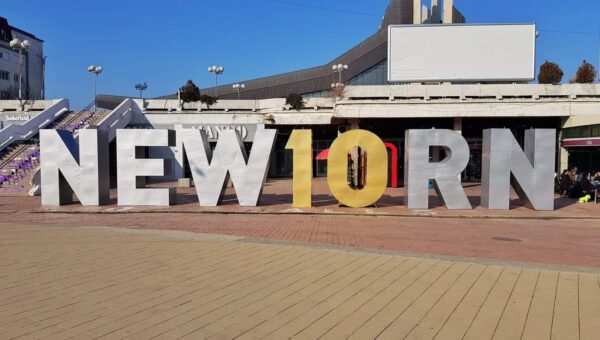
[Public Domain]
Here’s what we saw in September 2025.
Sitting cross-legged on the floor
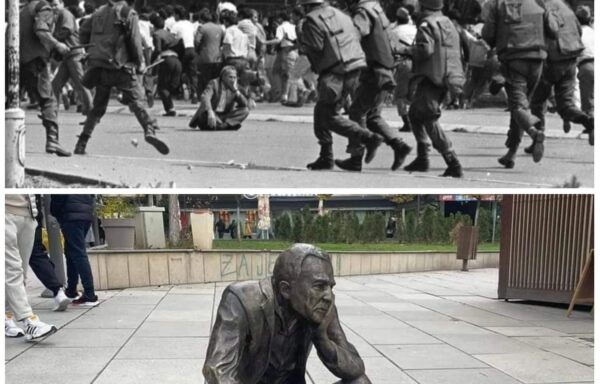
In the early nineties, Kosovo Albanians tried following Rugova’s model of peaceful protest against what they saw as Yugoslav occupation.Walking across Zahir Pajaziti Square our guide pointed to an unusual statue.
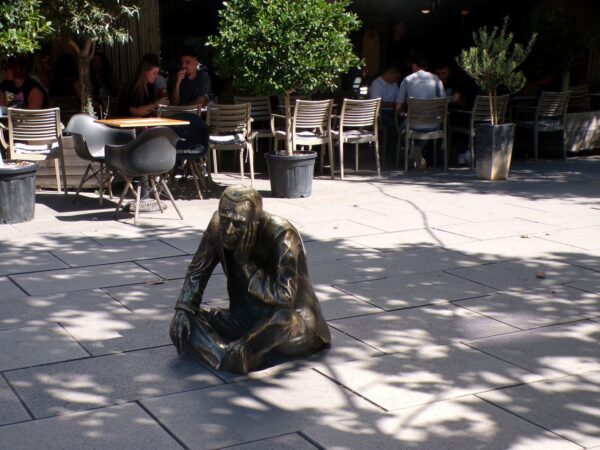
The story behind the statue stems from the actions of Faik Rexhepi. As Serbian police violently and aggressively tried to disperse a crowd of demonstrators, Rexhepi simply sat. Hazir Reka took a photograph that became internationally famous. The statue is at or very near the spot where Rexhepi sat.
[From Reporteri]
Walk less than half a kilometer from The Sitting Man statue and you’ll reach Skanderbeg Square. It’s a bit smaller than its counterpart in Tirana but it honors the 15th century Albanian hero in a similar manner.
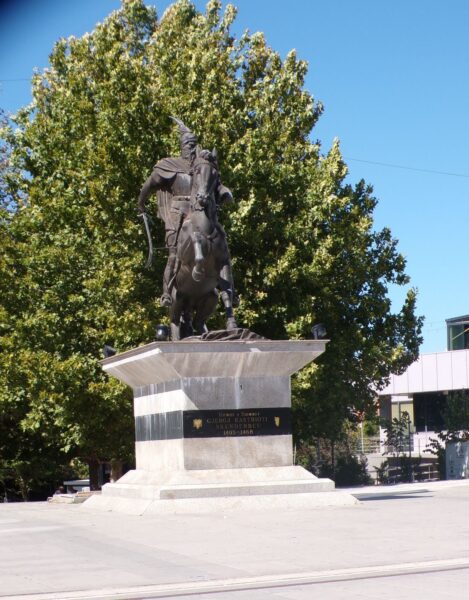
When you realize that more than 90 percent of Kosovars are ethnically Albanian this makes more sense. I’ll ask you to keep this in mind when you read the next report from Prizren. Meanwhile, here are a few additional pictures.
-
Photos and their stories – Lisbon – Summer 2026 part two – plus an egg-straordinary bonus
August 21, 2026 -
Photos and their stories – Lisbon – Summer 2026 – part one
August 21, 2026 -
The indigenous people of Da?ow?aga? (Olympic Valley and me supplement three)
August 19, 2026 -
The indigenous people of Da?ow?aga? (Olympic Valley and me Supplement two)
August 17, 2026 -
Olympic Valley in the time before humans (Olympic Valley and Me Supplement one)
August 14, 2026