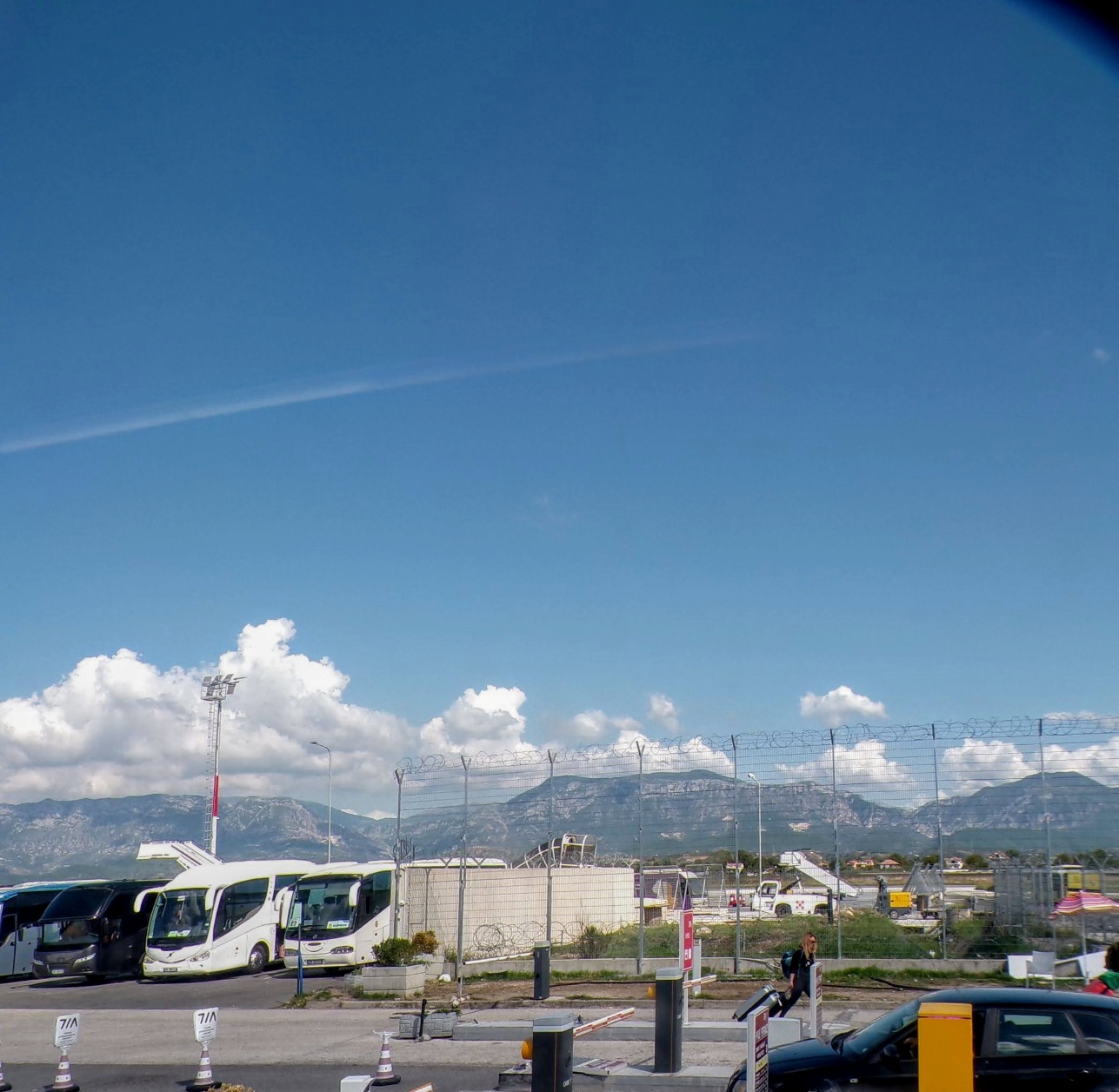
Leaving Belgium – Ne me quitte pas
Given the events of early Thursday morning, I think Belgium might have been trying to convince me to stay. I thought my departure would be easy. I knew my route to the train station and M had told me that all the stations in Brussels are considered a single stop so I could board at Gare du Midi – the station closest to the hotel. It should be easy, I thought. A 300m walk to the Louiza Metro, three stops on either the 2 or the 6 train to the intercity train station, and hop on board. As it turned out, that’s not quite what happened.
For the second time in three days, the metro line was shut down. This meant neither train was running and I had to find an alternate means of reaching the Gare du Midi. I decided to walk. It’s only about 1500m so too short for an Uber or a taxi and probably close enough that neither of those would have saved me substantial time. However, I did have a train to catch and it was well after 9:09 so I picked up my bag, ran to the station. The railman said I had the right location. It wasn’t quite like this but

I made my train with just two minutes to spare. Had I missed it, I’d have faced a two hour wait.
Thinkin’ about the good things to come
The train ride was peaceful and uneventful but I did make some notes along the way. Here they are:
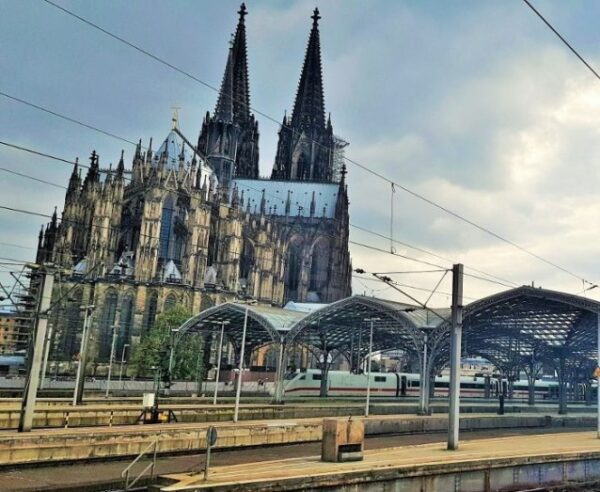
- The scenery was sporadically nice. The highlight was getting a glimpse of Cologne’s famous cathedral.
- Although I didn’t have to move, it would have been safer to buy a reserved seat. Passengers with reserved seats insisted on sitting in them even with other seats available.
- The ride seemed quite smooth until I went to the club car to get a cup of tea. However, the train did reach a top speed of 300k/h.
- I became aware that we’d crossed from Belgium to Germany only when I received the international welcome message from T-Mobile.
- Finding the hotel shuttle from the airport proved a bit tricky but the people I asked for assistance were quite helpful.
Still, it’s roughly three hours by train and since I won’t be visiting Frankfurt until the trip’s final days, I think it’s time for me to share some of my knowledge about the country where you’ll be joining me for the next two weeks –
Albania.
Crna Gora. Hrvatska. Deutschland. Suomi. Shqipëria. Ask a Montenegrin the name of their homeland and the reply will be Crna Gora. The people we call Croatians live in Hrvatska. Germans live in Deutschland. Finns in Suomi. And Albanians in Shqipëria (Sh-kip-ah-REE-uh). These are all examples of endonyms and exonyms. Not all endonyms and exonyms are as wildly different as these. For example the French pronounce their country’s name as Fronce (rhyming with nonce) whereas American English speakers call the country Frants rhyming with pants. (An exception arises when sportscasters discuss a certain bicycle race.)
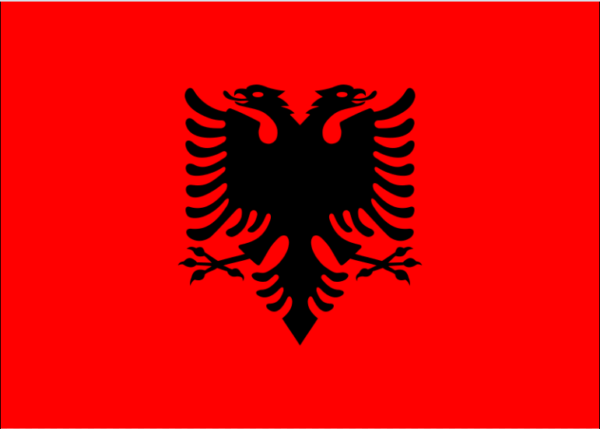
If you research the etymology of Shqipëria you’ll likely find two proposed explanations. The folk etymology (and as I would discover the one most widely believed by the Shqiptarë {Albanians}) connects it to Përralla e shqiponjë or Tale of the Eagle. Shqipëria means Land of the Eagles making Shqiptar son of the eagle. The double headed eagle adorns the nation’s flag.
The more prosaic – and likely more linguistically accurate – etymology is that its source is the Albanian verb shqipoj, which means “to speak clearly.” This origin emphasizes the unity of the people who speak a common language. It makes sense for the region since most linguists trace the word “slav” to the root slovo meaning word or speech. These Balkan “people of the word” viewed themselves as sharing a common language more than a common ethnicity. Albanian is unrelated to any of the Slavic languages but it makes sense that they would share a regional cultural ethos and develop their identity through their language. As we learn more about the nation’s history, we’ll see the importance of this to their cultural and societal identity.
Then whence Albania?
To find the most likely source of Albania, we need to start with a look at a collective group of Indo-European tribes that occupied the Balkans and parts of modern Italy whom the Greek writer Hecataeus of Miletus identified as Illyrians. (This is the first known use of the term and dates to the sixth century BCE.) Though they might have at times, formed various tribal confederations, the Illyrians weren’t a unified kingdom and the name seems to be a name of the territory as much as a name for its inhabitants.
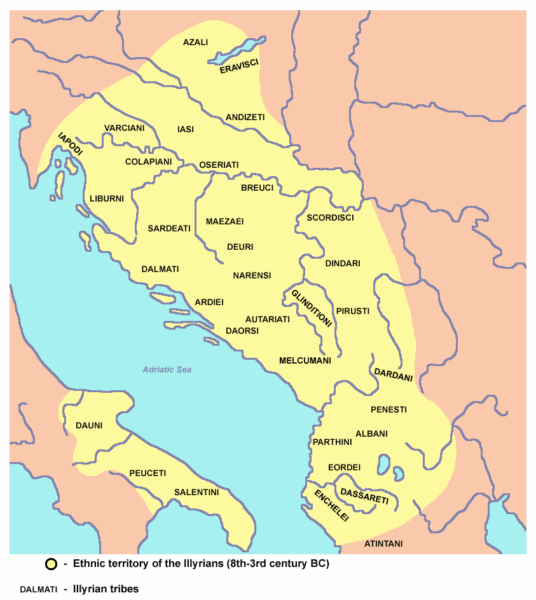
[From WikiEditor2004, CC0, via Wikimedia Commons]
While the map extends far up the Adriatic coast into present day Croatia, if you look toward the south you’ll see the label Albani. One of the first historical accounts of the Albanoi appears in the second century in the Geographica of Ptolemy who also mentions a settlement believed to be near Krujë that he identified as Albano and has been subsequently called Albanopolis. (It’s possible that Ptolemy was drawing on Hecataeus’ identification of a group there whom the latter called Abroi.)
There’s some possibility that the people Ptolemy mentions were, in fact, Macedonians or Thracians but its location in the southern part of Illyrian territory seems to mark them as a tribe that would have been Illyrian.
You now know what the people of the country call themselves and how the wider world came to call them Albanians. However, to ease everyone’s understanding and speed my typing, I will use the exonym henceforth.
A few non- nugatory informational gubbins about Albania
Based on my experiences before, during, and after this trip, it became apparent that Albania is one European country that qualifies as a great unknown. Much of that is likely due to the period of isolation it spent under the dictatorship of Enver Hoxha and was called the North Korea of Europe. So, here are some points to enlighten you.
A little geography
In writing about Belgium, I noted that it’s comparable in size to my home state of Maryland – slightly larger if you consider only Maryland’s land area but slightly smaller in total area. Though smaller than Belgium, the Albanian comparison is similar. Belgium is 30,528 km², Albania is 28,748 km², and Maryland is 32,133 km² but, of that, 6,819 km² is water. Still, the country is small enough that later in this journey I’ll make separate day trips from Tirana to Kosovo and North Macedonia.
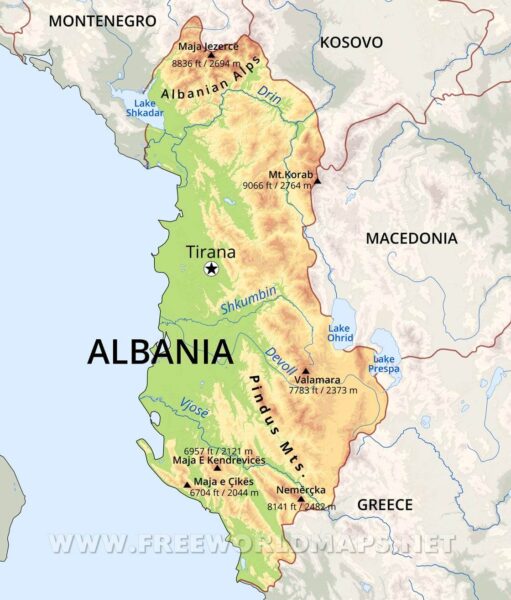
[From Free World Maps]
The percentage of arable land is similar to Maryland’s but, with a population of a bit more than 3,000,000, Albania needs to feed only about half as many people as the population of my home state. Even so this presents a bit of a challenge since nearly 75 percent of the country is mountainous. However, the Albanians make efficient use of their limited arable land growing 83 percent of their own food – producing surpluses in fruits, vegetables, dairy, and meat and having import dependence for grains, fish, and legumes. It’s the 41st most food self-sufficient country in the world.
Of the four main mountain ranges in Albania those in the north are generally called the Albanian Alps. They’re the southernmost subrange of the Dinarides and personally, I prefer the local name – the Accursed Mountains. (One local legend attributes the name to the work of the devil who escaped from hell for a single day and created the jagged glacial karsts. Another says that a woman cursed the mountains while she and her children trekked through them on a scorching-hot day and couldn’t find any water.)
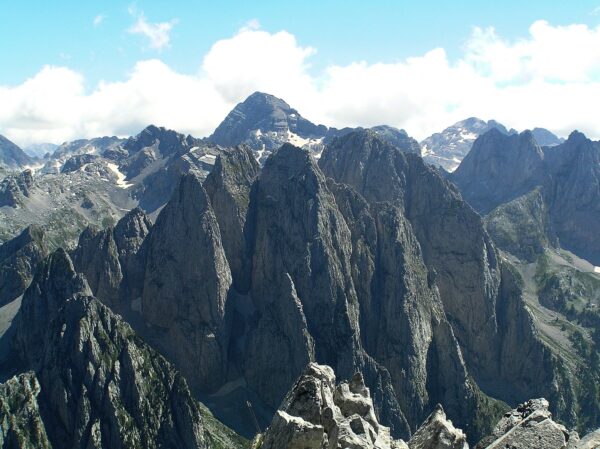
What results would I see if I asked AI to list famous Albanians?
I’m not AI (yet) so I won’t provide a list as lengthy or as thorough as an internet search but I will provide a few names starting with some current singers who were born in Albania or Kosovo or whose parents have this heritage. They are Dua Lipa, Rita Ora, Ava Max, and Bibi Rexha. Staying in the realm of popular culture, the Belushis’ (John & Jim) father was an Albanian-American immigrant.
Some of you may know the name Ismail Kadare – Albania’s most famous writer. Kadare, who died in 2024, was nominated 15 times for the Nobel Prize in Literature.
Perhaps the biography of the woman born Anjezë Gonxhe Bojaxhiu in Skopje in 1910 – two years before Albania gained independence from the Ottoman Empire – will ring a bell. She founded the Missionaries of Charity in India in 1950 and was canonized in 2016 by Pope Francis and you probably know her as Mother Teresa. The airport bears her name.
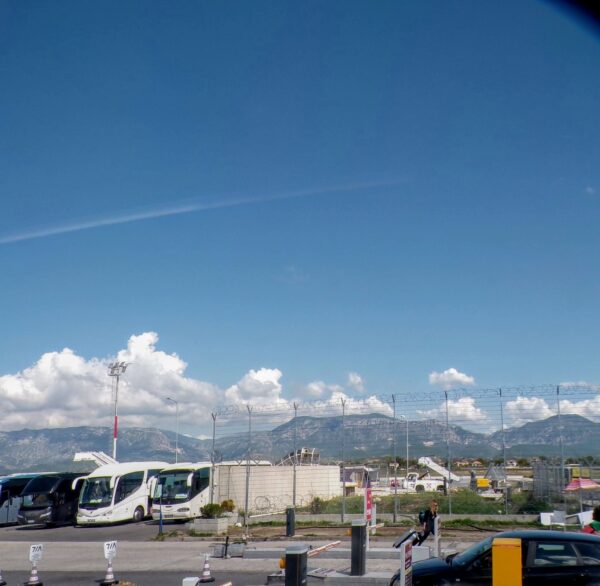
Now that you know a little about Albania, you’re prepared for our next stop – Tirana.
-
Photos and their stories – Lisbon – Summer 2026 part two – plus an egg-straordinary bonus
August 21, 2026 -
Photos and their stories – Lisbon – Summer 2026 – part one
August 21, 2026 -
The indigenous people of Da?ow?aga? (Olympic Valley and me supplement three)
August 19, 2026 -
The indigenous people of Da?ow?aga? (Olympic Valley and me Supplement two)
August 17, 2026 -
Olympic Valley in the time before humans (Olympic Valley and Me Supplement one)
August 14, 2026