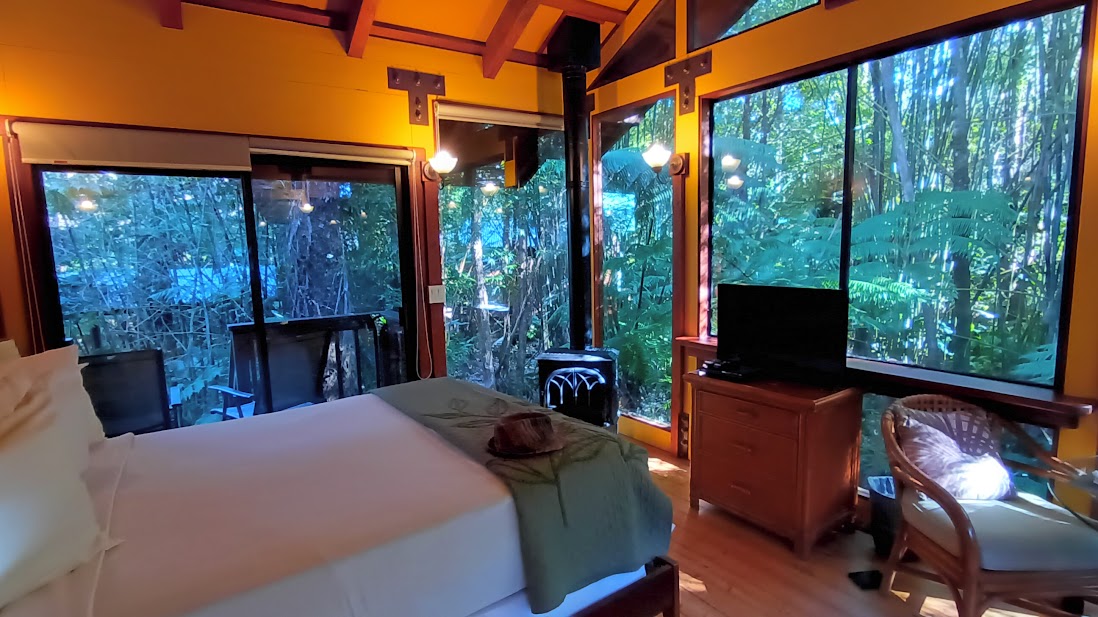
And maybe it’s the time of year
Today I needed a pair of flights to reach Hilo on the island of Hawai’i or, as it’s generally called, the “Big Island.” It’s a well deserved moniker – at least in comparison to the other islands in the chain. I started my Hawaiian adventure on Kauai with an area of 552 square miles. Today, I’m leaving Maui – the second largest island in the archipelago. It’s 727 square miles. And I’ll end my trip on mid-sized Oahu’s 597 square miles. Hawai’i is 4,028 square miles. It’s so big relative to its smaller volcanic siblings they would all fit inside it.
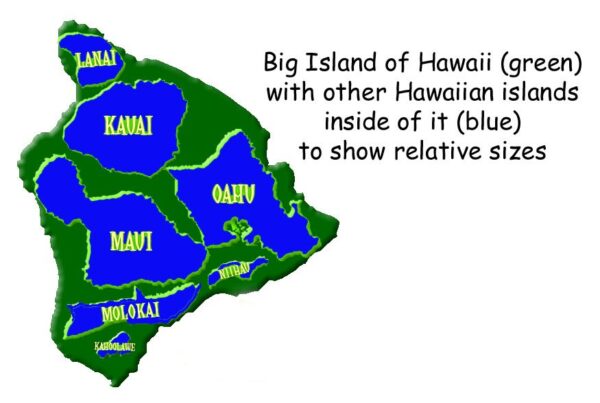
[From MauiHawaii.org]
And here are your other fun facts of the day. You might recall that the northernmost point of the Hawaiian archipelago is Kure Atoll. It’s the northernmost atoll on Earth and it’s approximately 1,523 miles from Cape Kumukahi – the easternmost point of the state – about 28 miles southeast of Hilo.
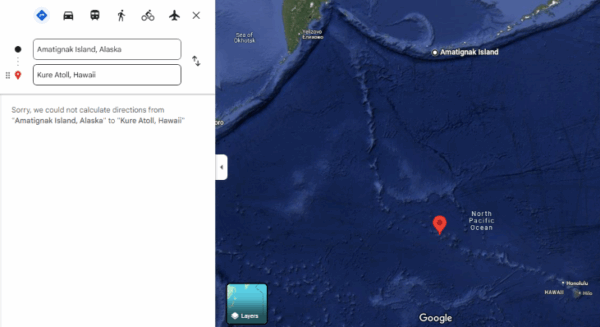
Near the top of the screen capture from Google Maps above you can see Amatignak Island, Alaska. The Big Island is in the lower right and the marker between them is Kure Atoll. Some sources assert that Kure Atoll is, in fact, closer to Amatignak than to Kumukahi. Other sources place the atoll 1,573 miles from the Alaskan island and 1,523 from Cape Kumukahi. I think the difference between them is small enough to say that a person can stay in Hawaii and be halfway to Alaska from the state’s easternmost point.
I have to admit it felt a bit strange flying north and west from Kapului to Honolulu before turning around to fly south and east to Hilo but I guess there isn’t enough demand for Hawaiian Air to have a direct flight from Maui to Hawaii. Between flights at Honolulu, I received a phone call that would have a negative impact on my time on the Big Island because I misheard the information from the caller. But first,
Back to the Garden.
I arrived in Hilo in midafternoon and once I was outside the urban area had a pleasant drive along Highway 11 to Volcano Village Inn about 45 minutes away. It’s a lovely bed and breakfast
about 10 minutes from Hawai’i Volcanoes National Park (HVNP). However, the timing of my arrival left me in a murky midway midday time frame. Too late for lunch, too early for dinner, and, given that I’d booked a tour of HVNP for the next day, a disinclination to embark on any but the most limited exploration of the park.
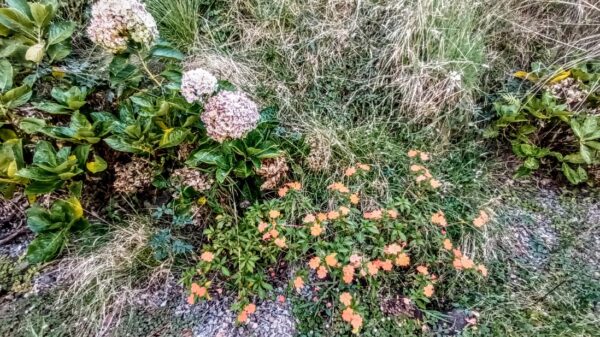
Since I’d spent a lot of time sitting, I decided to first take a bit of a walk in the vicinity of the B and B. Even though it was winter, it was winter in the tropics. This meant that many of the flowering plants were doing just that – flowering.
We are stardust
We are golden
When I’d had enough, I decided I should venture into HVNP and at least try to get a look at Kīlauea and I was flattered when the Ranger at the entrance asked to see my ID after I handed her my lifetime Senior National Parks pass because she needed not only to verify my identity but my age. It made me feel a bit like a teenager in reverse.
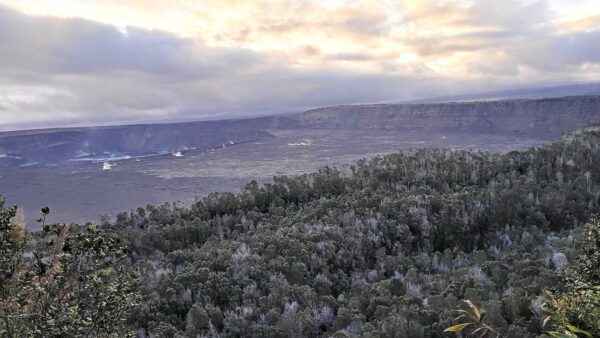
I got my first look at the steamy but not fiery Kaluapele (Kīlauea Crater) and the Halema’uma’u Crater in the distance as I walked along the Crater Rim Trail.
When I reached Waldron Ledge, I met Dan, a bearded fellow who was, it seemed to me, randomly picking Hawaiian-ish sounding tunes on what he told me was an open tuned guitar. (Rather than using the standard string tuning of E-A-D-G-B-E {from the thickest to the thinnest string} an open tuned guitar will have the strings tuned so that when they’re strummed without any fingers on the frets they will play a natural chord. Thus, a guitar tuned to an open F would have its strings tuned F-A-C-F-A-C – again from thickest to thinnest.)
I didn’t note what chord Dan was using. However, we had an interesting conversation over a broad range of topics one of which included my interest in and frequent travels to Portugal. I think I surprised him a bit when I told him that it was the Portuguese who introduced what is probably considered the quintessential Hawaiian musical instrument – the ukulele – to Hawaii.
But life is for learning
In recounting my stay in Lisbon in 2023-2024, I wrote rhapsodically about the way many recipes associated with specific countries other than Portugal such as tempura and vindaloo are, in fact, Portuguese in origin. And now I make this claim about the ukulele. Am I infatuated with many things about Portugal? Yes. But that doesn’t diminish the validity of the ukulele’s Portuguese origin.
In the late 1870s sugar cane plantations were booming and in desperate need of labor they could easily control. (Chinese, Japanese, and Philippine immigrants often left the plantations for better paying jobs and were not viewed in a particularly positive light.) King David Kalākaua
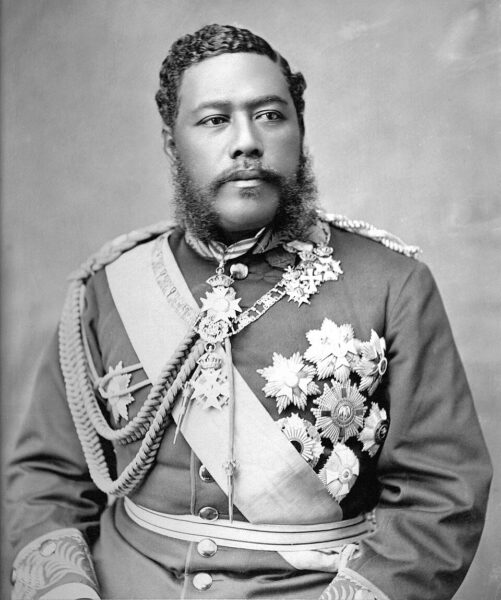
[From Wikipedia – Public Domain]
came to the throne in 1874 and sought closer ties with Europe.
In 1876, Jacinto Pereira, a Portuguese settler who served as the Portuguese Consul to Hawaii, suggested that plantation owners of the Planters’ Society could look to Madeira and the Azores for a reliable workforce since sugar cane had been central to their economies for four centuries.
Manuel Nunes, Augusto Dias, José do Espírito Santo, and João Fernandes were among the 419 passengers who arrived on the British Clipper ship the Ravenscrag
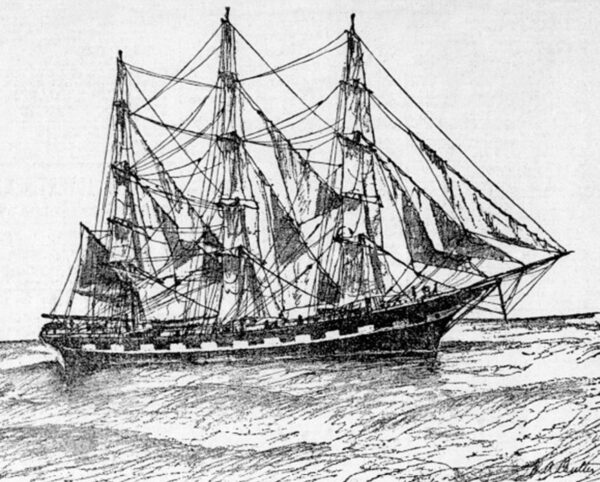
[From Wikipedia – Public Domain]
on 23 August 1879. There’s an indication that some or all of these four had not been cane workers on Madeira but rather, had made musical instruments. (It’s likely they were economic migrants.) They brought with them a small stringed instrument called a braguinha (sometimes called machete or cavaquinho).
The legend is that either Dias, Fernandes, or both, began playing their braguinhas on the docks to celebrate their safe passage. According to the Hawaiian Gazette, “Madeira islanders who recently arrived here have been delighting people with nightly street concerts.”
It wasn’t long before Nunes, Dias, and Espírito Santo abandoned the sugar plantations and began crafting and modifying the braguinha. Manuel Nunes is credited with redesigning the instrument and changing its tuning and size to better suit Hawaiian musical preferences. This allowed for easier chord formation, a distinctive sound, and led to the birth of the instrument now known as the ukulele.
In addition to his economic policies, King Kalākaua was also known as a patron of the arts and he promoted the ukulele as an accompaniment to hula and chant transforming what had been essentially a percussion-based musical tradition into one with novel Hawaiian melodies.
And what’s in a name? The literal etymology of the word is “jumping flea.” (Hawaiian, like its sister Polynesian languages, is agglutinative.) Uku means flea and lele means to fly or to jump. The folk etymology says that the Hawaiians christened their instrument ukulele because of the rapid movement of the player’s fingers on the fretboard. Whether this is true or simply an island legend is an open question. (Interestingly, one of the artists in Makawao with whom I’d had an extended conversation told me that, at least in the present vernacular, uku refers to lice.)
It is true that King Kalākaua’s successor, Queen Liliʻuokalani
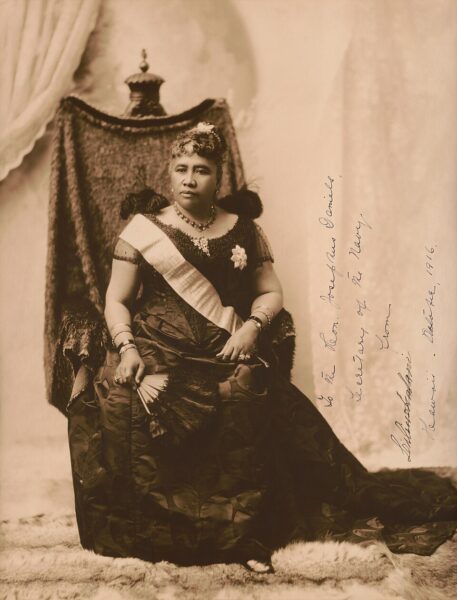
called the instrument, “the gift that came here.”
I left Dan to his guitar (he’d asked me not to take his photo) and returned to Uncle George’s at Volcano Lodge for supper. I had something called Hilo Style Furikake Soman Salad (a mixed leaf salad, sesame somen noodles, cucumber, carrots, eggs, tomatoes, scallions in a creamy Asian soy dressing) to which I added grilled chicken for some increased protein. I don’t know if this was authentic or even representative of what it purported to be but I enjoyed it a lot.
And now, the moment you’ve all been waiting for, the photos link.
-
Photos and their stories – Lisbon – Summer 2026 part two – plus an egg-straordinary bonus
August 21, 2026 -
Photos and their stories – Lisbon – Summer 2026 – part one
August 21, 2026 -
The indigenous people of Da?ow?aga? (Olympic Valley and me supplement three)
August 19, 2026 -
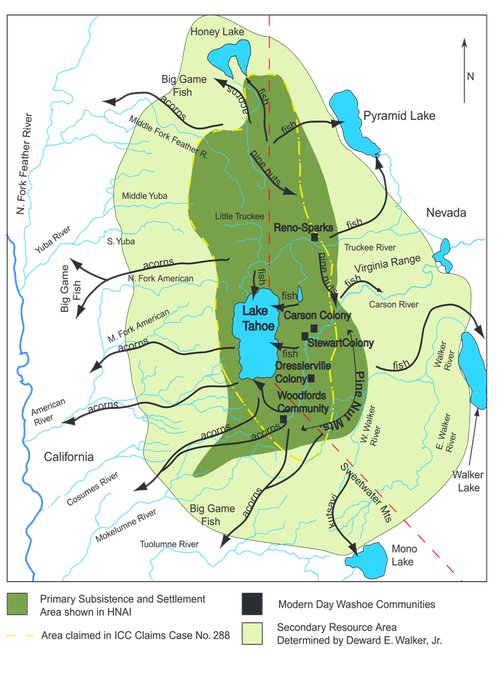
The indigenous people of Da?ow?aga? (Olympic Valley and me Supplement two)
August 17, 2026 -
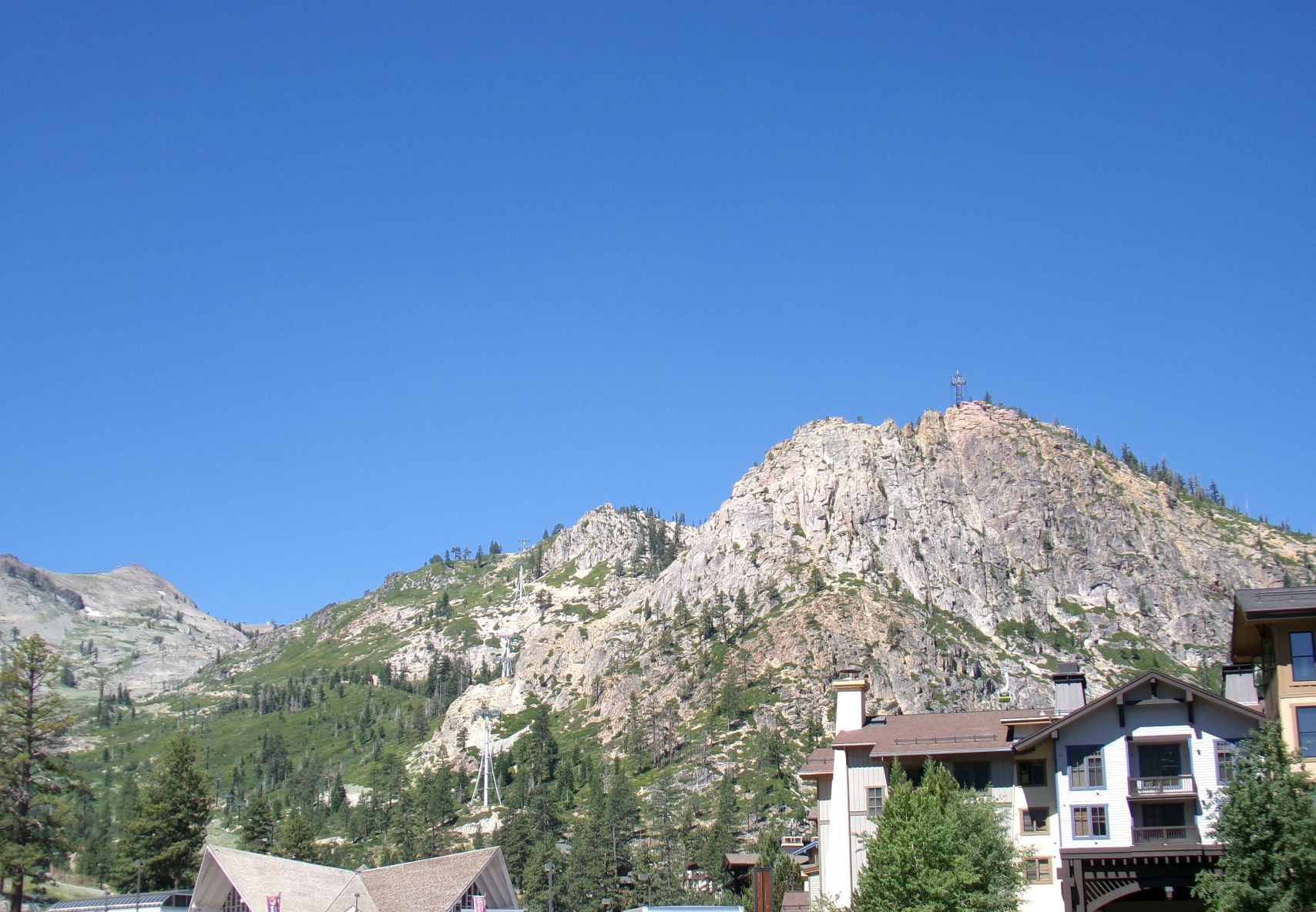
Olympic Valley in the time before humans (Olympic Valley and Me Supplement one)
August 14, 2026