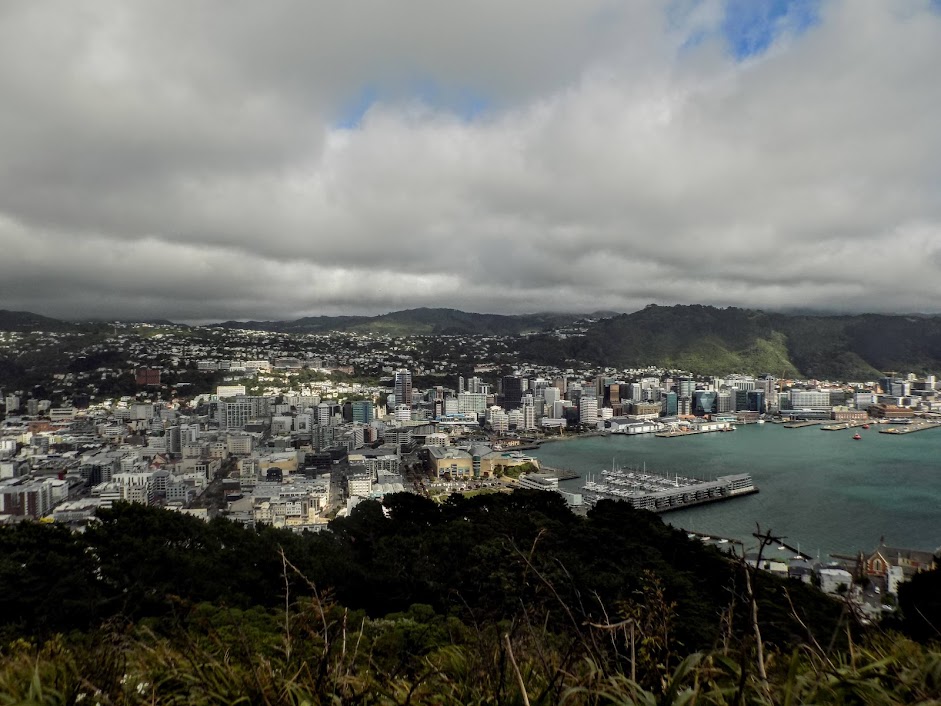
You can feel it in the streets
Shaking but not all shook up
Before moving on to how I spent my afternoon, I want to write a little about an invisible architectural feature of not only Te Papa but many buildings in Wellington. It’s a critical element in earthquake prone regions but not one that the public sees. These are base isolators. If you’re wondering if this is another rabbit hole distraction, I’d say a little yes and a lot no.
Those who know me and those who have read the sections of this blog covering my time in Lisbon know of my great affection for the Portuguese capital city that suffered one of the world’s most catastrophic earthquakes in 1755. They might also be familiar with my only half-joking assertion that the Portuguese people divide the world into A T and D T (antes do terramoto and depois do terramoto) or before the earthquake and after the earthquake.
One of the great scientific advances born from that disaster was the Pombaline Cage.
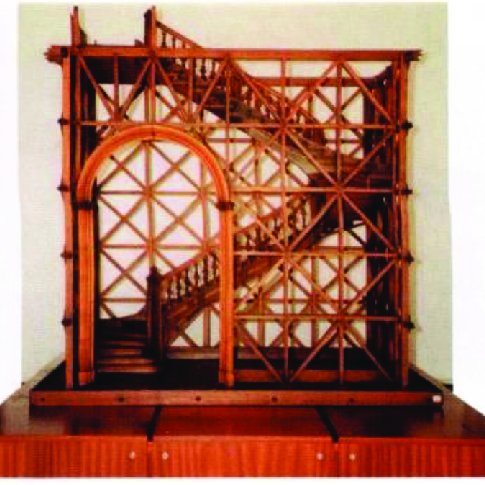
Developed by the Marquis de Pombal, the main purpose of this flexible internal wooden cage within masonry walls is absorbing and dissipating seismic energy. The Pombaline Cage increases ductility and flexibility, allowing controlled deformation and energy dissipation.
Using a different structural principle and mechanism, base isolators serve much the same purpose. The principle underlying base isolators is to decouple (isolate) the building from the ground motion thereby allowing the entire structure to move independently of the ground. Here’s a 30-second video demonstration.
I can hear some of you now thinking, “Okay, you’ve established a rather tenuous link to your obsession with Lisbon but what does this have to do with Aotearoa New Zealand?” Allow me one further brief historical detour. On 15 February 1870, a San Franciscan name Jules Touaillon filed this patent.
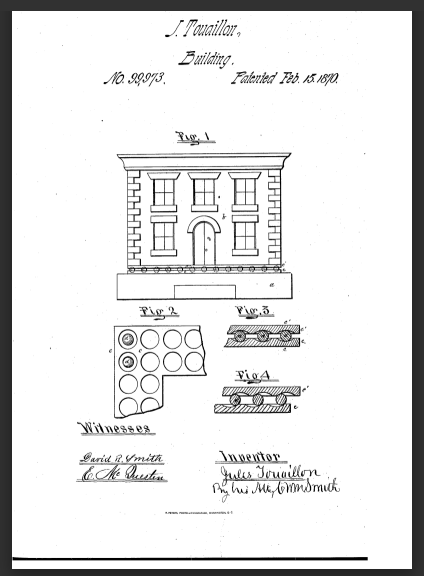
His proposed system of concave spherical surfaces and rolling balls, introduced key concepts seen in modern double-concave spherical bearing isolators. Improvements and changes were proposed through the twentieth century but it was a New Zealander, Dr Robert Ivan Skinner who propelled the field forward first with his use of isolators using steel and rubber and then, in conjunction with Dr Bill Robinson, the creation of the lead-rubber bearing and that Robinson, building on Skinner’s work invented of the lead extrusion damper.
Skinner’s work established the fundamental principle that energy absorbers-whether based on steel, lead, or other materials-can protect structures by decoupling them from ground motion and dissipating seismic energy in much the same way that the shock absorbers in your car smooth your ride.
It wasn’t part of any tour but the Ministry of Health Building (also known as the William Clayton Building) in Wellington
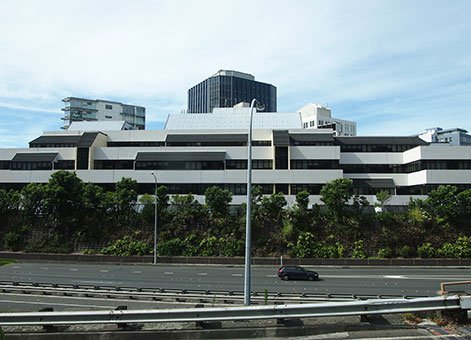
[From Engineering New Zealand]
that opened in 1982 was the first office building in the world constructed using the base isolation principle for earthquake resistance now found in buildings all over the world. Thus, if you’re in abuilding that doesn’t collapse during an earthquake, you might owe some gratitude to Ivan Skinner.
Instead of dust, Solace in the Wind
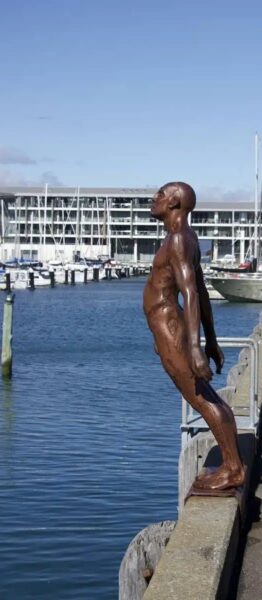
I don’t recall where I first read about Max Patté’s sculpture called Solace in the Wind but I did recall that it was close to Te Papa and seemed to be worth trying to see. Patté, who was born and raised in Gloucestershire, said that the work depicting a naked man leaning into the wind represents his feelings about his time in New Zealand and thoughts about leaving Wellington. Originally put on display as a loan to the city, it won the People’s Choice Award for favorite sculpture at the Wellington Civic Trust Awards in 2008. This prompted the city to purchase it for $60,000. (Patté has another connection to my time in Aotearoa. He went to work for the Wētā Workshop where he became its head sculptor. His work is featured prominently in the Lord of the Rings trilogy and he created Solace in the Wind in studio space provided to him by Workshop founder Richard Taylor.)
Banksy see, Banksy do
Those who have followed my travels certainly know of my passion for street art and those who know even a little about this medium likely know that there may be no street artist more famous than the mystery Englishman called Banksy. So it should come as no surprise that, when I learned that there was a show called The Art of Banksy at Tākina Wellington, I knew what would occupy my second free afternoon in Wellington.
Banksy is believed to have been born in or near Bristol, England, around 1974 and Bristol is where he first came to some prominence. He began as a freehand artist in the early 1990s before switching to spray-painting stenciled designs
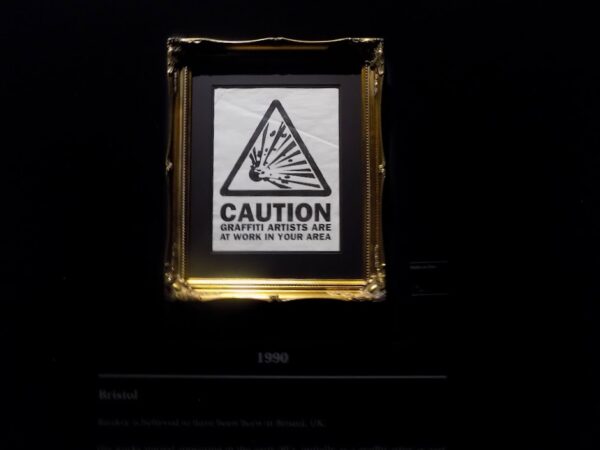
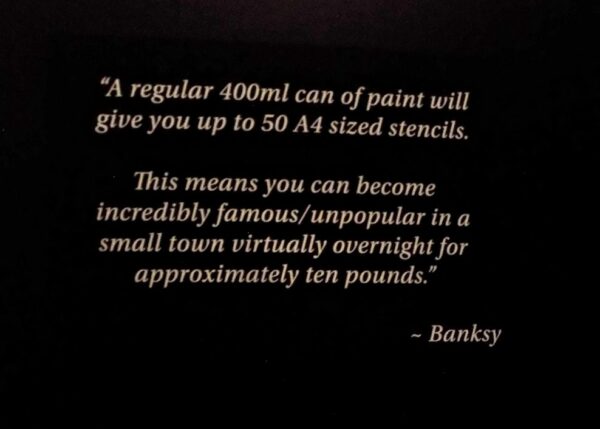
that have become an iconic element of his style and have inspired many of the street artists who followed. The exhibition explains the reason behind this change.
In either 1997 or 1999 (depending on the source), his first major mural – The Mild, Mild West – appeared on Stokes Croft next to The Canteen Bristol. It not only raised his profile but it foreshadowed the coming breadth of his satirical and subversive art.
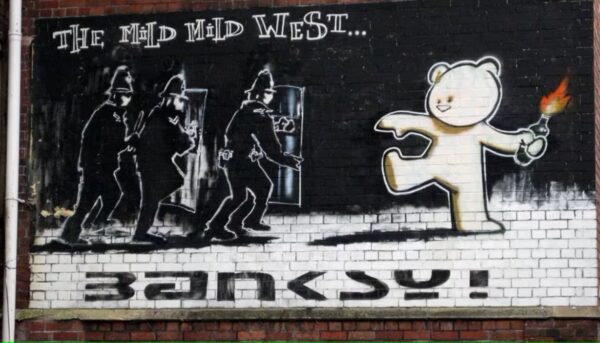
[From Visit Bristol]
In the early part of this century Banksy began a series of museum pranks. The first came at Tate Britain on 17 October 2003. The website Banksy Explained describes it:.
Between October 2003 and May 2005, Banksy walked into some of the most highly regarded and significant museums in London and New-York in order to place some of his artworks. Of course, as is always the case with Banksy, it was not just any artwork – each was meticulously prepared to send a very specific message. Some of these stunts were even recorded on video by his associates.
And it garnered him a March 2005 interview with NPR.
(You can see the works he hung at various museums using the link above.)
Courting, rather than avoiding controversy, in August 2005 in an act that raised his international profile, Banksy traveled to Israeli occupied territory (Palestine per his description) where he and his team painted seven large murals on the Israeli constructed wall in an exhibition called The Segregation Wall. He followed this with an October exhibition in Notting Hill in London called Crude Oils.
Some Banksy shots
Versions of many of Banksy’s most famous works such as Love is in the Air (Flower Thrower)
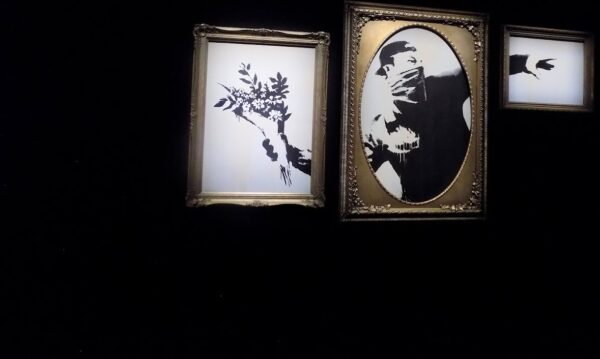
(originally painted on a nearby garage when he was working on The Segregation Wall) and Balloon Girl
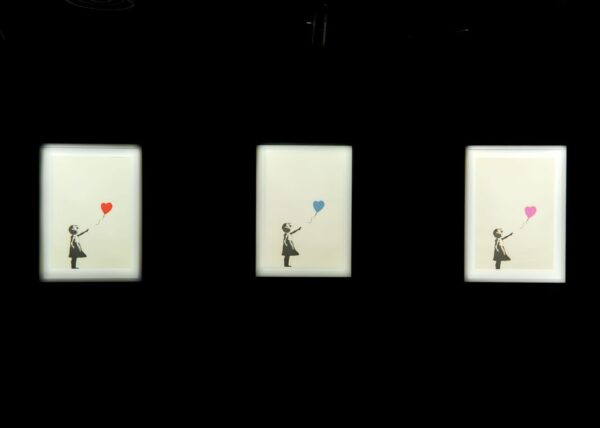
(originally painted in 2002 under the Waterloo Bridge in London) were reproduced in various iterations as well as some that were less familiar (at least to me).
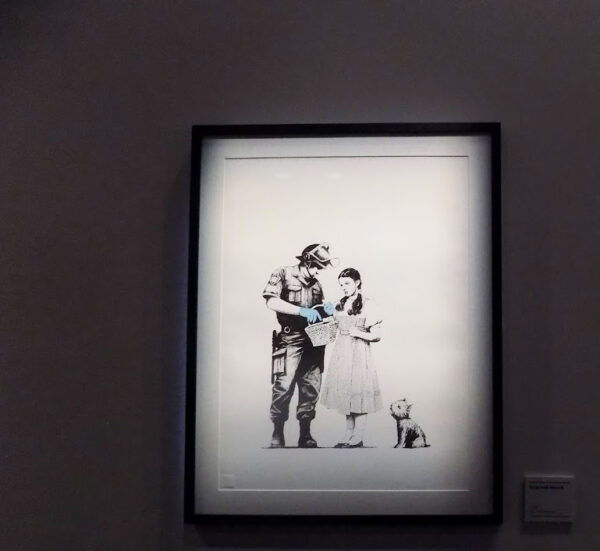
Finally, I need to note that Banksy puts his idealism into practice donating most of the proceeds from sales of his art or admission to shows such as the one in Wellington to charities and causes he supports. For example, he created the painting Game Changer as a tribute to healthcare workers during the COVID-19 pandemic and shipped to Southampton General Hospital with a simple note. The hospital sold it for £16.7 million ($23 million). All the proceeds were donated to NHS charities supporting staff and patients at that hospital. You can read about some of his other charitable endeavors here and see my other photos here.
A final farewell
Since I had no personal connection to anyone in Aotearoa New Zealand, unlike at the end of the Australia trip, I attended this MASH session. My broad recollection is that the discussion centered on the activities with different people expressing different preferences. And while there was positive feedback about the amity within the group, I didn’t sense that anyone had made any real longer-term connections but perhaps this was merely a projection of my bias because I certainly hadn’t.
We had dinner at the hotel and I was able to take part in a segment of the last remaining activity Saturday morning called “Round the Bays: Wellington’s Fascinating Coastline.” Our bus took us to the top of Matarangi also called Mount Victoria where it was chilly and quite windy but from where we had a new angle from which to view Wellington
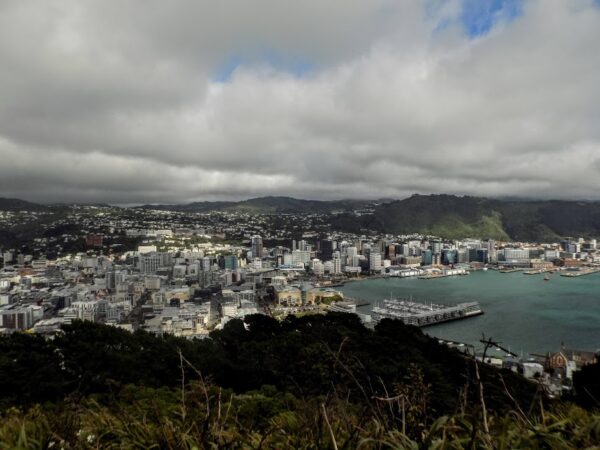
and look at the monument to the Antarctic Treaty
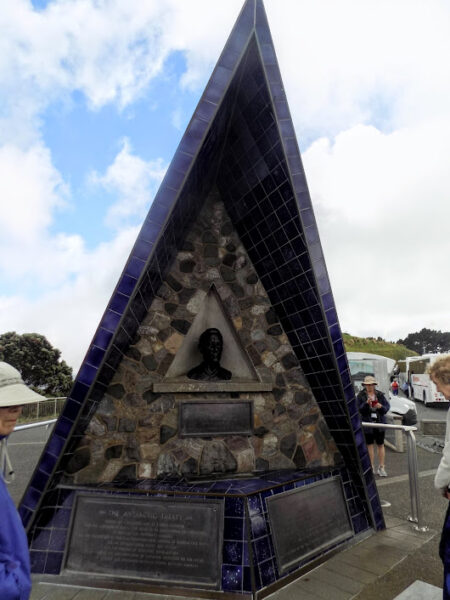
that also honors Richard Evelyn Byrd whom it calls, “The Greatest Explorer of the Air Age.” Here’s where you can see a few more pictures from that final morning.
We went back down the mountain, I said my goodbyes, and set off for the airport where I’d embark on a flight to Hawai’i where I’d have brief stays on four of that state’s islands – the final stops on this long, long adventure. I hope you’ll join me.
-
Olympic (Squaw) Valley and Me – part one
August 3, 2026 -

Here are the songs from the México City and México City Olympics posts
May 18, 2026 -
Notes on the XIX Olympiad – the quiet protest – (México City and Me addendum three)
May 18, 2026 -
Notes on the XIX Olympiad – Successes, failures, and a Flop – (México City and Me addendum two)
May 15, 2026 -
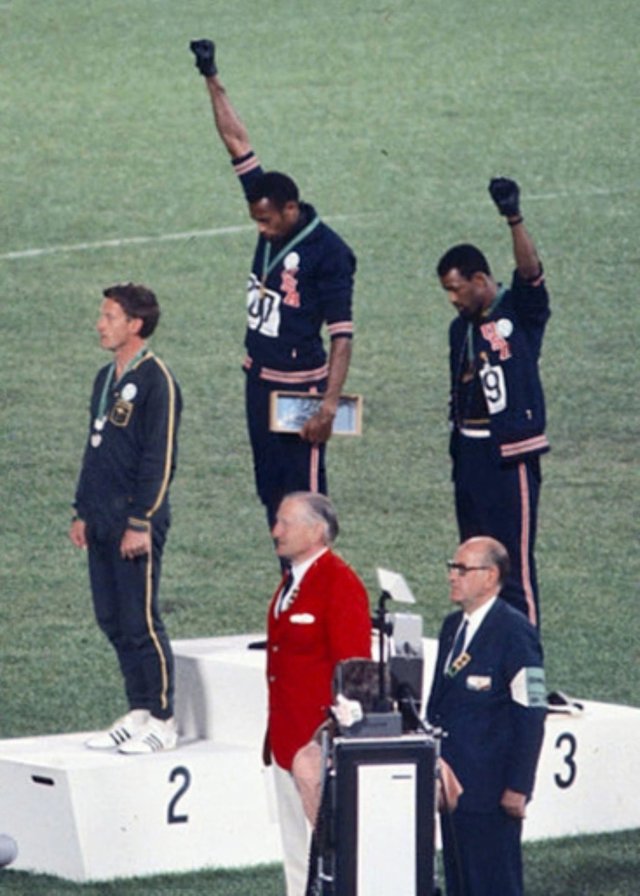
Notes on the XIX Olympiad – Understanding Carlos and Smith – (México City and Me addendum one)
May 13, 2026