Lake Placid and Me – part three
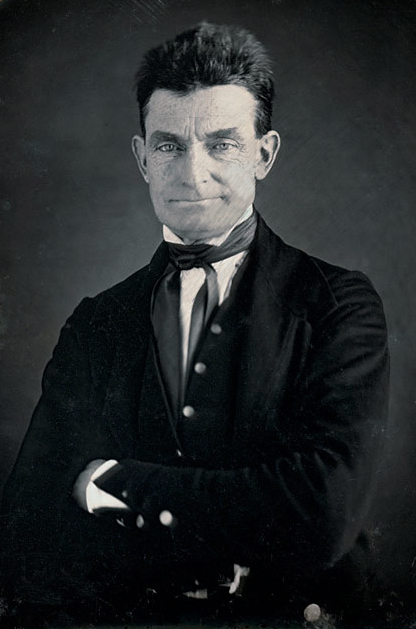
The barn I saw belonged to John Brown
John Brown. A simple two syllable name that casts its owner’s long shadow over the middle of the nineteenth century. Born in Torrington, Connecticut in 1800, Brown moved with his family to Hudson, Ohio when he was five years old. Hudson, populated mainly by settlers from New England, was a stop on the Underground Railroad for escaped slaves fleeing to Canada and is generally considered one of the centers of anti-slavery activism. Brown’s father despised slavery so much that he wanted to make Western Reserve University a bastion of antislavery and, when that failed, became involved in creating Oberlin College as a racially integrated coeducational institution of higher learning.
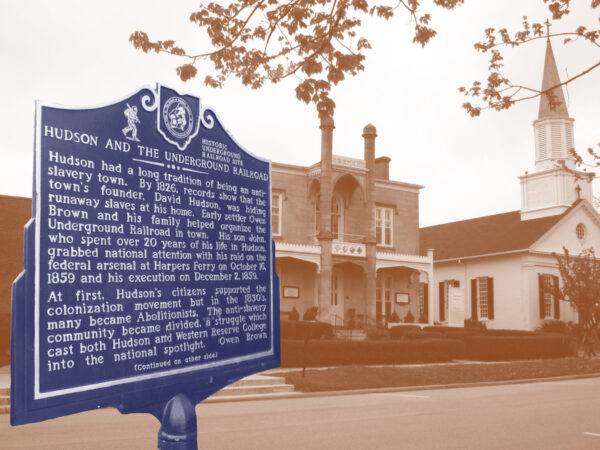
[From Belt Magazine – collage by Njaimeh Njie]
But it wasn’t his father alone who shaped Brown’s early life. David Hudson, the town’s founder, wasn’t merely a staunch abolitionist but advocated for “forcible resistance by the slaves.” We can see that the seeds for Brown’s later militancy were sown early.
(Note: From this point, I’m going to focus on connecting Brown with North Elba – the town that contains the entirety of the village of Lake Placid. As I’ve noted in the introductory post, I’m not doing original research and I have no degrees in the sciences or, in this case, the history about which I write. Thus, what follows will not present Brown’s life and social impact in any detail. If you’re interested in this, I can unequivocally recommend Evan Carton’s book Patriotic Treason – John Brown and the Soul of America that Kirkus Reviews called, “A dramatic, expertly paced biography of American history’s most problematic figure.”{Full disclosure, Evan is my second cousin.})
The Smith gift
Racial animus and the desire to limit the ascent of free black men into positions of authority and power was alive and well in New York. In 1821 the Assembly reformed the state’s constitution to eliminate all property qualifications for enfranchising white males. However, they imposed a requirement of ownership in $250 of real property for black men effectively disenfranchising all but a select few. White New York voters endorsed it again at the 1846 state Constitutional Convention.
In today’s terminology, we might call Gerrit Smith a trust fund baby. His father, Peter, built a fortune as a partner with John Jacob Astor in the fur trade in the late 1700s and later by investing heavily in large tracts of land in New York and other states. The younger Smith, a notable abolitionist, saw his fortune as a means to promote this and other humanitarian causes.
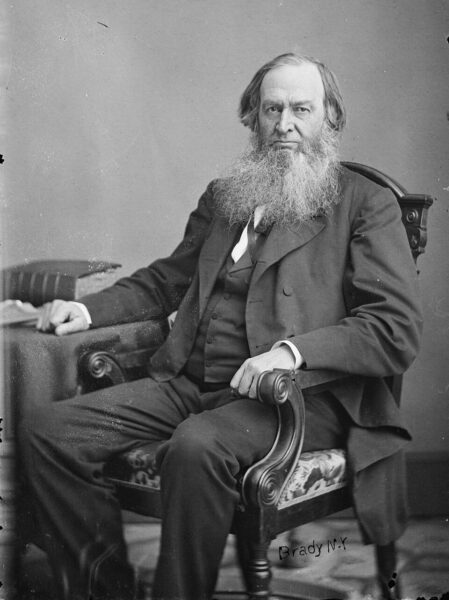
[From Wikipedia – Public Domain]
After the 1846 Constitutional Convention, Smith, inspired by the agrarian rhetoric of black reformers, and supported by such prominent men as Frederick Douglass and Henry Highland Garnet, constructed a plan to give 120,000 acres in 40 acre plots to 3,000 black New Yorkers hoping their success as farmers would raise the value of the property to or beyond the minimum threshold for enfranchisement.
However, this grand gesture had its limitations. Located in the far north of the state, this densely forested land in the Adirondack Mountains, was difficult to reach and was not, as the local natives had known for millennia, well suited for agriculture. By the time Smith’s experiment ended, of the intended 3,000 families, fewer than 200 actually took up residence in the colony.
How John Brown came to North Elba
Always a committed abolitionist, evidence indicates that the 1837 murder of Elijah Lovejoy, a St Louis abolitionist, further ignited Brown’s zealotry and militancy. Brown, who had invested heavily in speculative land ventures and relied extensively on credit and bank notes, had begun facing the impact of the Panic of 1837 on his personal finances as well. He filed for bankruptcy in 1842 and remained under considerable financial duress when he began a partnership with Simon Perkins, Junior of Akron, Ohio – a sheep farmer who recognized Brown’s expertise as a skilled breeder and judge of wool.
Though headquartered in Akron, the partners established a warehouse in Springfield, Massachusetts around 1846 to act as a depot for storing, grading, and marketing wool – both from their own flock and from the flocks of Eastern and Midwest sheep farmers. They hoped to break the monopolistic and exploitative practices of the big mills and manufacturers. They failed in part because Brown’s attention was as focused on his abolitionism as it was on the business and in part because the mill owners took coordinated actions to break the fledgling union.
In a last-ditch effort to sell the wool, Brown traveled to England but was unable to salvage the business. Upon his return, he learned of Smith’s project in the Adirondacks and traveled to Smith’s home in Peterboro where, asserting he could teach farming skills he’d learned in Pennsylvania to the blacks who had accepted Smith’s gift of land, he negotiated the purchase of 244 acres of nearby property at a price of just $1 per acre. Brown eventually came to call the settlement Timbuctoo likely after the ancient Malian city of Timbuktu.
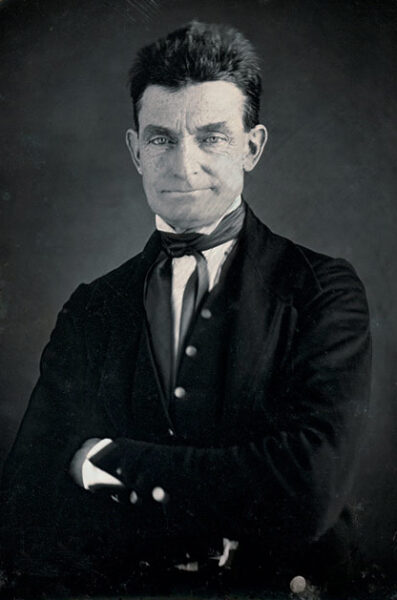
[From Wikipedia – Public Domain]
Even with Brown’s presence and assistance, the settlement failed. While the majority of the people who managed the journey north and accepted Smith’s endowment had the work ethic necessary to succeed, they came from urban backgrounds where they had been employed as cooks or coachmen or in related activities but were thoroughly inexperienced with the demands of farming. The area’s inherent incompatibility with farming only compounded their difficulties. Census reports from 1850-1870 show that there were only thirteen black families listed in North Elba and by 1871 that number had dropped to two.
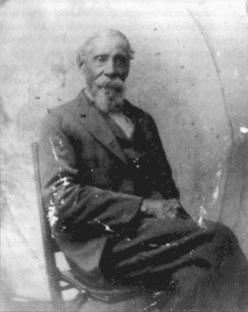
While Brown’s intent was providing assistance to the new farmers in the Timbuctoo settlement, it was Lyman Eppes, Senior,
[From Adirondack Almanack – Public Domain]
one of those farmers who assisted Brown and his family in constructing the house that would become their home.
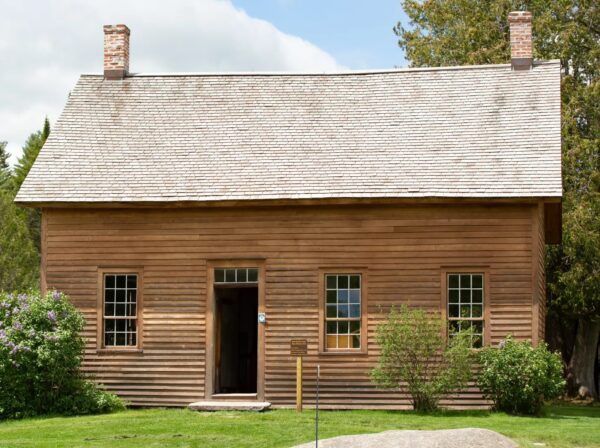
Despite feeling a deep spiritual connection to the farm in North Elba, Brown, felt obligated to repay Simon Perkins for his losses. As a result, he spent very little time there between 1850 and 1855. In addition, according to the book John Brown and his Men, “he considered it a good refuge for his wife and younger children, when he should go on his campaign; a place where they would not only be safe and independent, but could live frugally, and both learn and practise (sic) those habits of thrifty industry which Brown thought indispensable in the training of children.”
It was this deep connection that prompted his widow Mary Ann Day Brown to return his body to the site after he was hanged for treason in December 1859 (following his failed 16-18 October raid at Harper’s Ferry).
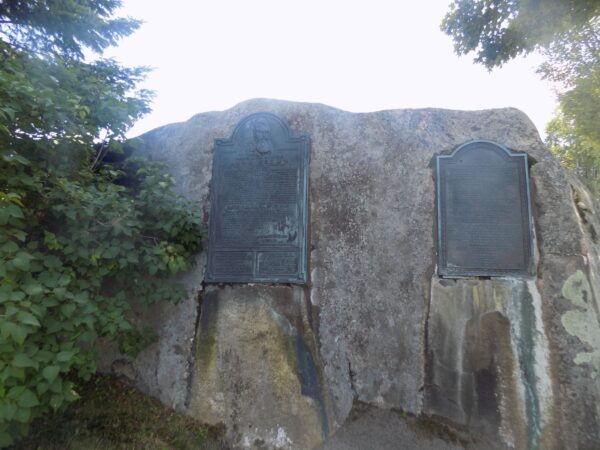
In a letter written as he was awaiting execution, Brown penned this summary of his belief in what is likely his most often quoted, prescient and, perhaps, misunderstood statement, “I, John Brown, am now quite certain that the crimes of this guilty land will never be purged away but with blood.”
The end of my day
I returned late in the afternoon for some ice cream, a little rest, supper, and a concert.
According to the National Day Calendar, 23 July is National Vanilla Ice Cream Day so what better day, I thought, to patronize Emma’s Lake Placid Creamery. The long line moved quickly but when I reached the front to place my order I learned that they only offered soft-serve plain vanilla. I like soft-serve but, to me, it’s not really ice cream so I chose a scoop of pistachio and a scoop of Roadrunner Raspberry. The latter met my expectations. The former, despite chunks of whole pistachio nuts, didn’t.
As I’ve noted in some of the other journal entries, it’s important when traveling to allot time to simply be present in the location. This was that time. I finished my ice cream in an Adirondack Chair and simply watched the people paddle boarding and sailing on Mirror Lake.
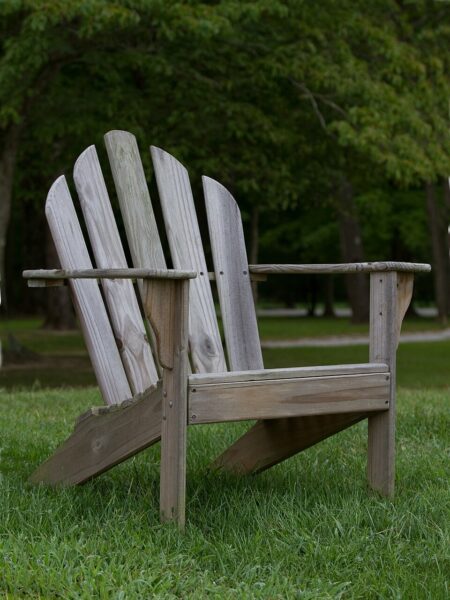
(Originally called the Westport Chair, it was invented in 1903 by Thomas Lee while he was at his vacation home in Westport, NY.)
I had a second consecutive Italianate dinner at Luna that initially had me worried that I’d encountered the same chef I’d had last night. The bread and salad were nearly identical. Fortunately, the Chicken Caprese – served with linguini rather than rigatoni – was superior.
Finally, I wandered back to the Band Shell Park where I was treated to a curiously eclectic concert by the Lake Placid Sinfonietta with a program of selections by Elmer Bernstein, Brahms, Puccini, Leroy Anderson, Jerry Herman, Aram Khachaturian, Bizet, and Henry Mancini.
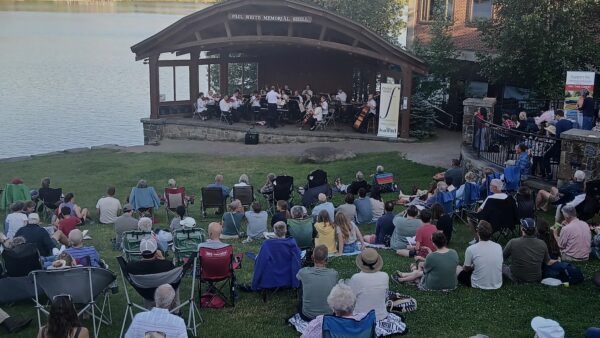
This 20-musician orchestra isn’t in permanent residence. It’s a collection of musicians from around the country who gather for several summer weeks in this corner of northern New York. The orchestra played well-enough and it was a pleasant hour to close the day.
Next up, an exploration of how the 1932 Games came to Lake Placid and, of course, you can look at my other photos here.
-
It’s just a shot away – Prizren
March 6, 2026 -
Some things looking better, baby – Getting into Kosovo
March 4, 2026 -
Here, where the sky is falling – Kukës
March 2, 2026 -
That’s when we fall in line ’cause we got Berat
February 27, 2026 -
Walking on the big stuff – a climb to Tragjas
February 25, 2026
2 responses to “Lake Placid and Me – part three”
I know you didn’t want to take part in the ski jump (and I agree), but your notes Wednesday showed a far off picture of the bobsled/luge course.
I’ve heard you can still take a ride on it, and I was thinking Friday’s blog would include a visit to that venue. Did you ever get over there?
No. I got too caught up in the John Brown thing and had burned out a little on visiting the Olympic Sites.