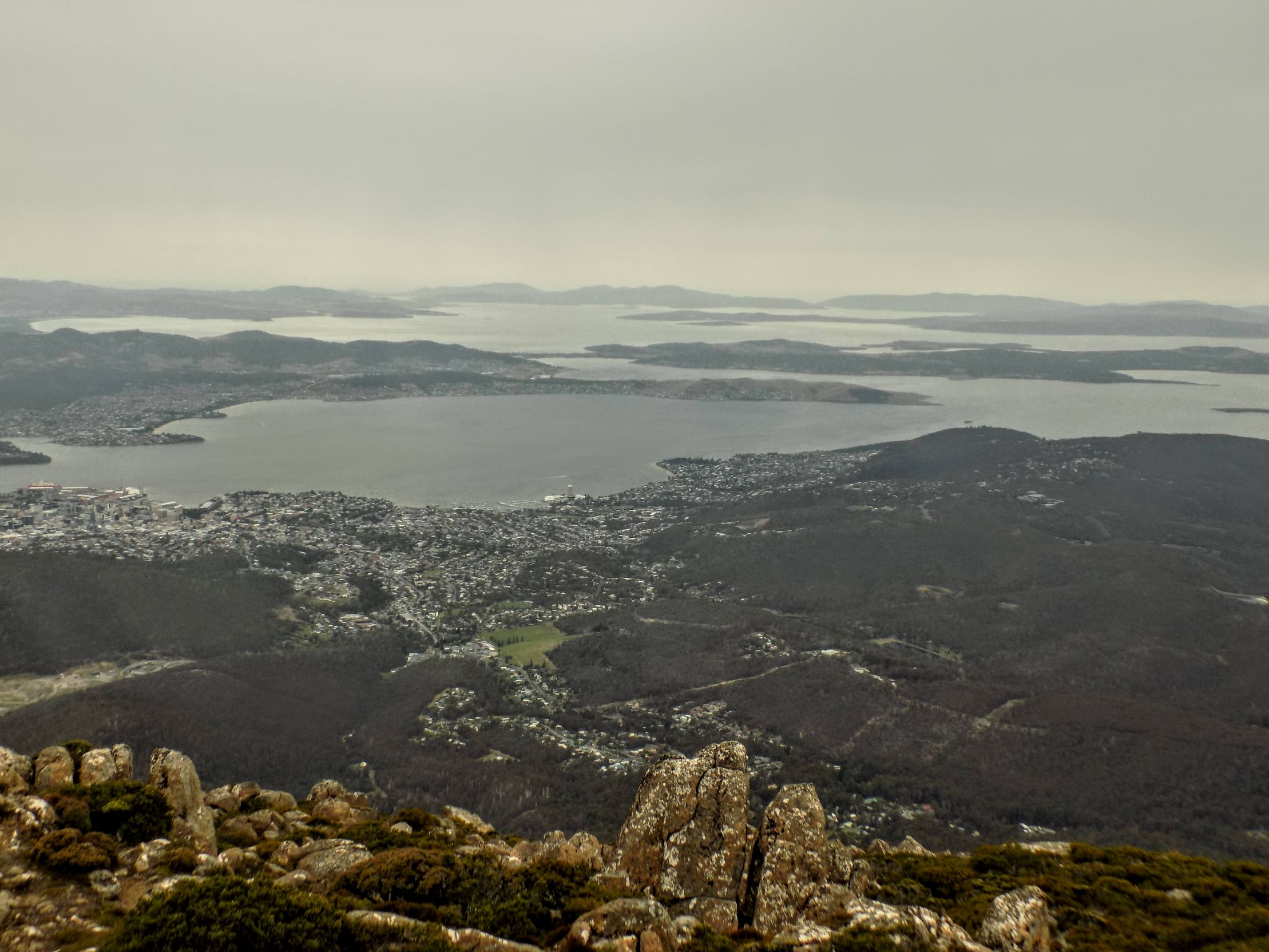
far from its frowning walls
If you happen to be in Hobart on a Saturday your de rigueur activity is visiting the Salamanca Market.
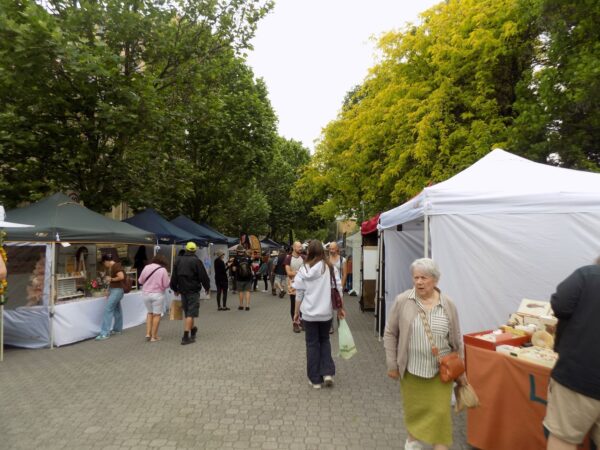
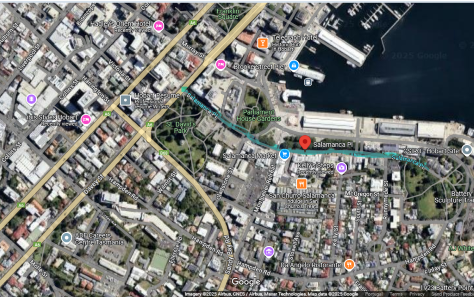
The Hobart City Council established the market in 1972 and it opened that year on 22 January with a mere 15 stalls. Nearly 53 years later, it boasts more than 300 vendors and stretches more than 700 meters from Davey Street at the top nearly to Princes Park and filling Salamanca Place (highlighted in blue below).
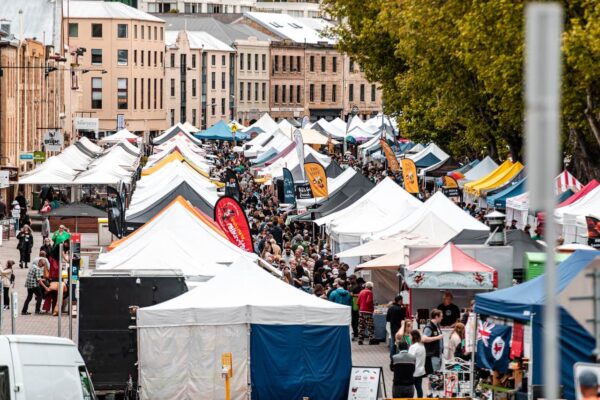
The market operates every Saturday (and only on Saturday) from 08:30 until 15:00 and of this you can be certain: the later you arrive in the morning, the bigger the crowd is likely to be. Early on, the crowd will be akin to the one you see in the photo above. Later, it’s more likely to look and feel like what you see in this photo from Pulse Tasmania.
This market is clearly more organized and more professionally run than the Feira da Ladra in Lisbon which has a sense of disorder layered atop its order. I also have the feeling that many of the vendors in Lisbon are more willing to haggle (something I’m not inclined to do and so am relatively inept at doing) than the vendors at Salamanca. While Feira da Ladra has its share of professional vendors, it also has much more the feel of a flea market where people are essentially saying, “Please buy my junk and make it your junk.” Oh, and it’s about 300 years older than Salamanca.
If you’re getting the feeling I wasn’t overly impressed with the Salamanca Market, you’re on the right track. I’m not much of a shopper so I’m not likely to be impressed by malls and markets. I did spend some money there picking up a small gift for a neighbor who was being quite neighborly while I was away, a new accessory to hold my credit cards (I had a long and interesting political chat with the vendor.), and some honey ice cream that must have been simply okay because it merited not a single exclamation point in my notes.
What did merit an exclamation point happened while I was standing looking a bit at sea wondering where to go to meet the bus that would take me to the top of Kunanyi (AKA Mount Wellington). I heard a voice call, “Todd?” I didn’t fully recognize it but turned in the direction whence it came. It was L – the woman I’d met on the Bruny Island Tour Friday. We chatted a bit and I learned that she was also going up Kunanyi but later in the day. Still, we made arrangements to meet, share drinks, and perhaps supper. Then she pointed me in the right direction and I set off to meet the bus.
Kunanyi
While I haven’t included an Acknowledgement of Country for everyplace I’ve visited, I suspect I’ve done so often enough that some of you have stopped reading them. Even if that’s the case, I plan to continue writing them. I mention this now because I noticed its absence on the Bruny Island tour yesterday and again this morning when I boarded the “kunanyi/Mt Wellington Bus”.
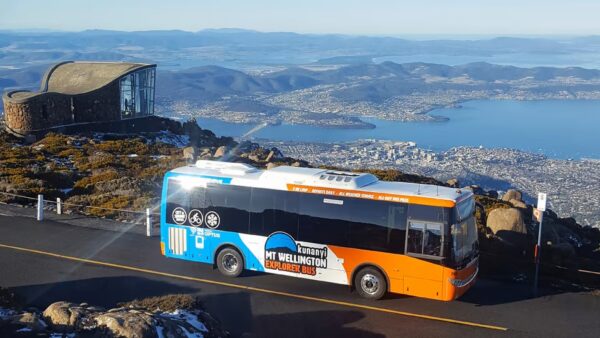
[From GetYourGuide.com]
The announcement was even more conspicuously absent given the use of the Aboriginal name on the exterior. As I noted previously, even the small gesture of an Acknowledgement of Country is voluntary and, given the ferocity with which some Tasmanians want to invalidate entire segments of the state’s history if small historical details are inaccurate, it’s unsurprising that open Acknowledgements are uncommon.
No WABAC
Rather than taking you through another tedious history of mountain formation, I’ll take you through a tedious history of the forces that shaped Kunanyi as we see it today. It may be a notable feature of Hobart’s landscape but, at 1270 meters above sea level, Kunyani isn’t imposingly tall. It’s still tall enough to feel a 10° drop in the temperature from Hobart’s nearby CBD, though.
Ascending the mountain you have a chance to see one of its most notable features – the dolerite Organ Pipes.
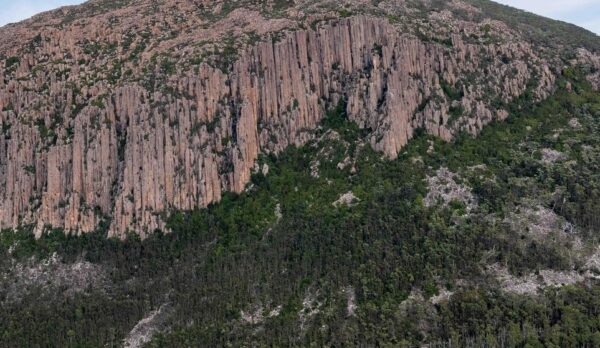
Had I had the energy to brave the rain and wind that governed the afternoon I might have considered the hike that would have gotten me a closeup view like this.
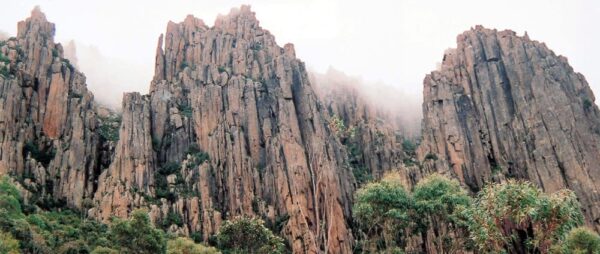
[From TrailHikingAustralia]
(Nope. Even on a pleasant day this nearly 8km hike with its 458 meter ascent would be too much for my old bones to attempt.)
The Organ Pipes are dolerite columns that formed through the process of columnar jointing as the magmatic dolerite cooled and contracted. However, many rocks found below 700 meters in altitude are of Permian and Triassic origin indicating a long geological history that likely involved tectonic uplift in addition to the intrusion of dolerite that demonstrates the significant magmatic activity responsible for the mountain’s current status.
The main geological processes that have shaped Kunyani as we see it today are glaciation, cryoplanation, and periglacial weathering. We’ve encountered glaciation through this trip and know that the Earth experiences periods of glacial advance and retreat. Kunyani has experienced at least six periods of glaciation over several million years.
Cryoplanation is the modification of a land surface by intensive frost action that generally decreases the steepness of slopes and lowers the tops of hills and mountains. Some of the dolerite columns have toppled due to periglacial weathering a process that, like the others is part of a freeze-thaw cycle. Other erosive processes contribute to the latter.
The views
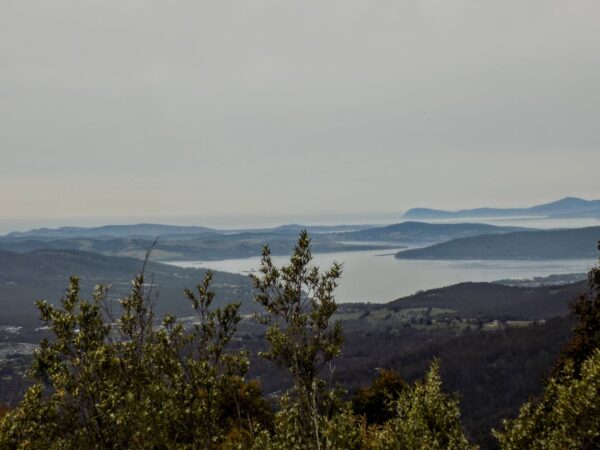
even on a windy, rainy, and chilly day
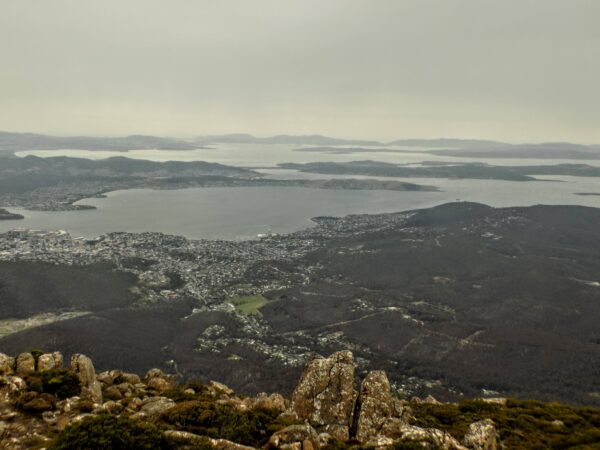
are worth the trip up as is the little extra effort
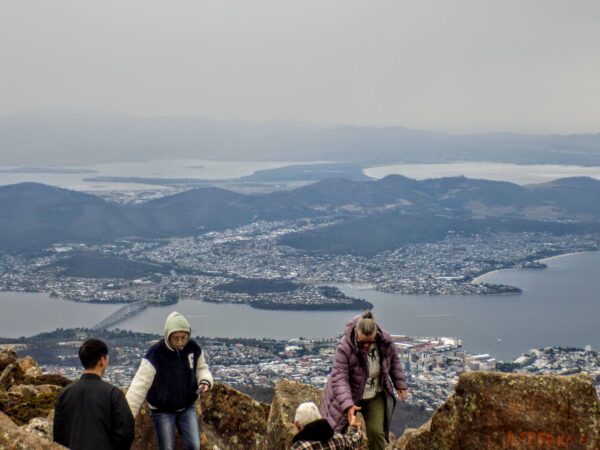
needed to get to the mountain’s pinnacle.
The Female Factory and a Cascade or two
(I put my armor on, show you how strong I am)
Since she was ascending the mountain after I did, I sent L messages to prepare for the wind and rain she might encounter at the top. We firmed up a time to meet and, at L’s urging decided time permitting, to visit both the Cascades Female Factory and the Cascade Brewery. She met me at Hadley’s and we rode the bus from the CBD. Hopping off the bus at stop 13, we crossed the street to the Cascades Female Factory which is one of the 11 sites that together form the Australian Convict Sites World Heritage Property.
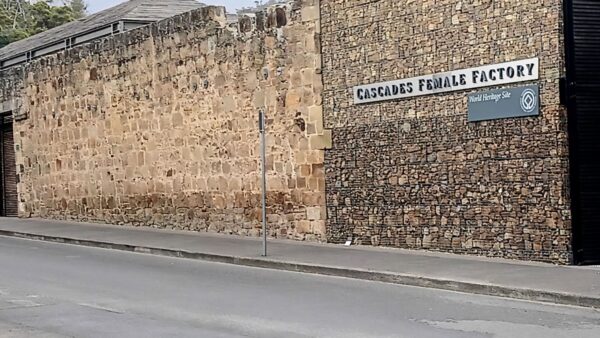
Unfortunately (or perhaps fortunately) we arrived just a few minutes before the site closed for the day. Still, we had time to peek inside and learn a few things.
Great Britain began transporting convicts to Australia in 1788 with the First Fleet arriving in Sydney on 26 January 1788. Over the ensuing 80 years, approximately 162,000 people – 25,000 of whom were women – had been transported when the last ship, the Hougoumont, docked in WA on 10 January 1868. Prisoners were sent to Van Diemen’s Land for 50 of those years beginning in 1803 and ending in 1853. More than 16% of the 73,000 convicts sent to Van Diemen’s Land were women. Of the 13,000 women sent to the island, more than half spent time in the Female Factory.
Intended as a means of reform and employment preparation, the Female Factory was a grim, overcrowded space with poor sanitation and high rates of disease. More than 200 women died there and the infant mortality rate for those who arrived or became pregnant was above 26 percent. On the other hand, a brochure from the site states that some women, “managed to ultimately succeed in life and become prosperous citizens once they left the Factory.”
Much of this information comes from my post trip research. Successes or no, it strikes me as a bleak way to prepare for a beer tasting at the
Cascade Brewery.
Founded in 1832 it’s Australia’s oldest continually operating brewery.
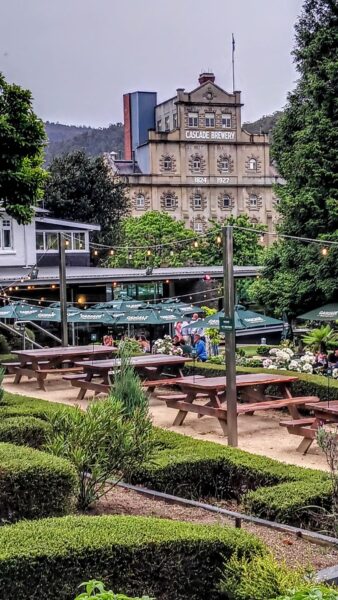
Perhaps fittingly, although it was part of a legitimate business – the Cascade Mills and Brewery founded by Hugh Macintosh with his nephews Henry and Charles Degraves – the conventional history of the brewery’s founding has some blarney to it. The history reported until 2011 was that the three men above established the mill while Peter Desgraves, who was a convicted thief and undischarged bankrupt, was serving his prison sentence and that it was Peter who founded the brewery.
This wasn’t the case. Historian Greg Jefferys uncovered evidence showing that the major partner in the Cascade Mills and Brewery was Hugh Macintosh and that Degraves had falsified the brewery’s history after Macintosh’s death in 1834. This feels somehow fitting for a brewery established in a penal colony.
L and I shared some polenta fried squid and each had a tasting paddle
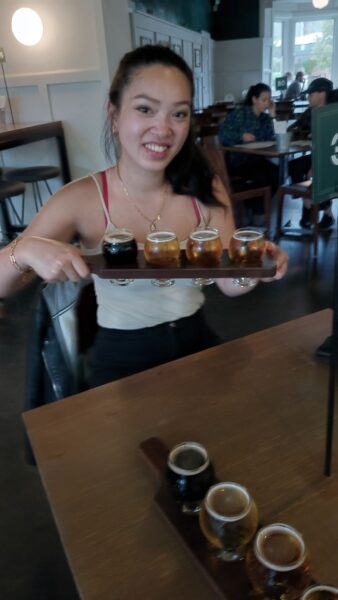
consisting of Cascade Export Stout, Cascade Pale Ale, Cascade Draught, and Cascade Lager. I liked the draught and lager about equally and the pale ale and export stout much less so.
After our snack and beer, we wandered the grounds for a bit
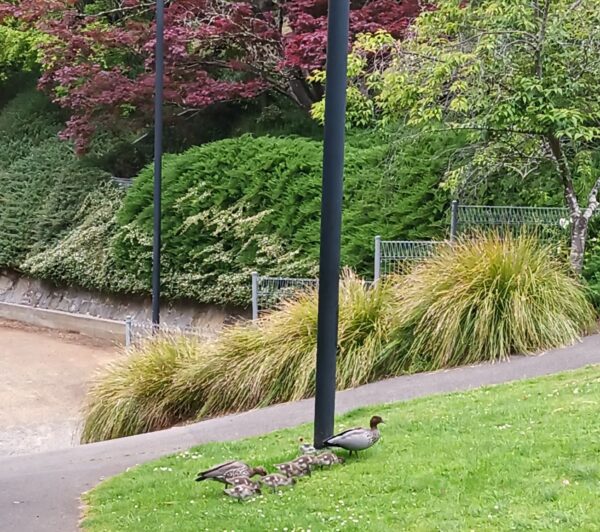
before getting the bus back to the CBD. I’m happy to say we’ve exchanged several messages over WhatsApp in the ensuing months.
Tomorrow, I’m off to Port Arthur – another of the 11 locations in the Australian Convict Sites World Heritage Property.
As always, you now have permission to look at the day’s remaining pictures.
-
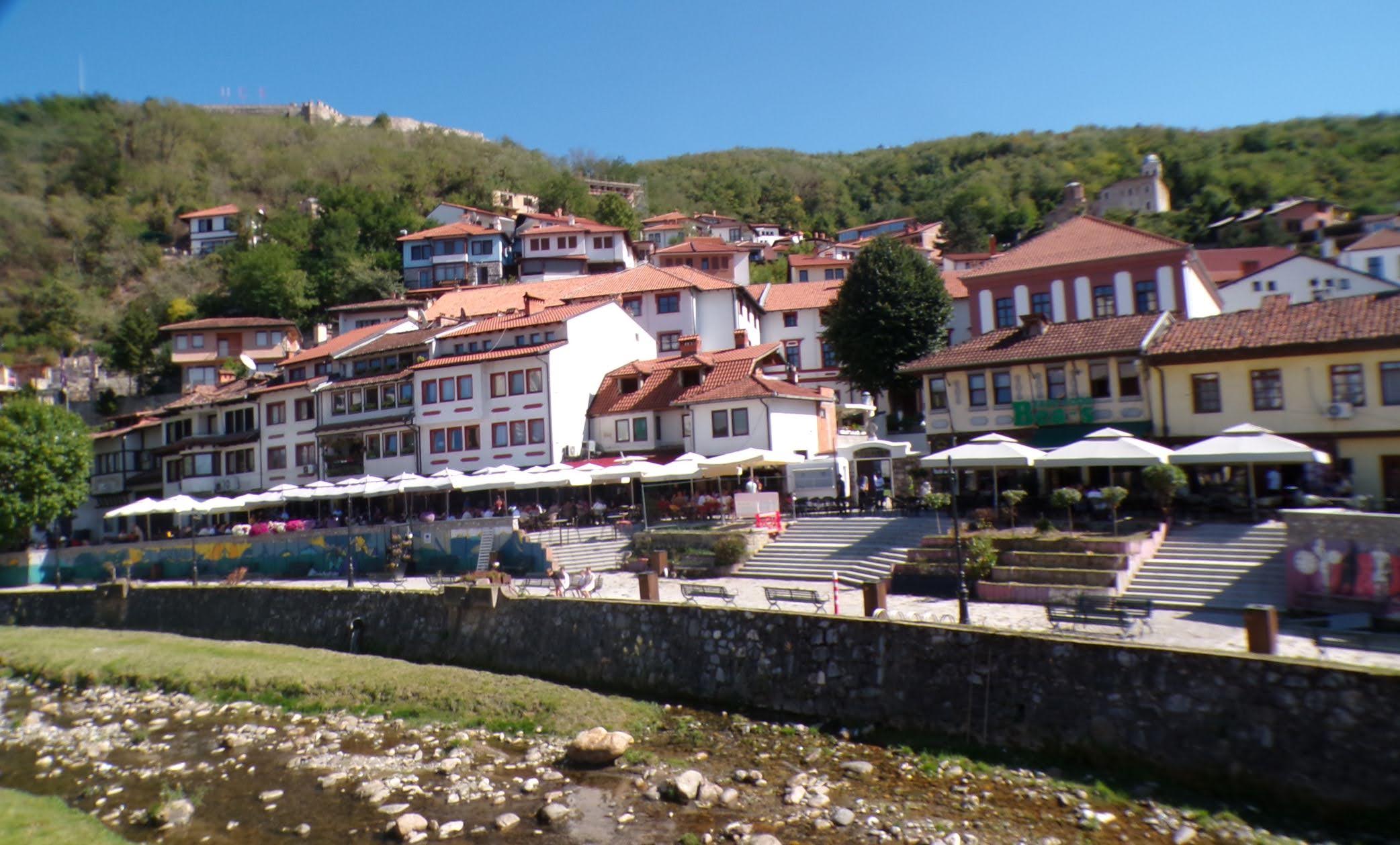
It’s just a shot away – Prizren
March 6, 2026 -
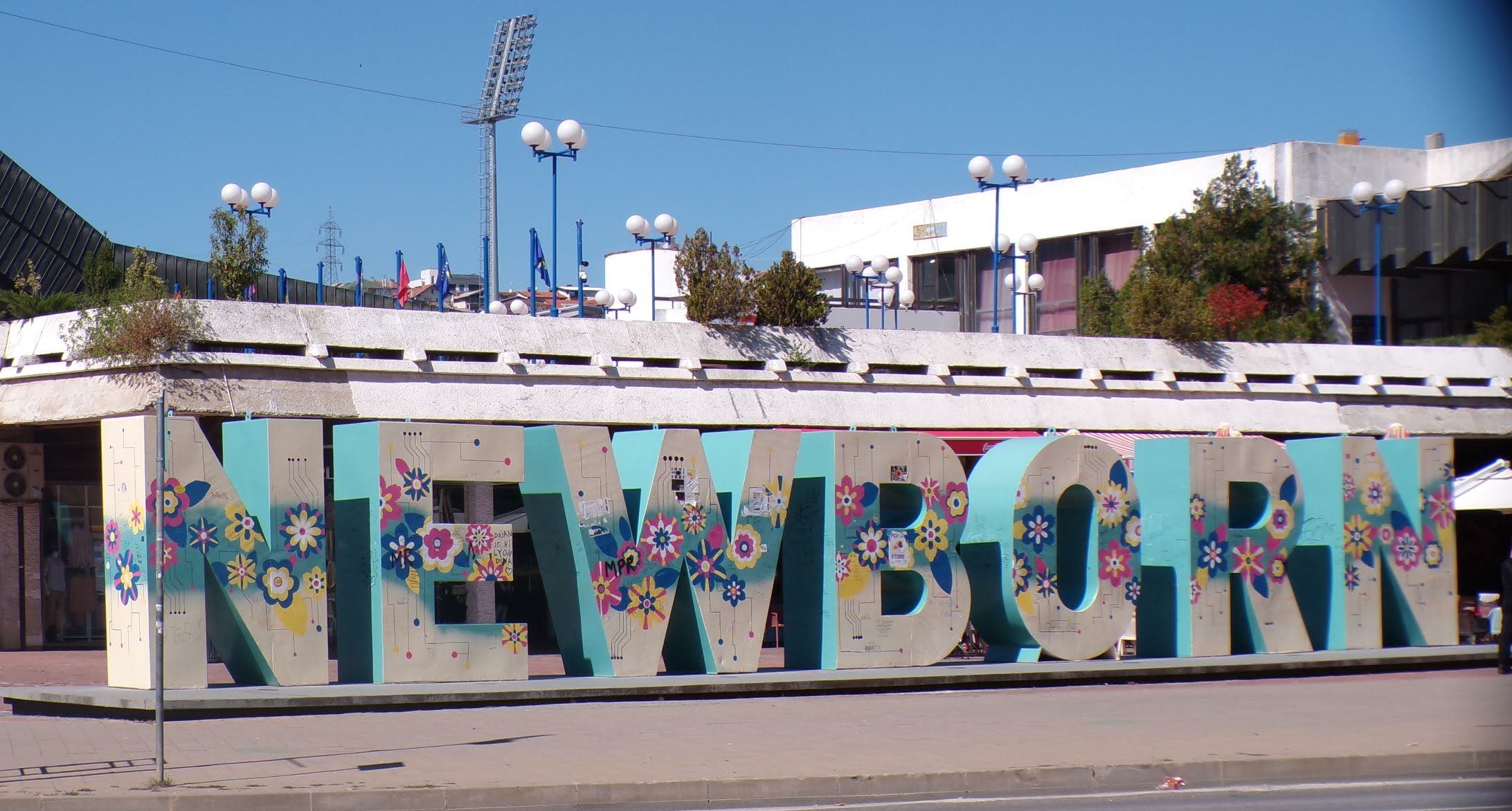
Some things looking better, baby – Getting into Kosovo
March 4, 2026 -
Here, where the sky is falling – Kukës
March 2, 2026 -
That’s when we fall in line ’cause we got Berat
February 27, 2026 -
Walking on the big stuff – a climb to Tragjas
February 25, 2026
4 responses to “far from its frowning walls”
I’m here to haggle Todd. Nice read.
Changed my mood after what happened here earlier.
Super view from the top – in your photo.
That’s L? Oh my.
Nicely written, Todd! It’s great to be able to go through the day again! I always enjoy talking to you and see your perspective of things
Thanks for accompanying me and mentioning me here 🙂
Thanks, L. I enjoyed our time in Hobart and our continuing message exchanges.
That’s L. We stay in touch over WhatsApp.