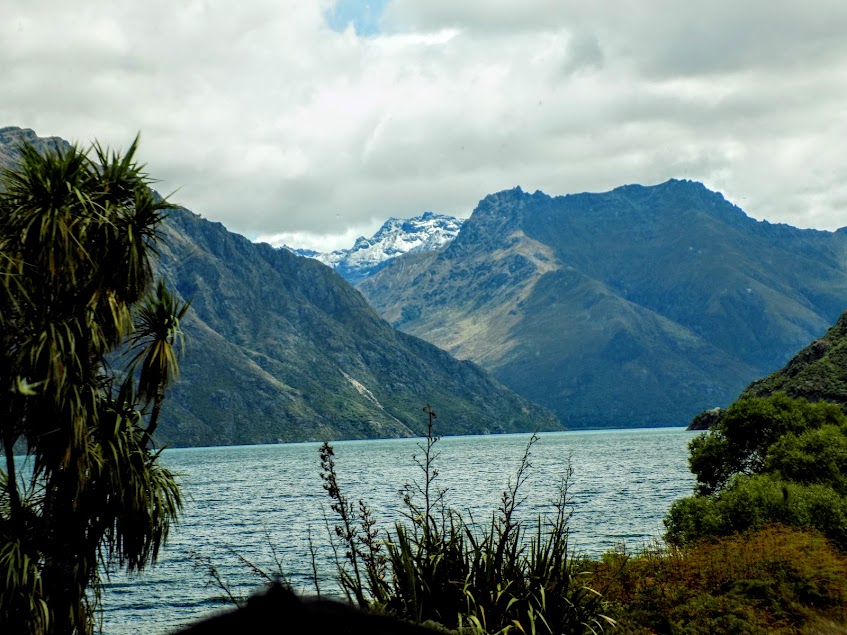
…when the weather is high
I’ve been struggling to find the motivation to write today’s post. You see, I think when RS planned the day’s activities they anticipated the highlight would be a visit to Real Country Farm and it might have been that for some in the group but it wasn’t that for me. I’ll explain why when we reach the farm. Fortunately, that wasn’t our sole activity. First, we’d make a brief 15-minute stop in Garston and another in Arrowtown afterward. Why Garston and why a mere 15-minutes? It’s not particularly clear from the map on this sign there
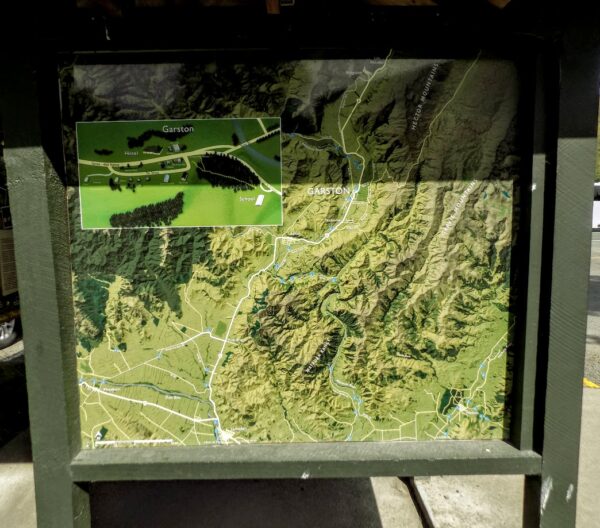
and I’m not certain this view from Google Maps conveys it significantly better
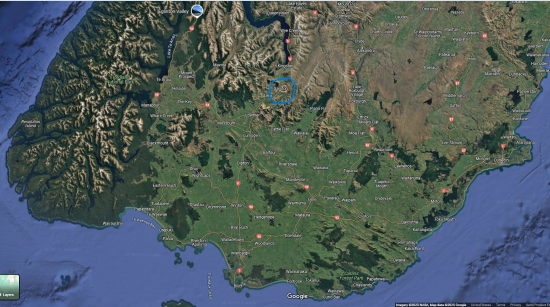
but Garston is purported to be the most inland settlement in Aotearoa. So, as far as settlements are concerned we were perhaps as far from the Pacific Ocean and the Tasman Sea as one can be on Te Waipounamu.
(Of course, as we learned in this post these determinations are contextually dependent. For example, according to a February 2009 article in Otago Daily Times, “The position of the “unofficial most inland point” is S4500.340′, E16922.245′, 119.44km from the Tasman Sea at Milford Sound and 119.44km from the Pacific Ocean, near Hampden.” In this case, the closest town appears to be Cromwell which is about 115 km northeast of Garston.)
However, other than being farthest from the shoreline, there isn’t much else to see and do in Garston. Hence, 15-minutes.
Here’s to the ladies who shear
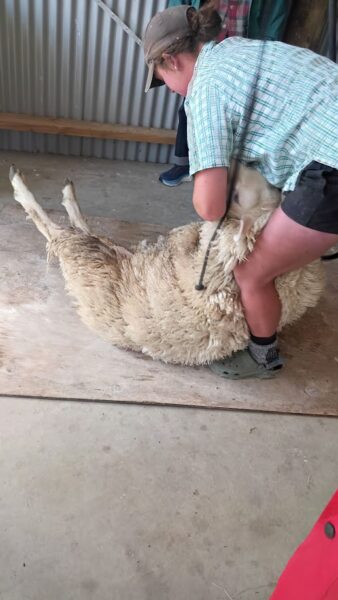
There’s a long running joke about sheep outnumbering people in Aotearoa New Zealand. That’s been the case since authorities began tracking the number sometime in the 1850s and, while it remains true today, the sheep to person ratio has fallen below 5:1 for the first time. So, in a country famous for producing wool that’s notable for softness, comfort, strength, and durability, and it’s grass-fed tender lamb, it makes sense to schedule this sort of visit.
Thus it was that about 15-minutes after we left Garston, we reached Real Country – a passion project for its owner Laura Douglas. She offers a farm skills workshop, private farm tours, and clay target shooting among a mix of activities.
Our group took part in the Sheep Shearing Experience. Here’s a description from the Real Country website.
Experience the thrill and challenge of sheep shearing with a [sic] up close a [sic] personal Sheep Shearing Farm Experience! This isn’t a simple haircut – it’s a test of skill, strength and precision. You wont [sic] just learn what it takes to shear and watch our skilled shearers take the wool off a sheep, you will also learn about the wool markets and the history of this impressive product.
Kingston Station is a 22,000 acre picturesque sheep and beef farm with a rich history and there is much to be learned from our farming hosts.
- Sheep shearing demonstration
- Sheep dog mustering demonstration
- Whip cracking lesson
- Meet and greet the local farmer to understand their farming operations
- Feed and interact with the friendly farm animals
Those of you who read the record of my Australia trip will probably recall that I’d attended a sheep shearing demonstration and seen a sheep dog mustering demonstration at Rob’s Shearing and Sheepdog Demo less than a month before. A bigger spirit than I might have worked up some enthusiasm for the whip cracking lesson but I’ve been retired long enough to know that my whip cracking days are over.
You can see a sheep being shorn in the photo above and the sheep dog demonstration was interesting because Laura’s approach was somewhat different from the one we’d seen at Rob’s – although that could have been because of the mix of dogs we saw. One was in training and the other in semi-retirement.
After feeding the animals – and I find hand feeding even the domesticated horses, alpaca, and deer a calming activity – we indulged in a brief smoko. In our event, this was coffee or tea (thank goodness) accompanied by scones with clotted cream and jam. And, of course a few of us engaged in the great debate:
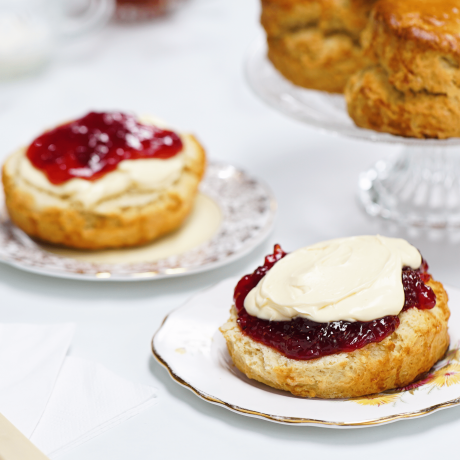
Do you layer cream or jam first. I am an advocate of the Cornish tradition of jam first. I find it easier to spread the jam to a preferred amount and also prefer the way the jam seeps into the scone providing a flavorful sweetness to the base. To me, it’s more appealing to the eye. J, argued in favor of the Devonshire method that treats the cream more like a buttery base with the jam expressing itself as a burst of sweet topping.
Which way are we pointing? It must be toward Arrowtown.
Let’s start with this. The drive on highway 6 from Real Country to Arrowtown – much of it along the shore of Lake Wakatipu – was beautiful –
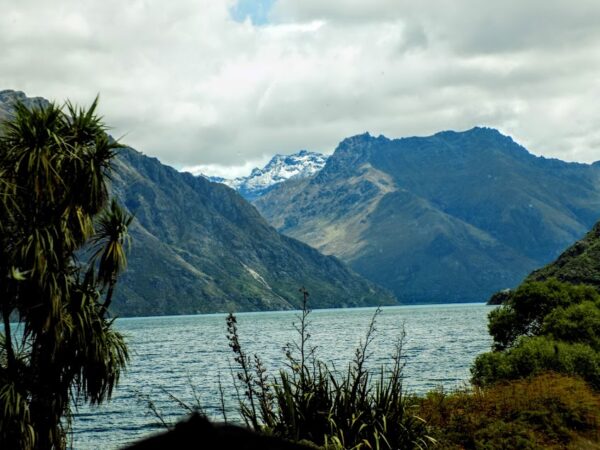
even cruising by in a bus at 80kph. If that first sentence leads you to infer that I’m not going to be lavishing high praise on the village itself, you’re probably correct. It was charming enough and it may be that I’d become a bit jaded by this point of the trip (remember I started in October and I’m writing about a day in mid December).
In August 1862, Jack Tewa, a Māori sheep shearer, discovered gold in the Arrow river. Once word got out, it triggered the Otago gold rush and before the end of 1863 more than 1,500 miners had congregated in the area establishing a place they called Fox’s because and Irishman named William Fox claimed to have been first to find gold there. His claim didn’t survive scrutiny and the village was soon renamed Arrowtown.
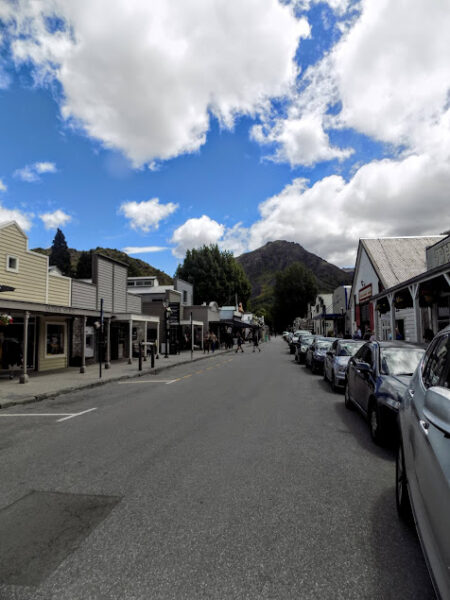
For me, this was an odd stop – not quite long enough to visit some of the few attractions such as the settlement that housed an influx of Chinese miners who arrived in 1869 or the small but possibly overpriced Lakes District Museum and Art Gallery but too long to do little more than shop and wander about the town whose main street you can see in this photo.
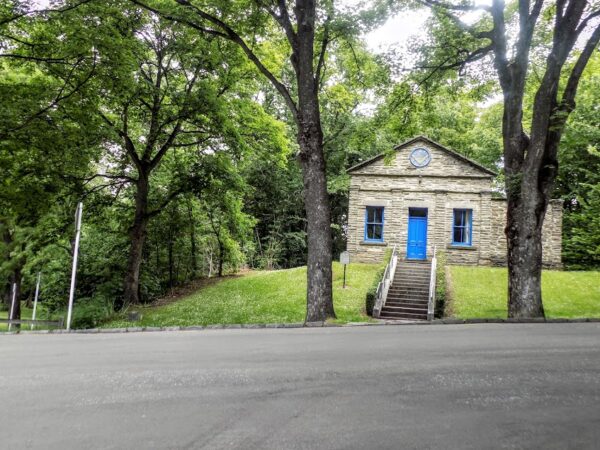
As I wandered around Arrowtown I managed to locate a Masonic Lodge
and had a cheeky but attractive panhandler try to induce me to share a bit of the sandwich and tea I snacked on
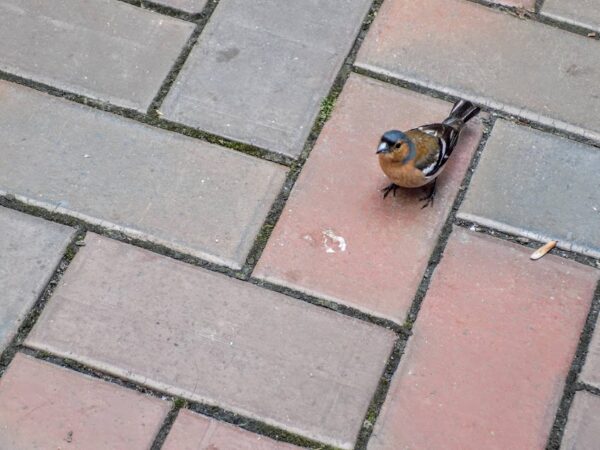
but otherwise I was content to reboard the bus and head off to Queenstown.
Was I wrong to hope I’d see Brian May, Roger Taylor, John Deacon?
We were in Queenstown, after all. Perhaps it would have been better to think of myself as being in Tāhuna to temper my expectations. Since Māori visited Tāhuna as a summer hunting ground for moa and to source pounamu and hadn’t established a pā or any sort of permanent settlement there, I think it’s fair to say that Europeans were the first to settle Queenstown in the 1860s as adjunct to the gold rush in the Otago region. The town was named by Irish settlers after Queenstown in County Cork, Ireland.
Rather than gold mining, this largest city in Otago with a population about 28,000 now relies on tourism as its main industry and the natural assets that would make it such are readily apparent all around. However, because of rising housing costs, traffic congestion, and strains on resources, the city has used zoning regulations to keep a limit on center city hotels.
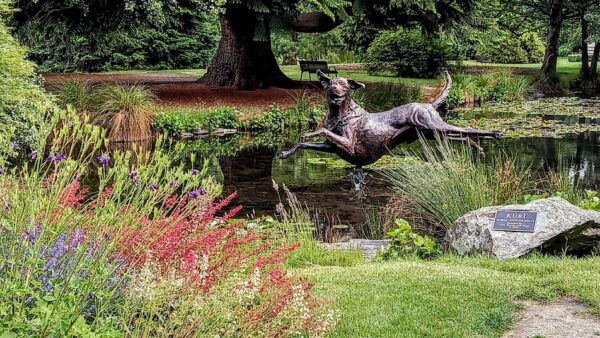
Our hotel was on the outside of the center city but, after checking in, we had time to walk with F into the Botanic Garden
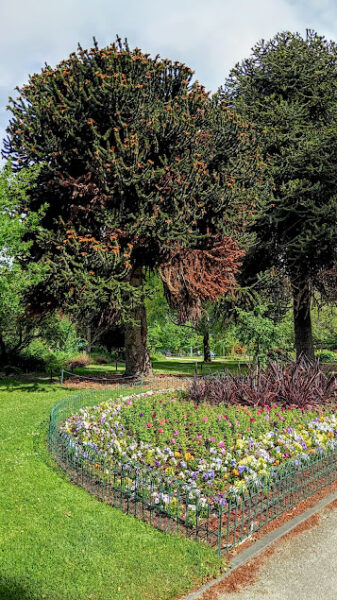
where we saw several monkey puzzle trees (natives of South America) and this sculpture of Kurī – the dog Māori brought with them.
We also walked into the business district
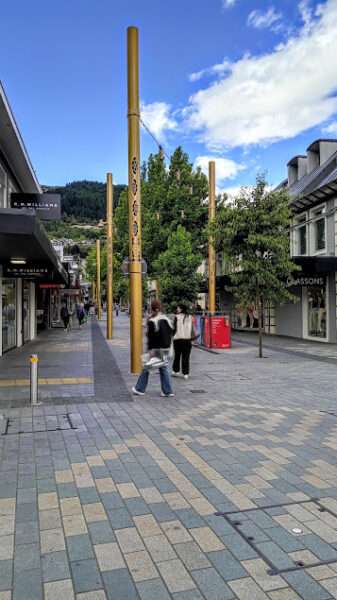
before returning to the hotel for our bus ride to our dinner at
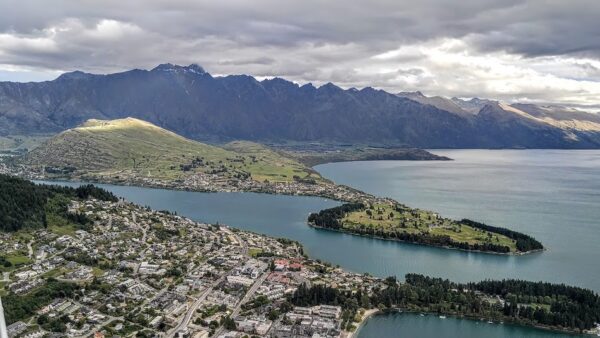
the Stratosfare.
This restaurant is at the top of Bob’s Peak and patrons need to take a five-minute cable car ride ascending about 480 meters to reach it. Here’s what I’ll say about the dinner: There’s a certain class of restaurant where you go not primarily for the food but for the atmosphere or, in this case, for the view.
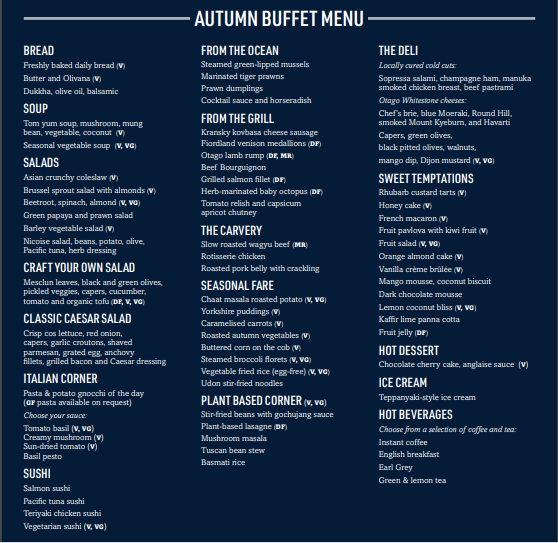
I will also say that, what the Stratosfare’s buffet lacked in quality, it certainly made up for in quantity. Thus, for the second time on this journey I’m reproducing a mindbogglingly enormous menu.
(I remember taking a trip to Manhattan with my parents when I was quite young when my father took us to a restaurant called Top of the Sixes. It was on the 41st floor of the building at 666 Sixth Avenue and was among the few rooftop restaurants in New York at the time. I’d like to say I remember the quality of the food but I was very young and remember mostly that it required relatively formal dress and I was a sharply dressed seven-year-old.)
Tomorrow, we have a short flight to Wellington and our return to Te-ika-a-Māui where we’ll spend the final days of our journey.
The remaining pictures from Real Country and Arrowtown are in this folder and those of Queenstown in this one.
-
It’s just a shot away – Prizren
March 6, 2026 -
Some things looking better, baby – Getting into Kosovo
March 4, 2026 -
Here, where the sky is falling – Kukës
March 2, 2026 -
That’s when we fall in line ’cause we got Berat
February 27, 2026 -
Walking on the big stuff – a climb to Tragjas
February 25, 2026
2 responses to “…when the weather is high”
I might have guessed you have taken part in whip cracking with Laura. 😉
Let’s just say I left all the whip cracking to her. 😬