Nobody on the road – Pākehā arrive
The first Pākehā
Whether you date their arrival to the thirteenth century or to the eleventh, the people in the seven waka hourua who settled in Aotearoa had several centuries of relative isolation before the December 1642 appearance of a ship commanded by the Dutch explorer Abel Tasman.
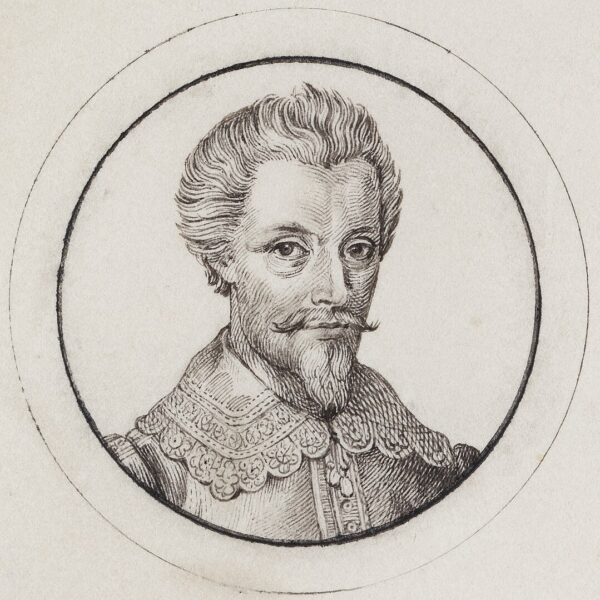
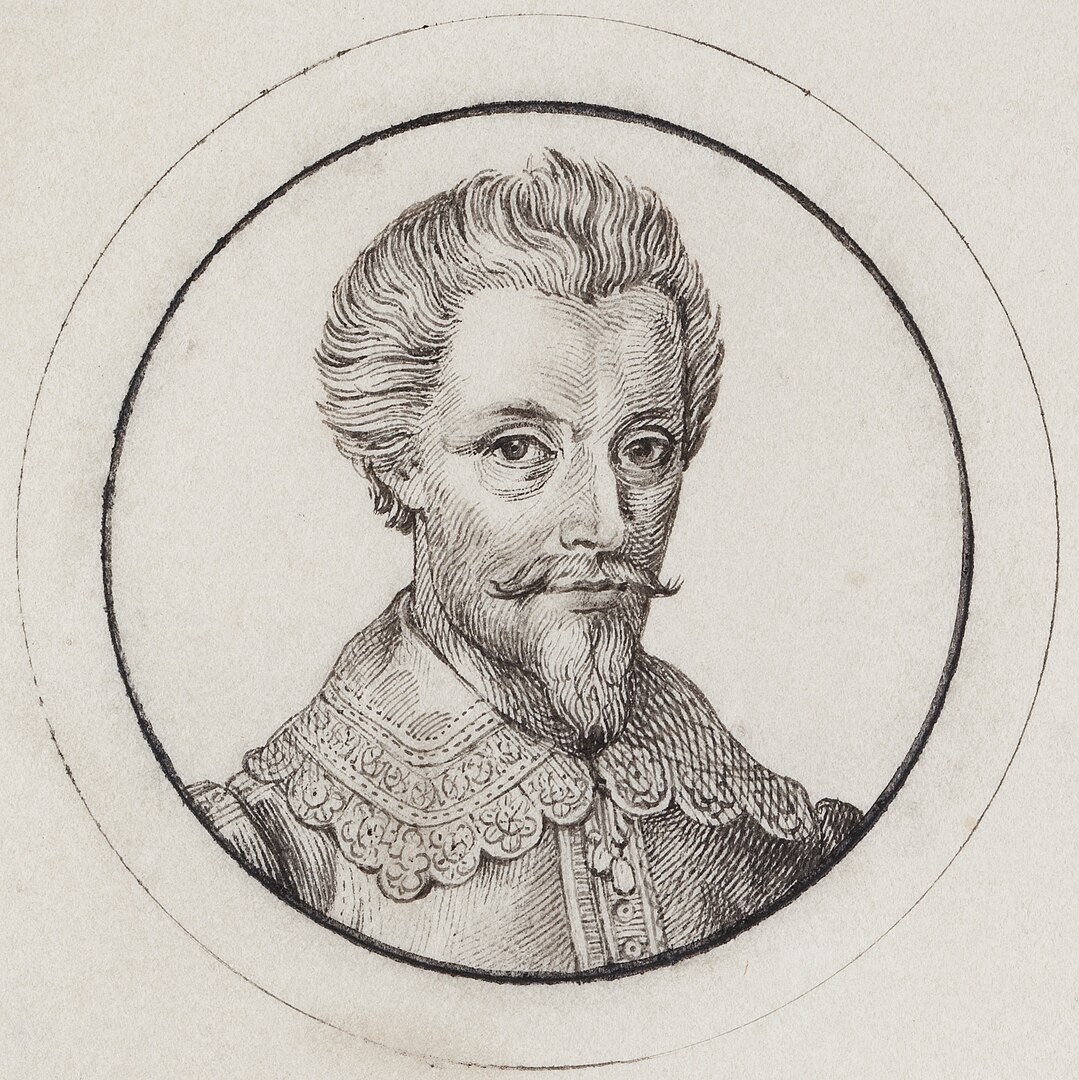
[Tasman portrait from Wikipedia – Public Domain]
It appears that the local iwi spotted the ship along the northwest coast of the South Island near a place they named Tiropahi.
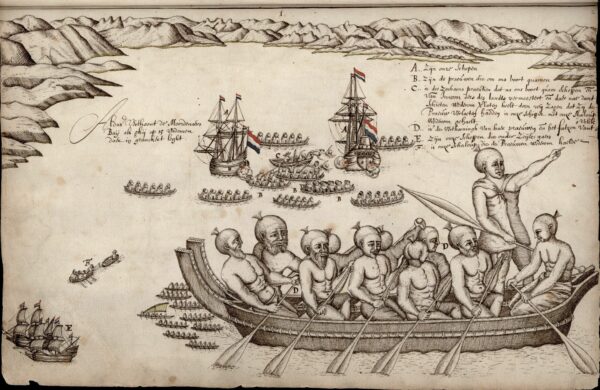
Several days later, Tasman anchored farther north in Mohua or what’s known today as Golden Bay. It was here that Tasman and his crew had their first encounter with the local Ngāti Tūmatakōkiri iwi. This meeting didn’t go well for either side. (Aotearoa’s iwi and hapū wouldn’t come to have a unified view of themselves as Māori until the nineteenth century.)
The Ngāti Tūmatakōkiri were in the process of expanding their territory – they would eventually control most of the northwest section of the South Island. It’s likely they didn’t know whether they needed to view these ships as a threat particularly since it was the height of kūmara growing season, a vital and fiercely protected food source.
(While I won’t embark on an exploration of it here, the presence and importance of kūmara to Māori is a topic worth its own investigation. This sweet potato is, like all potatoes, native to South America so its adoption by Māori and other Polynesian people is evidence of pre-Columbian contact between Polynesian and Quechua people. In fact, the Māori word kūmara is nearly identical to the words khumara, kumar, and others that are used in several Quechua languages.)
Another possibility is that they perceived the Dutch as patupaiarehe (fair-skinned fairy folk or ghosts) and sought to frighten them away by blowing some sort of horn that the Dutch, thinking it appropriate, answered by sounding horns of their own.
[From Wikipedia – Public Domain]
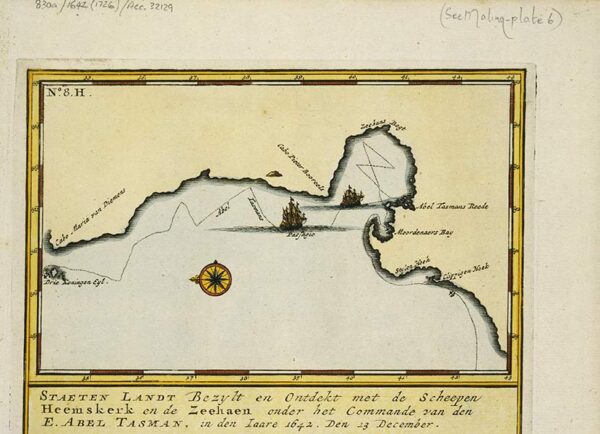
The Dutch ship’s log records having seen fires on shore before they anchored in Mohua. It’s also possible this is another reason the Ngāti Tūmatakōkiri might have assumed an aggressively defensive posture since this was a common way for one hapū to warn another of potential danger. There was a violent clash that appears to have been instigated by Ngāti Tūmatakōkiri. In the ensuing fight, one local person was killed as were four Dutch sailors. Tasman named the place Murderers Bay,
[By permission of the National Library of New Zealand]
sailed away and never made landfall in the land he initially called Staten Landt because he believed it might have been connected to South America. When this proved incorrect, Joan Blaeu, the official Dutch cartographer to the Dutch East India Company, first used the name “Nova Zeelandia” on his 1646 global map.
They’re Back!
Although there was probably some limited European contact such as the occasional whaling ship with the land now known as New Zealand, the Europeans effectively left the Māori untroubled for the following 127 years when Captain James Cook arrived on the first of his three voyages there. It might be said that, although he violated his own principle (and general orders) of avoiding conflict with indigenous people, the disastrous nature of that first encounter set a tone for interactions with Māori that would persist for generations.
Those who read the story of my Australian trip might recall that, for the Indigenous People there, a welcome ceremony was essential before crossing into another group’s Country. The Māori tradition of the pōwhiri, as we’ll learn later, is somewhat different. It’s both a ritualized welcome and a challenge that can include a pōwhiri haka. As part of the ritual, the visitor is expected to demonstrate their peaceful intent by presenting the hosts with a gift.
(Those who have seen New Zealand’s All-Blacks Rugby team perform the Ka Mate haka – a haka that celebrates the triumph of life over death and celebrates survival in the face of adversity might understand how a haka that’s intended to communicate something of a challenge could be viewed as intimidating and aggressive. Here’s the Ka Mate for those who haven’t seen it.)
Cook arrived in October 1769 (admittedly not summer) on the east side of the Tūranganui River, near present-day Gisborne in a bay called Tūranganui-a-Kiwa that supported a large population of four tribes. It’s likely that some of Cook’s crew interpreted the local people’s ceremonial challenge as a prelude to an attack. Their reaction was to shoot and kill a Ngāti Oneone leader named Te Maro.
Cook returned to shore the next day with Tupaia – a member of a noble family from Raiatea who had fled to Tahiti after his home had been invaded by warriors from Bora Bora. Because of the Polynesian connection, Tupaia was able to communicate with both Māori and the English. In this instance, while he was able to help atone for the previous day’s murder, he was unable to prevent further clashes and misunderstandings at Tūranganui-a-Kiwa and other stops on Cook’s route.
Cook’s intent and orders were to cultivate friendship and form alliances with the inhabitants of any new land he discovered and he did demonstrate some measure of forbearance, restraint, and understanding. However, his record in this regard remains ambivalent. Māori were killed on both his first and second voyages to New Zealand. Even with Tupaia’s assistance in regard to establishing trade, things were lost in translation and misunderstandings over trade and protocol were common setting a pattern that would persist, as noted above, for generations.
Following Cook
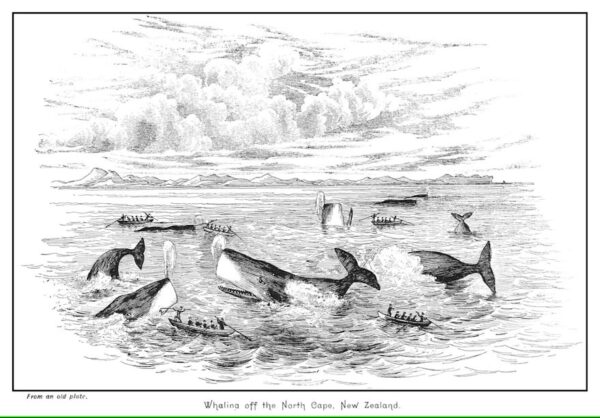
Cook would make two more voyages to New Zealand one in 1773 and another in 1777 but neither prompted much additional contact with Europeans beyond the accelerating arrival of sealers and whalers that began in the last decade of the eighteenth century. Despite their relative isolation in Aotearoa, the Polynesian culture of which the Māori were a part, had a long history of seafaring and trade. Thus, unlike Australia’s first people, all of the iwi in Aotearoa were prepared to establish trading relationships seeing the potential for economic benefit.
[From tepapa.govt.nz]
Māori supplied whalers with essential goods such as fresh water, food, and flax. In exchange, they received manufactured goods like clothing, tools, and firearms. The whalers’ need for food prompted some iwi to expand their agricultural production and they learned to use iron tools in the process. Some people joined the whaling ships gaining new knowledge including learning to speak English.
On the other hand, the Europeans introduced diseases that significantly reduced Māori population. Overfishing the whales and seals was also problematic as those populations were also rapidly depleted. But these traders were temporary visitors. It’s estimated that in 1830 the European population in New Zealand was less than 300 people.
Although Europeans were engaged in a rapid expansion of their global presence, the fact that Cook and the French explorers Jean François Marie de Surville and Marion du Fresne had violent encounters with Māori together with four widely reported incidents – the burning of the Boyd (1809), the Elizabeth incident (1830), the Harriet affair (1834) and disorder at Kororāreka – created a caricatured image of New Zealand as an untamed lawless frontier and left the islands relatively untroubled by any European presence.
By the late 1830s, however, the New Zealand Company’s plans to buy large tracts of land in the country combined with the British government’s increasing interest preventing other European powers, most notably France, from establishing colonies there, prompted the British to adopt a plan to annex the country as a British colony. In 1839, they appointed Captain William Hobson as lieutenant governor authorizing him to negotiate with Māori chiefs. These negotiations led to the signing of the Treaty of Waitangi (pronounced WHY-tang-ee) in February 1840 – a treaty whose terms remain contentious to this day. Its signing, however, marks the beginning of British sovereignty over New Zealand.
We’ll look at the Treaty of Waitangi in some depth later in this narrative. For now, it’s time to leave the classroom and head out for a harbor cruise.
-
It’s just a shot away – Prizren
March 6, 2026 -
Some things looking better, baby – Getting into Kosovo
March 4, 2026 -
Here, where the sky is falling – Kukës
March 2, 2026 -
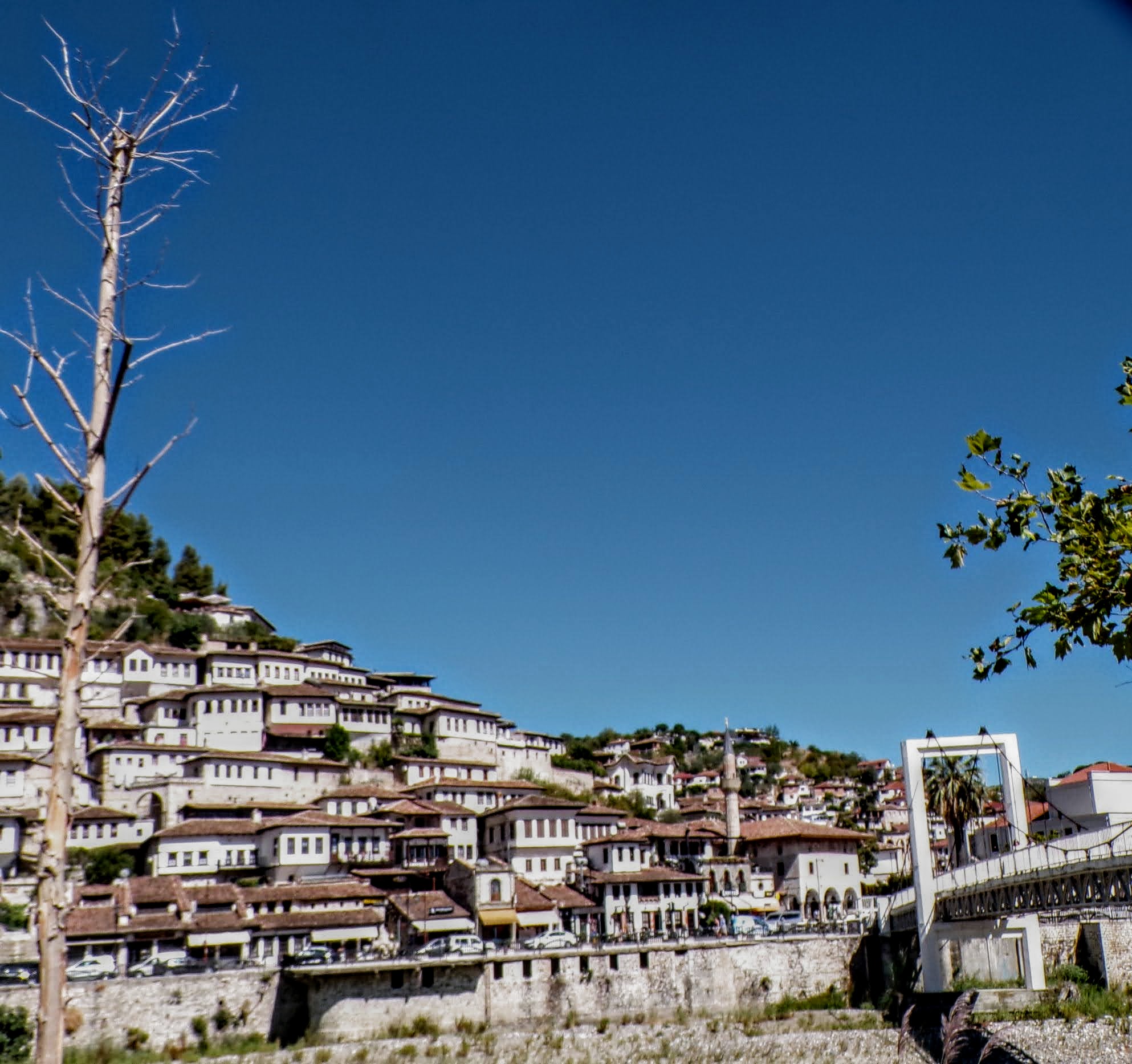
That’s when we fall in line ’cause we got Berat
February 27, 2026 -
Walking on the big stuff – a climb to Tragjas
February 25, 2026