Fever dream high in the quiet of the night
Before we leave Te Kōti Mana Nui o Aotearoa or the Supreme Court of New Zealand, I want to point out a few of its noteworthy design features starting with an aspect of the building I didn’t photograph mainly because I couldn’t compose an image I liked. This would be the bronze screen on its exterior.
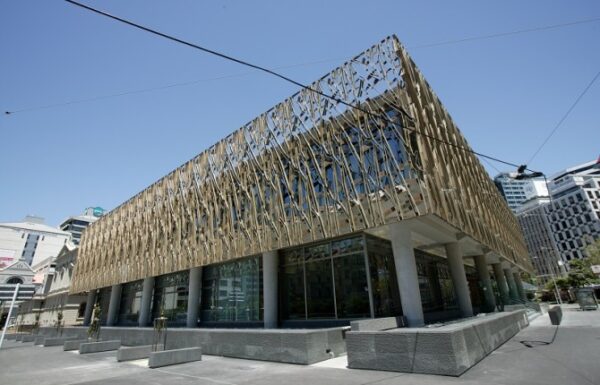
[From Courts of New Zealand]
This takes its inspiration from a pair of native trees – the pōhutukawa (which we encountered early on in Auckland) and the rātā which we haven’t. I wrote about the way Europeans view the pōhutukawa as the nation’s native Christmas tree because of its seasonal red flowers and promised that I would discuss its importance to Māori in a later post. As we near the end of this journey, we’ve finally reached that discussion.
Our arrival in Wellington brought us back to the North Island – albeit nearly the southernmost point of that island. Travel to the northern tip, Te Rerenga Wairua (Cape Reinga) and you can find a lone, ancient, windswept pōhutukawa.
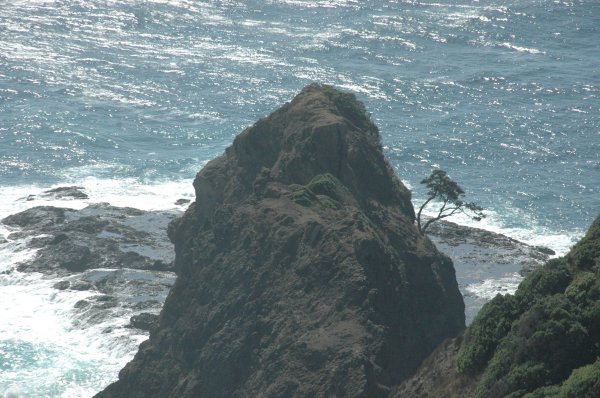
[From New Zealand Tree Register – Grant Hodgson]
For Māori, this is “the place of leaping” where the spirits of the dead begin their journey to the ancestral homeland of Hawaiki by leaping from the headland and descending into the underworld via the tree’s roots. The tree serves as a bridge between the living and the dead.
While Europeans associate its red flowers with Christmas, for Māori, the flowers symbolize bravery, strength, resilience, and are often seen as a symbol of mourning and remembrance. In some instances the rātā has similar symbolic importance.
Like the pōhutukawa, the rātā also produces red flowers and those flowers are associated with vitality, passion, and the blood of fallen heroes. This links the tree to themes of bravery and sacrifice.
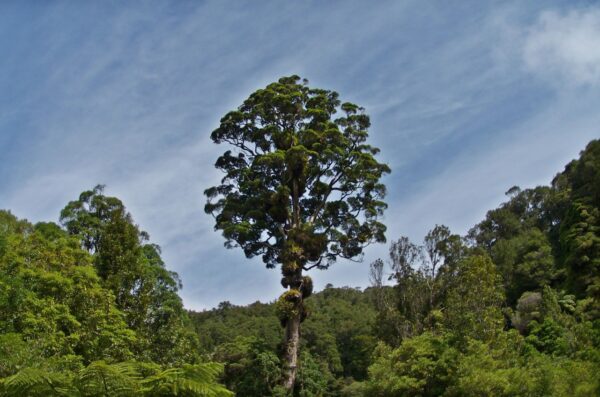
[From Wikipedia By Callum O’Hagan – originally posted to Flickr as Kaitoke Tree, CC BY-SA 2.0.]
It’s also closely associated with the legend of Rata who attempted to fell one such tree to build a waka but who neither sought permission of Tāne, the god of the forest, nor performed the proper rituals. The forest spirits restored the tree nightly until Rata realized his mistake and asked for forgiveness. The spirits then built a waka for him. From the first element of the story Māori learn the importance of respect for nature and proper ritual and from the second the values of humility and respect for the environment.
The interior of the court draws its inspiration from the kauri tree cone.
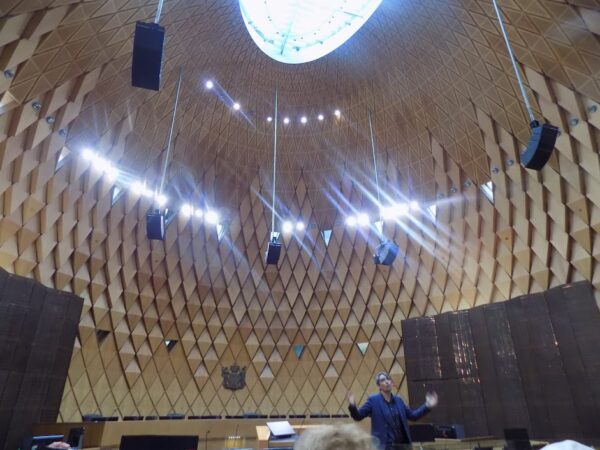
The kauri is a conifer that produces globose seed cones and, for Māori, these cones are a manifestation of the tree’s productivity (its enormous straight and cylindrical trunks provide an exceptionally high timber yield) and resilience. Like the sequoias and giant redwoods of the American northwest, kauris can live for millennia and are resistant to wind and other disturbances. In Māori metaphysics, every kauri tree is imbued with its own mauri (life force), tapu (sacredness), and mana (authority), all of which are gifts from the spiritual ancestors and Io Matua Kore, the Supreme Being.
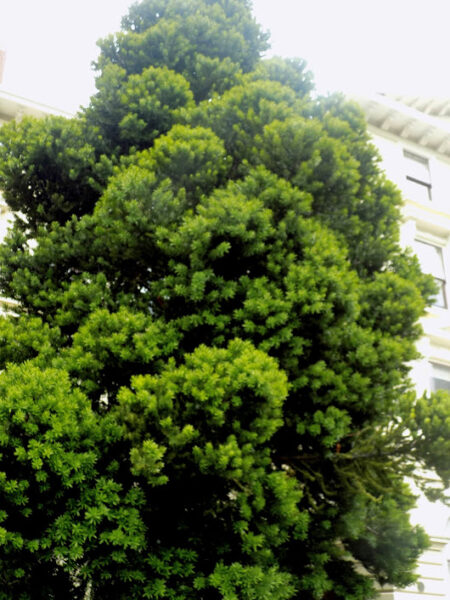
Our site coordinator took us past this very young kauri on our return to our bus.
And it’s lunch time
I don’t know if my recounting of these back to back RS trips has had an unusual paucity of writing about meals relative to some of my other trip journals but it seems that way to me as I compose them. And, even though this section is titled “And it’s lunch time,” I’ll be writing about the venue not the meal. The Thistle Inn bills itself as the oldest inn in Wellington and “one of the oldest surviving public houses in New Zealand.”
It received the second liquor license issued in New Zealand when its original building was constructed on the site in 1840 and its front door was at the edge of the harbor. It survived the 1855 earthquake but the original structure was destroyed by a fire in July 1866. Although it’s reported that no one among the citizenry aided an inadequately-equipped fire brigade, a new Thistle Inn was open in the same spot before the end of the year. In the 1950s, the building looked like this.
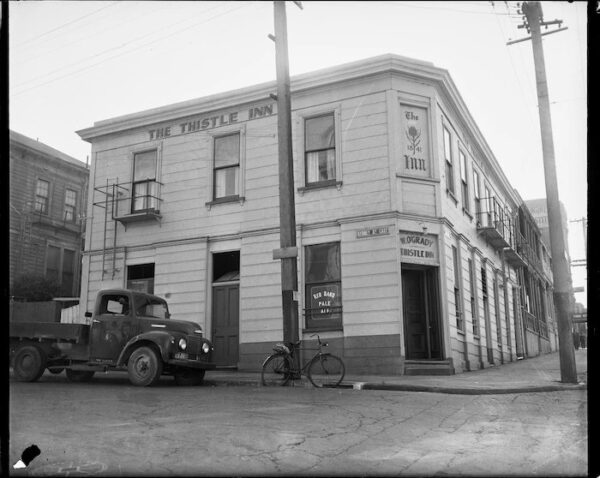
[From Digitalnz.org]
As four of us were waiting for an Uber to take us to the WĒTĀ Workshop, I took this photo of the relatively unchanged exterior.
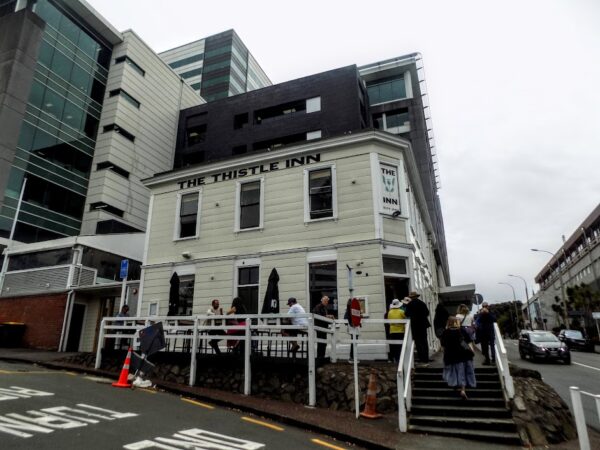
Even if you think you’ve never heard of WĒTĀ Workshop, you probably know their work
This seems like a bold statement but the breadth of the work this small company has done in film and television is so wide that I can only guarantee you haven’t encountered it if you’re Amish. In fact, all you had to do was look through this album of Wellington photos to see this public sculpture produced by the Wētā Workshop.
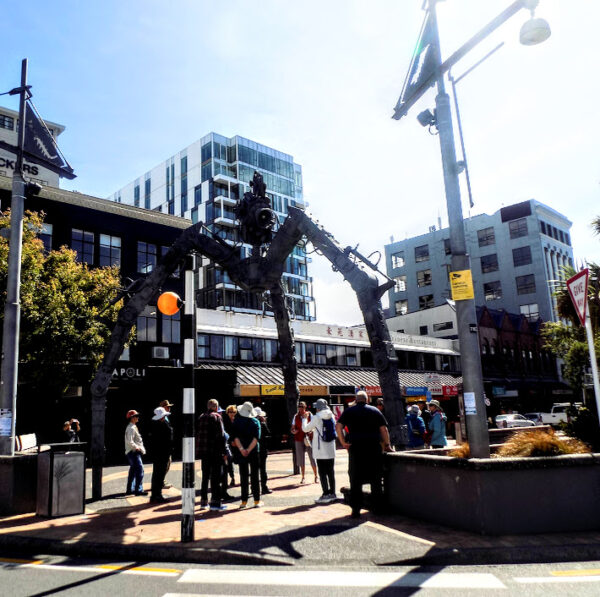
Before going any further, I’ll answer the burning question I’m sure you’re cogitating over, “What’s a wētā?” The macron over the vowels indicates the word is – or at least comes from – Māori. The answer is in this very short video.
Are you now wondering what inspired company founders Richard Taylor and Tania Rodger to choose this insect? If so, you’ve come to the right place. Taylor described the wētā as “a beautiful indigenous little monster (insect) here in New Zealand,” and intended the name to reflect both a sense of local pride and the insect’s unique, creative, and resilient characteristics – traits they wanted their company to exemplify.
Now, addressing the possibly brazen nature of this section header, here’s a partial list of Wētā projects from their Wikipedia page:
TELEVISION:. The Tommyknockers; Hercules: The Legendary Journeys; Xena: Warrior Princess.
MOVIES:. Heavenly Creatures; The Frighteners; Lord of the Rings (all three parts); Peter Pan; The Last Samurai; I,Robot; Hellboy; Van Helsing; The Chronicles of Narnia; King Kong; Kingdom of Heaven; Bridge to Terabithia; Avatar; The Hobbit (all three parts); Mad Max: Fury Road; Thor: Ragnarok.
By now you get the idea.
Our Uber had to circle Evans Bay to reach the workshop about eight kilometers from the CBD. Waiting outside for our tour to begin, we had this troll
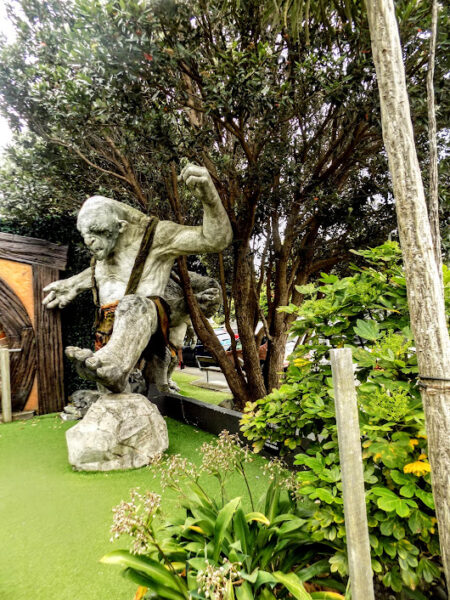
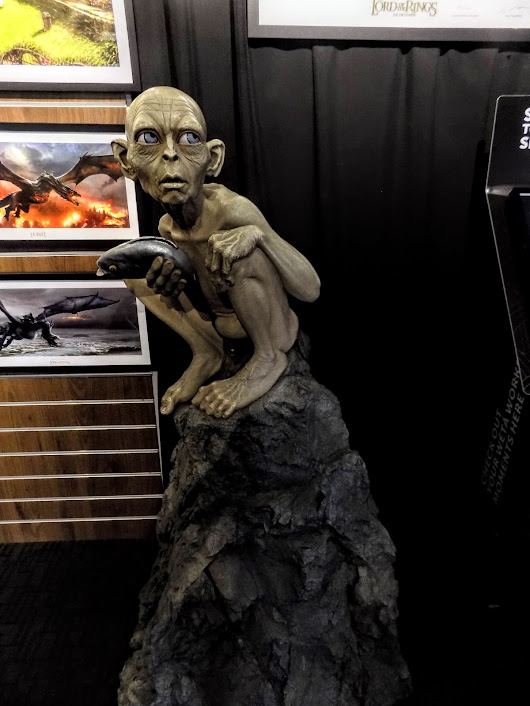
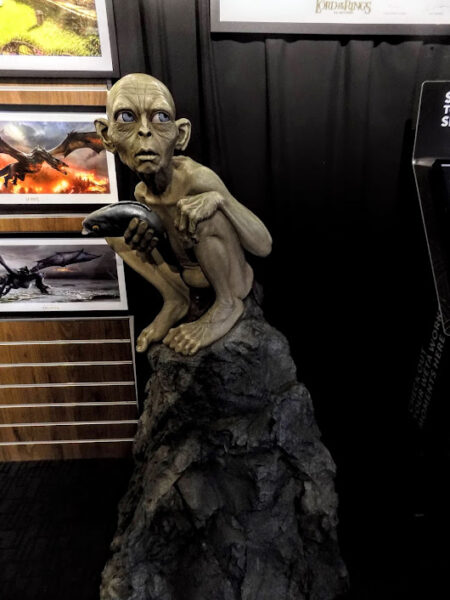
to keep us company and, of course, Gollum greeted us soon after we went inside.
It was an interesting opportunity to see how smart people can create illusions that we believe are real. We learned how, for example, the chainmail worn by the armies in the LotR series was, in fact, PVC pipe cut into rings, assembled by hand into a semblance of armor, and then electroplated. The 90-minute tour took us behind the scenes and allowed us to meet some of the creators and to have some hands-on interaction with prosthetics, costumes, and swords (we posed as swordfighters in one area) from several of their projects. For me, it was a fun and engaging time because I’m a movie fan and I enjoy seeing how the cake is baked.
1154
We returned to the hotel and I had a bit of a rest before setting off on my own for supper. I hadn’t settled on a spot when I set off for Cuba Street which is probably the artiest and most Bohemian street in Wellington. Its pedestrian mall is home to the Atlas Obscura recommended Bucket Fountain –
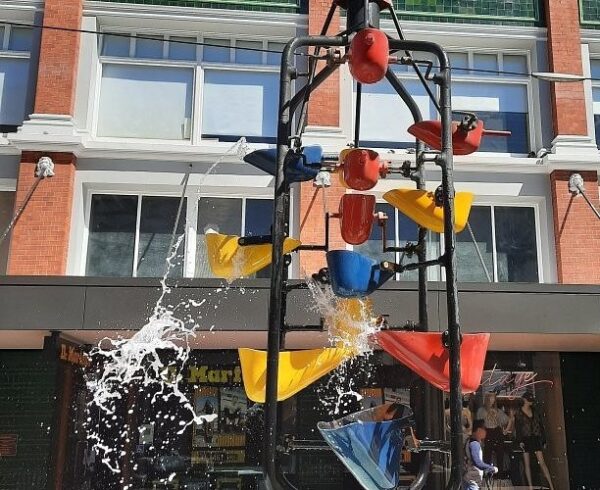
called by some the “Crappiest Fountain in the World.”
I wandered along the street raking in some of its sights and sounds and working my appetite into a frenzy. I settled on the Pastaria called 1154 because, while I had the Spaghetti Aglio Olio e Gamberetti (spaghetti with sweet garlic and olive oil sauce, prawns, chili, parsley, breadcrumbs, and parmesan) I couldn’t resist it being “Gnocchi Gnight.”
The place was crowded but the hostess seated me at a spot along the counter looking out the window
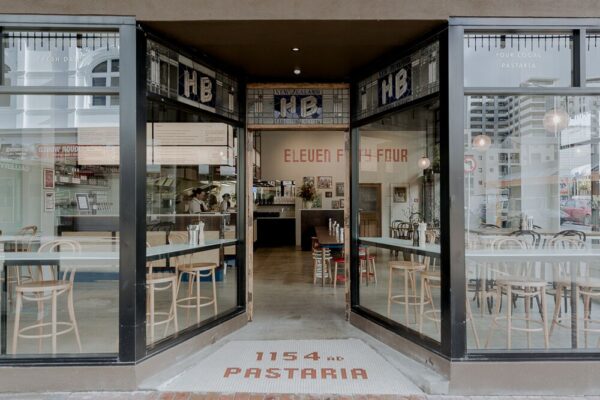
that didn’t shelter me from the pulsating and loud dance music but did afford me a grand spot to watch the parade of pedestrians up and down Cuba Street. (By the way, although they bring your order to you, you place it at the counter in the photo on the left above and sit with a number until your meal is served.)
I walked down Cuba street to Cable Street and by the wharf and Waitangi Park before returning to the hotel where I completed my nightly notes and fell into bed. Only one more full (and as it will turn out very interesting) day remained for me in Te Whanganui-a-Tara before my midday Saturday flight to Hawai’i.
There aren’t many remaining pictures to look at but you can do so here.
-
It’s just a shot away – Prizren
March 6, 2026 -
Some things looking better, baby – Getting into Kosovo
March 4, 2026 -
Here, where the sky is falling – Kukës
March 2, 2026 -
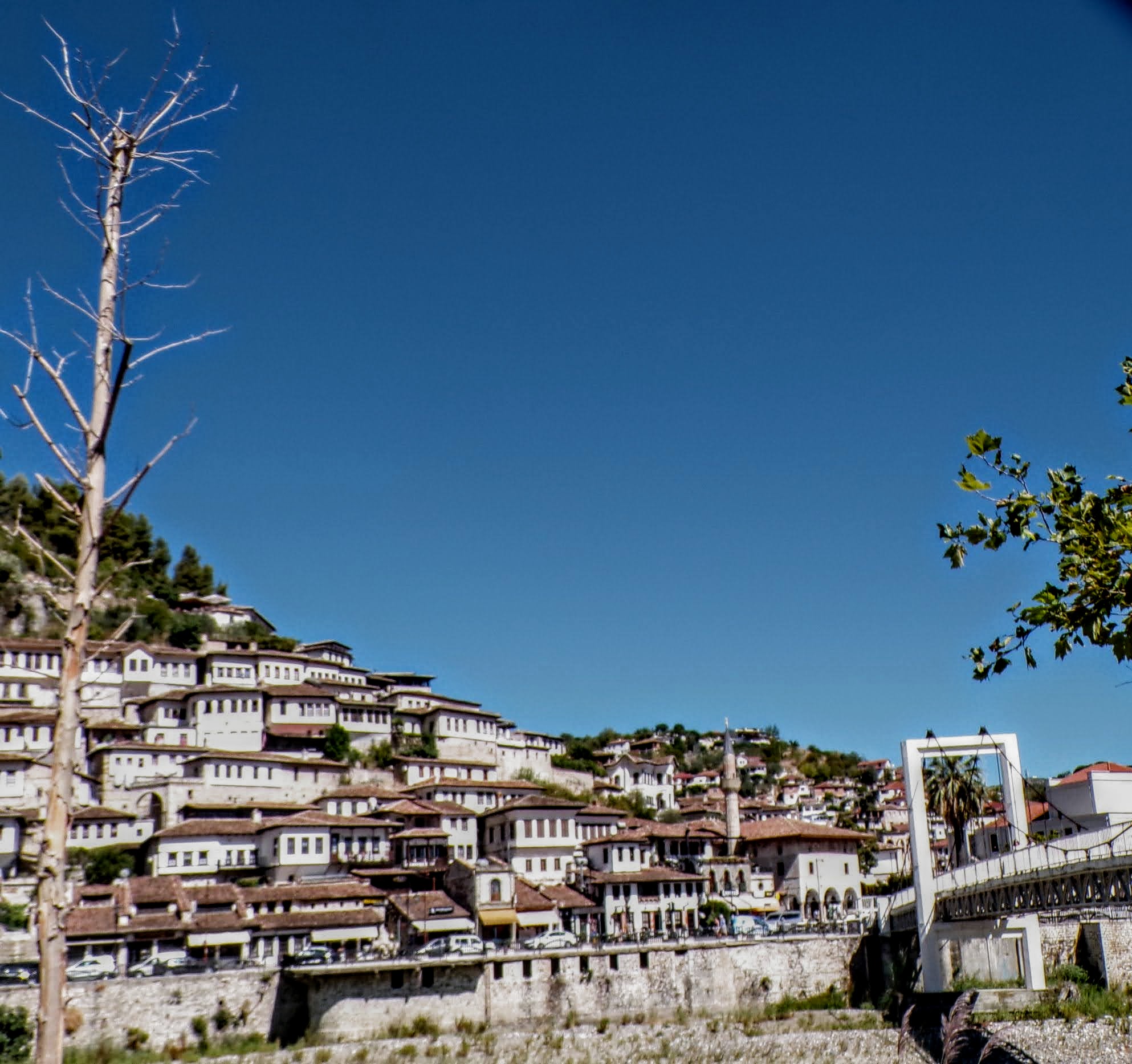
That’s when we fall in line ’cause we got Berat
February 27, 2026 -
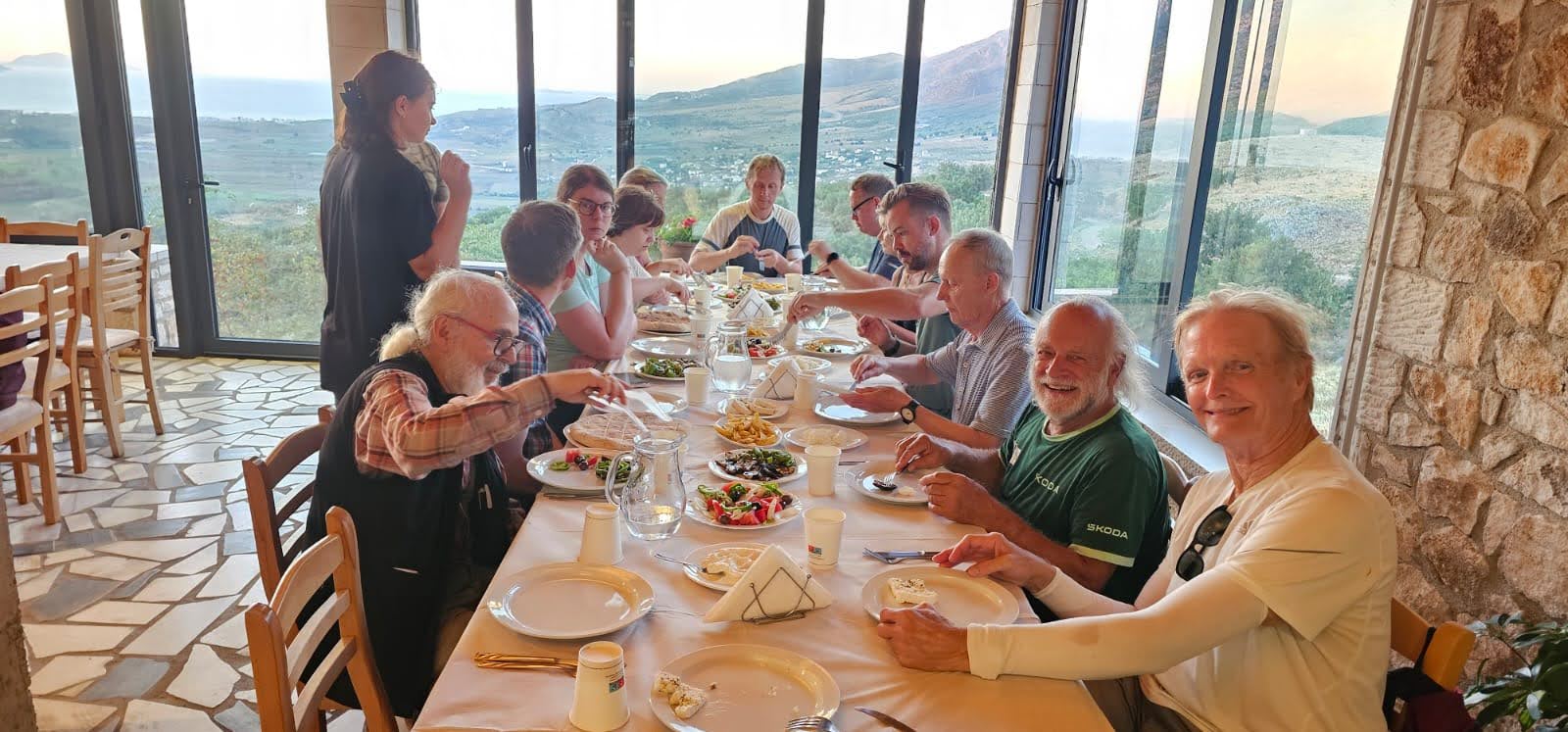
Walking on the big stuff – a climb to Tragjas
February 25, 2026